Labbaik: The story of my Hajj (Part 7)

Mohsin Aziz

We stepped into the sacred Mataf, the open expanse encircling the revered Kaaba, where the heart of every pilgrim beats in unison with centuries of devotion. Surrounding this blessed courtyard, the majestic arches and covered galleries of Masjid al-Haram rise gracefully in every direction, embracing the pilgrims in a sanctuary of peace.

Our Tawaf began—a deeply spiritual journey of seven graceful circuits around the Kaaba. This divine rite must commence from a specific point: the corner that houses the Hajr al-Aswad, the sacred Black Stone. The Kaaba, a sublime cubic structure of time-worn granite, stands firm and solemn with its four distinguished corners. Of these, the corner bearing the Black Stone marks the beginning and end of each sacred round.

In the midst of the swirling sea of believers, it can be challenging to pinpoint this sacred starting point. But with gentle care for the ease of the pilgrims, a green light has been placed high above, directly aligned with the Hajr al-Aswad. It now shines as a guiding beacon—subtle yet clear—making it effortless to locate the place where each Tawaf must begin, a small yet thoughtful gesture to aid the hearts seeking closeness to the Divine.

Tawaf is the act of circumambulating the Kaaba in an anti-clockwise direction, starting from the corner where the Black Stone (Hajar al-Aswad) is located. The open area surrounding the Kaaba is called the Mataf, and pilgrims prefer to perform Tawaf in this space. However, during times of heavy crowding, it may become necessary to move back and enter the main building of the Masjid al-Haram to continue the Tawaf. This building is multi-storeyed, providing ample space for worshippers. The covered areas of the building also offer wheelchair access for those with mobility issues, ensuring that everyone can perform the ritual comfortably.

We were lucky to find space in the mataf for our tawaf. To start, one has to point his hand with open palms towards Hajre Aswad and say ‘Allahu Akbar’ (God is Great) and start the circumbulation. It is the belief that whatever prayer is said during tawaf is answered.

The four corners of the Kaba are named. Two are more important from the tawaf point of view. The starting point where is hajre aswad is kept. It is called Rukn e aswad (Blackstone corner) . The next one is called Rukn al Iraqi (the Iraqi corner). The next one is called Rukn e Shaami (the Syrian corner). The fourth one is called Rukn e Yamani (the Yemeni Corner). From this corner, i.e. Rukn e Yamani to the RukneAswad, one has to preferably recite the following prayer:

  Rabbana aatina fid dunya Hasanataw

(Our Lord give us good in this world)

wa fil akhirati Hasanataw

(And good in the hereafter)

wa qina azaab al naar

(And defend us from the torment of the Fire)

This sequence has to be repeated for all seven rounds. From corner one to three, one can say any prayer in any language.

There were people from all over the world in the mataf. From Turkey, Iran, Nigeria, Australia, New Zealand, Oman, India, Pakistan, Bangladesh, Russia, Tajikistan, Malaysia, Thailand, Niger, South Africa, Bosnia, U.K., U.S.A., Cote d Ivor, Gabon,  etc. These are the ones whom I could identify from their sling bags and flags that they were carrying.

It is a common tradition for group leaders to carry flags aloft—vivid emblems that flutter gently above the crowd, guiding their companions like lodestar through a sea of pilgrims. These banners serve not only as symbols of unity but as anchors, helping individuals find their way and gather together amid the vast and often overwhelming multitude.

Within this sacred space, hearts are stirred, and spirits awakened. All around, people are immersed in prayer—some whispering their supplications in quiet intimacy, others raising their voices in fervent appeal. Here, in the revered House of the Lord of the Universe, every soul stands equal before the Divine wearing the same white seamless cloth. No one is rich, and no one is poor. All have come with their petitions. All are beggars here in front of the ‘Al Wahhab’ (The Ever Giver) and ‘Al Mannan'(The giver of gifts and favours). One may ask for anything, in any language, for the language of the heart transcends all earthly tongues.

Yet, many are drawn to the beauty and sanctity of Arabic, reciting time-honored invocations passed down through generations. Often, a group leader will raise his voice in duʿā (the supplication) flowing from their lips like a gentle stream, while group members echo each word with solemn devotion. This collective recitation creates a mesmerizing rhythm—an undulating chorus of longing and love. The air becomes charged with the vibrations of prayer, weaving a profound and almost otherworldly atmosphere that envelops every soul in its embrace.

In such moments, time seems to stand still. The world fades, and what remains is a sacred harmony—the collective heartbeat of those who have come, from every corner of the earth, seeking nearness to their Creator.

Muslims from around the world face Kaba for prayers. It is called Baytullah (the house of Allah). In the beginning of Islam, Muslim did not pray towards Kaba. They prayed towards Masjid Al Aqsa in Jerusalem. There came a time when it became difficult for muslims to live in Macca, a group of Muslims migrated to Abyssinia, but the Prophet with a handful of Muslims stayed in Macca. When it became difficult to live in Macca, the Prophet Mohammad migrated to Madina. He was very fond of Kaba and Macca. While leaving Macca, he said:

‘By Allah, you are the best and most beloved land to Allah. Had I not been driven away from you, I would not have left you’ (Sunan al Timidhi, 3925).

Once in Medina, slowly but surely, the Prophet established his authority and established the first Islamic state. It was a welfare state that prioritised the weak, poor, orphaned, and widowed. In Madina, Muslims, under the leadership of the Prophet, continued to pray, facing Masjid Al-Aqsa. This is the reason why Al Aqsa is called Qibla Awwal (first qibla). This is the reason why it is so important to the Muslims. It is one of the three holiest mosques in the world.

One day, while the Prophet was leading obligatory prayers, verses were revealed mid prayers that directed him to change his direction from Jerusalem to Macca.

‘The fools (pagans, hypocrites, and Jews) among the people will say ‘What has turned them (Muslims) from their Qibla (prayer direction (towards Jerusalem)) to which they were used to face in prayer (O Mohammad SAW) ‘To Allah belongs both, east and the west. He guides whom He wills to a straight path’. Thus We have made you [true Muslims – real believers of Islamic Monotheism, true followers of Prophet Muhammad SAW and his Sunnah (legal ways)], a Wasat (just) (and the best) nation, that you be witnesses over mankind and the Messenger (Muhammad SAW) be a witness over you. And We made the Qiblah (prayer direction towards Jerusalem), which you used to face, only to test those who followed the Messenger (Muhammad SAW) from those who would turn on their heels (i.e. disobey the Messenger). Indeed, it was great (heavy) except for those whom Allah guided. And Allah would never make your faith (prayers) to be lost (i.e., your prayers offered towards Jerusalem). Truly, Allah is full of kindness, the Most Merciful towards mankind. Verily! We have seen the turning of your face (Mohammad s.a.w.) towards the heaven. Surely, We shall turn you to a Qibla (prayer direction) that shall please you, so turn your face in the direction of Al Masjid Al Haram (at  Makkah). And wheresoever you people are, turn your faces (in prayer) in that direction. Certainly, the people who were given the scriptures (i.e. Jews and Christians) know well that, that (your turning towards the direction of the Kaba at the Makkah in prayers) is the truth from their Lord. And Allah is not unaware of what they do’ (Al Quran, Surah Al Baqarah:142-144). 

From that day onwards, kaba is the Qibla for Muslims from Indonesia to Alaska. In turning towards towards the same centre while praying, Muslims practically show spiritual unity.

After finishing my tawaf, I tried to pray rakaat of required prayers behind the Maqam e Ibrahim. Maqam e Ibrahim (station of Ibrahim) is the place where a stone (on which Ibrahim stood while constructing Kaba) with Ibrahim’s foot mark. Presently, it is kept in a beautiful glass and golden brass enclosure. It is polished thrice a day and surroundings refreshed with oud and amber (Arab News, 2016).

‘And (remember) when we made the House (the Kaba at Makkah) aplace of resort for mankind and a place of safety. And take you (people) the Maqam  (place) of Ibrahim (Abraham) ( or the stone on which Ibrahim (Abraham) stood while he was building the Kaba) as a place of prayer (for some your prayers, e.g. two rakat after the tawaf of the Kaba at Makkah), and We commanded Ibrahim and Ismail that they should purify My Home for the circumambulators, and the coseccrators, and the ones often bowing down and prostrating themselves’ (Al Quran, Surah Al Baqarah:125).

Due to rush, it was not possible. We moved inside the mosque and prayed two rakaat. The next step was drinking zamzam water. Zamzam is available in water cooler in every corner of the Masjid Al Haram. It is a huge logistical challenge to provide zamzam to millions of pilgrims continuously. It is not only used for drinking. Pilgrims wash their face with it and pour it over their head as well. The act of drinking zamzam and afterwards walking and running between two hill locks of safa and marwa are both deeply connected to the family of Ibrahim. It was when Ibrahim left his wife Hajra and nursing child Ismail at Makkah that the story started. When the water finished and the baby started crying, the mother started getting worried. In desperation, she ran atop nearby hill to look out for water. There was nothing in sight. She descended the hill and ran towards the baby. The baby was crying incessantly. She ran atop another hill on the other side to look out for water for her crying baby. She could not see any water. In her worry, she ran seven times between the two hills. The hills were Safa and Marwa. Suddenly, she saw water gushing from near her baby’s feet. To her utter disbelief, a spring of pure water had sprung near baby’s feet. She started making a circle of sand around the water to stop its flow and to collect it al the while saying zam zam, meaning stop, stop. The love and affection of a mother towards her child was so liked by Allah that drinking zamzam and walking between the same two hill locks was made part of Hajj and umrah pilgrimage for eternity. Today, millions of Muslims every year follow in the footsteps of Hajra. They retrace and connect to het legacy. This act of walking between the two hills is called Sai (to strive or to make an effort).

After drinking zamzam, my wife and I moved to the Sai area. Today, this area is covered, air-conditioned, and within the Masjid Al Haram complex. The sai has to start from Safa. Approaching safe, we recited the following verse from the Quran as recommended:

Verily! As-Safa and Al-Marwah (two mountains in Makkah) are of the symbols of Allah. So it is not a sin on him who perform Hajj or Umrah (pilgrimage) of the House (the Kaba at Maklah) to perform the going (Tawaf) between them (As-Safa and Al-Marwah).  And whoever does good voluntarily, then verily, Allah is All-Recogniser and All-knower (Al Quran, SurahAlBaqarah:158).

Once you reach the Safa area, you have to face Kaba and say takbir (Allahu Akbar) and pray any dua. After that, one has to move to the Marwah area. Once you reach the Marwah area, you are again supposed to face towards Kaba and make dua. This completes one round and is about 394 metres. Go back to safa again. It will complete the second round. In between both rounds, there is a space between safa and marwah where men are supposed to jog. Women keep walking normally. In total, 7 rounds are around 2.76 km. For me and my wife, it took about 7 minutes for each round, thus totalling 35 minutes. However, it takes more time as we stop drinking zamzam, which is avaion both sides. For those with mobility issues, electric carts are available at the upper level. There are also wheelchairs available at every level. Carts are a bit costly compared to wheelchairs. While we were in our 4th round maghrib, azaan started. Once the prayer starts, everyone stops whatever they are doing  (those doing tawaf stop and join prayers while those doing sai do the same) and join the prayers. Once the prayer was finished, we restarted from where we left. Hence the total time for our sai was 1 hour.

In doing sai, pilgrims do not follow any prophetic tradition. They retrace the footsteps  of a woman, a mother who ran between the two hills desperate to find water and provide solace to her crying baby. Allah liked this act of a mother so much that he honoured her struggle and made it an obligatory act of Hajj and Umrah. It is a powerful reminder to the believers that in the eyes of Allah, gender and status do not matter. What matters is the sincerity of effort and belief that Allah is with us and our efforts shall not go waste.

By the time we finished sai, we were tired. We decided to sit in a corner in the sai area and wait for isha Azaan, which was not very far. We prayed isha and came out of the Masjid Al Haram.

We got a taxi from outside and reached our hotel. Now, only one last step was left to complete our Umrah:Clipping of hair. For women a out an inch of hair is clipped. For men doing only Umrah, they can either clip a portion of hair or get shaved. Since I had to do hajj, I only clipped my hair and left the shaving for my Hajj. Now we were out of the state of Ihraam. We took a shower and changed to regular clothes. We were very hungry. It was time for dinner. We were so busy that we had no time to check our mobile phones for hours. I saw a flurry of messages on my whattsapp in our hajj group. I realised thar it was almost 10 p.m. and the bus carrying the rest of the group from Madina had still not reached Makkah. At that time, the bus was at the outskirts of Makkah. The bus had left Madina at 11 a.m. and finally reached the hotel at 11.15 p.m. It was a long and hectic journey for the group. Now, they had to go to Masjid Al Haram for Umrah. I thanked Allah that I was done. I thanked my wife for her suggestion of taking the train. The train journey took only 2 hours, and we were saved almost 9 hours of exhaustive travelling. Most of our group members finished Umrah and reached the hotel by 2.30 a.m. May Allah reward them all abundantly for their efforts, Ameen.

(To be continued in Part 8)

References:

Arab News (2016, September 25) Maqam e Ibrahim shines… like visitor’s faith. Available at: https://www.arabnews.com/node/989361/saudiarabia.

Sunan al Timidhi, 3925.
Langkawi – A journey to the rain-forest paradise

Author: Mohsin Aziz

On my Malaysia trip, Langkawi was last destination in the itinerary. From Kuala Lumpur we took Air Asia flight to Langkawi. The check in and the rest of the procedure was very smooth. Air Asia is a budget airline and hence the limit on check in luggage. We realized at the counter that we had a few kilograms more luggage then permitted. There was a lengthy line behind me and I decided to pay so as not to inconvenience others. However, the lady at the counter was very considerate and told us to step aside and rearrange our luggage. She even assigned another lady to assist us in doing so. That was such a nice gesture. The flight was one hour and five minutes. We were the only tourists in that flight. The rest were locals. Since it was a budget airline, we had to pay for water and food. I ordered some sandwiches along with the famous Malaysian tea: Teh Tarik. Teh Tarik means pulled tea. The origins of Teh Tarik are traced to Indian Muslim immigrants who traditionally set up tea stalls outside rubber plantations after World War II to serve workers there. It is prepared by pouring the tea back and forth from one vessel to another from height (the reason why it is called pulled tea) thus creating froth. Today it is the national drink of Malaysia and has been declared as national heritage of Malaysia. It may not be everybody’s cup of tea as it is on the sweater side. It was the best Teh Tarik in my entire stay in Malaysia. The first thing I did on return flight to Kuala Lumpur was to order Teh Tarik. In Muscat, it is available at Bread Talk where I go once in a while to enjoy my cup of Teh Tarik.

Before we could finish our sandwiches and tea, there was announcement of landing. Langkawi from above looked magical. Full of greenery and beaches everywhere. The Langkawi airport is very small airport and has a very provincial look. We finished with the procedures and baggage within 20 minutes. It was such a relief after navigating through the big and bustling airport at Kuala Lumpur. For Langkawi, I had not engaged any tourist agency for my trip. We engaged a taxi from outside the airport. It took us about 20 minutes to reach the hotel. The road to the hotel from the airport was lush green on both sides. Since it was rainy season everything was fresh. At times it felt like we are inside a jungle. The air was very cool and fresh. Good beginning to a new place.

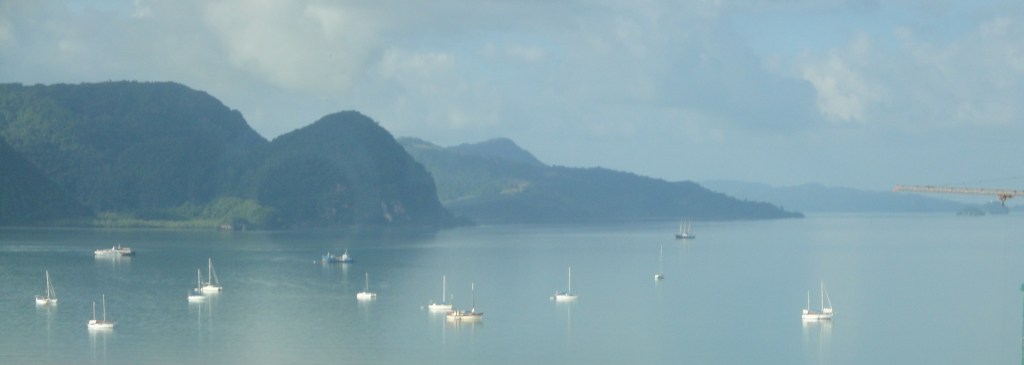
View of the bay from the Hotel Room, Langkawi. Photo Credit & © Mohsin Aziz.

Eagle Square

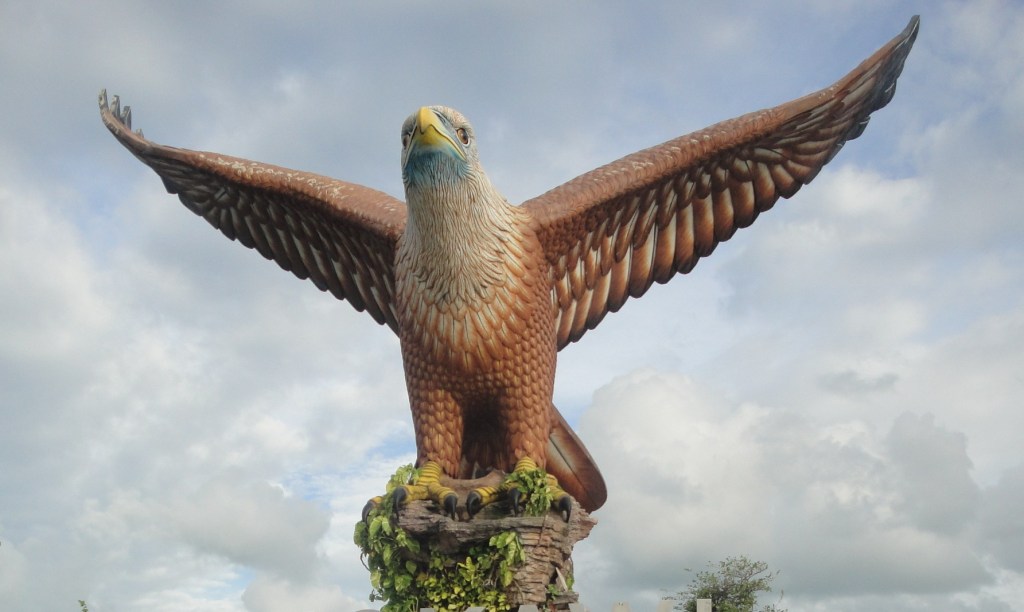
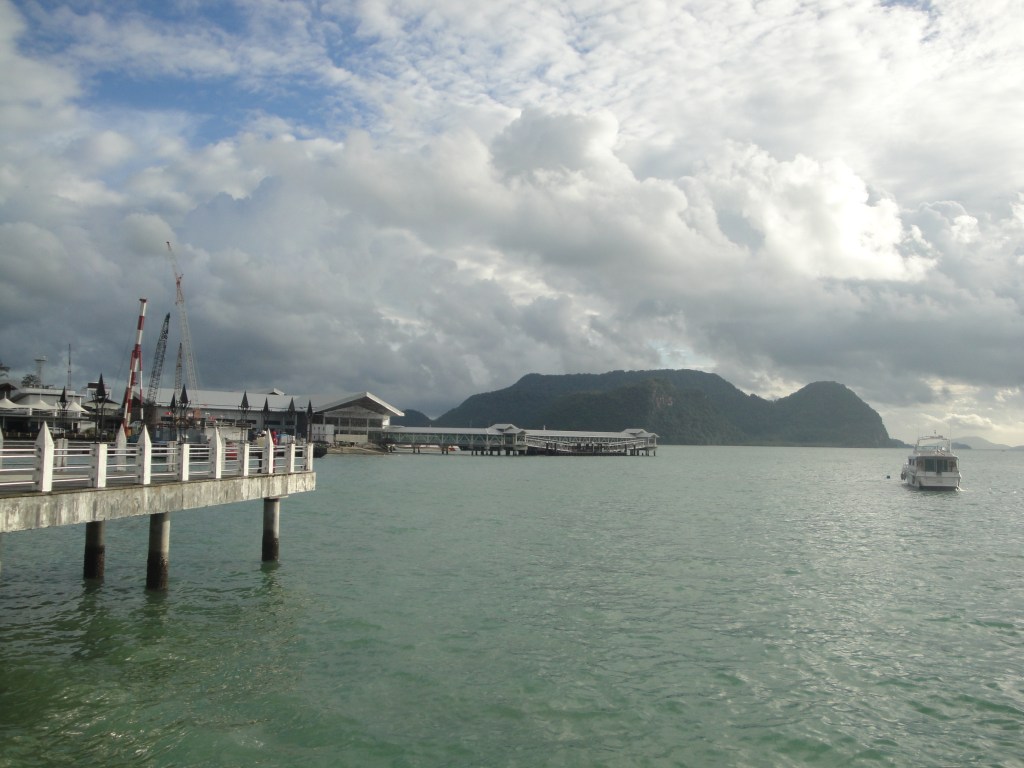
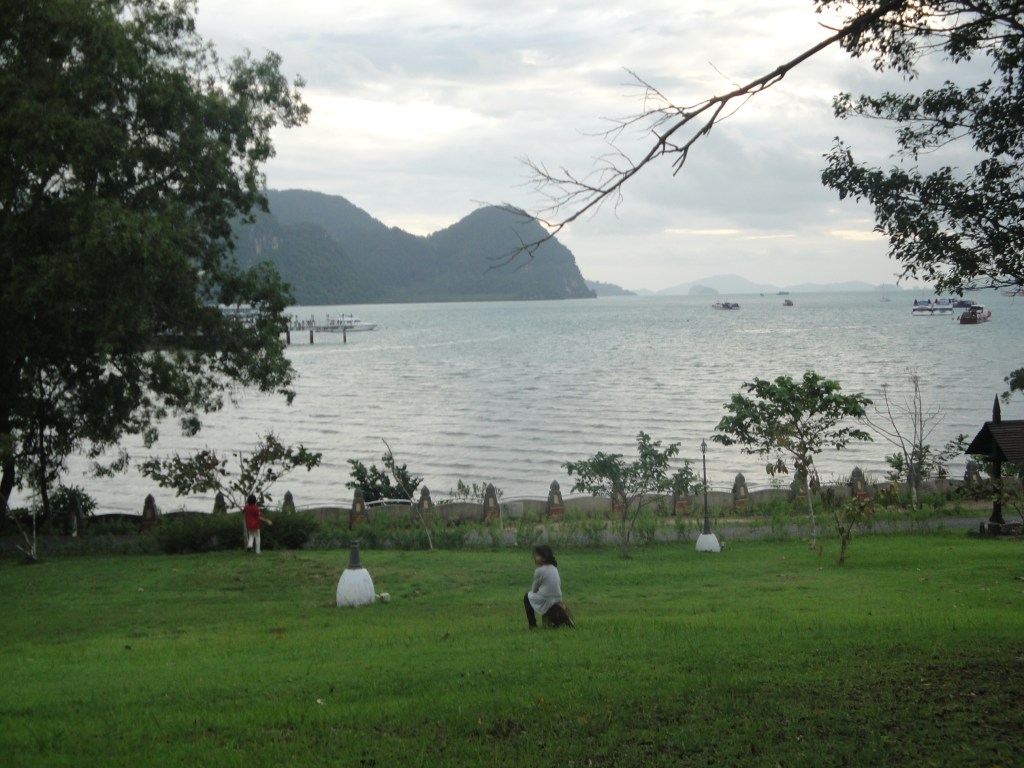
Once at hotel we all decided to take shower, lunch and some sleep in that order. After one hour of sleep we were ready to hit the town. Our first stop was Dataran Lang or Eagle Square. Eagle square was at five minutes walking distance form the hotel. The statue of Brown Eagle has become Mascot of Langkawi Island. This place reflects the origin of Langkawi’s name. Malay words ‘helang‘ means Eagle while ‘kawi‘ means reddish brown. Combining the two words becomes Langkawi. The Eagle statue is a massive 12 meters concrete structure depicting a Reddish Brown Eagle ready to take off. Today it is perhaps the most visited and most photographed place in Langkawi. However, the real highlight of the Eagle Square is the awesome view of bay with mountains in the background. One can see ferries moving in and out of the jetty.

Dataran Lang, Langkawi. Photo Credit & © Mohsin Aziz.
View of the Jetty from the Eagle Square, Langkawi. Photo Credit & © Mohsin Aziz.

Legenda Park

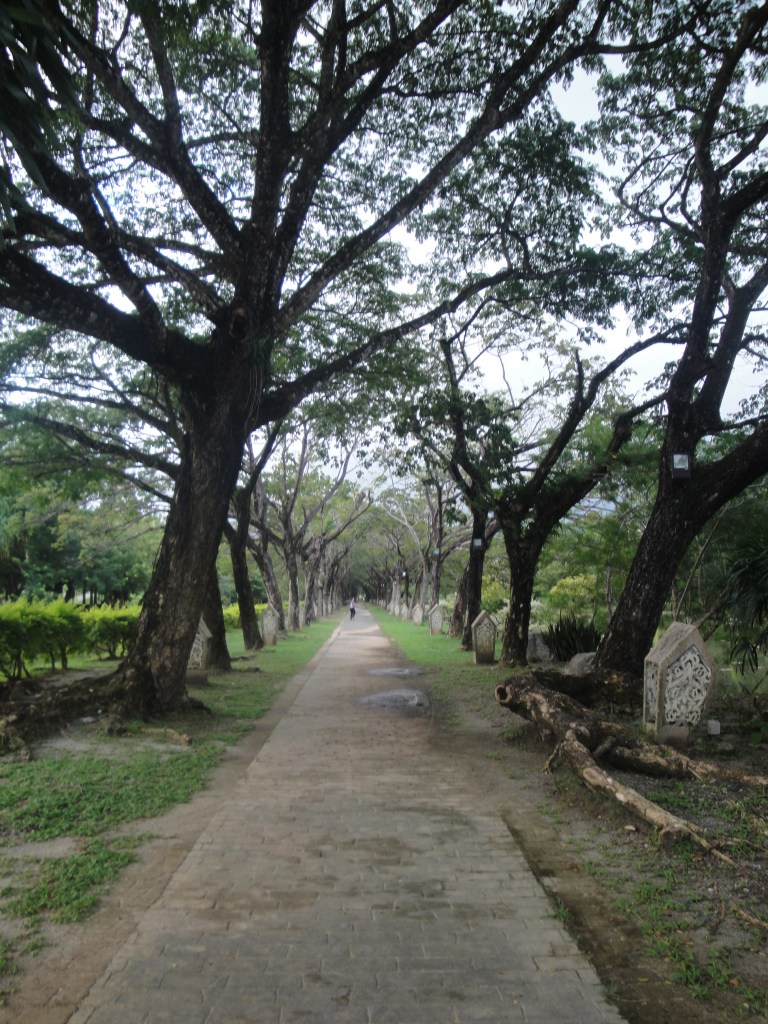
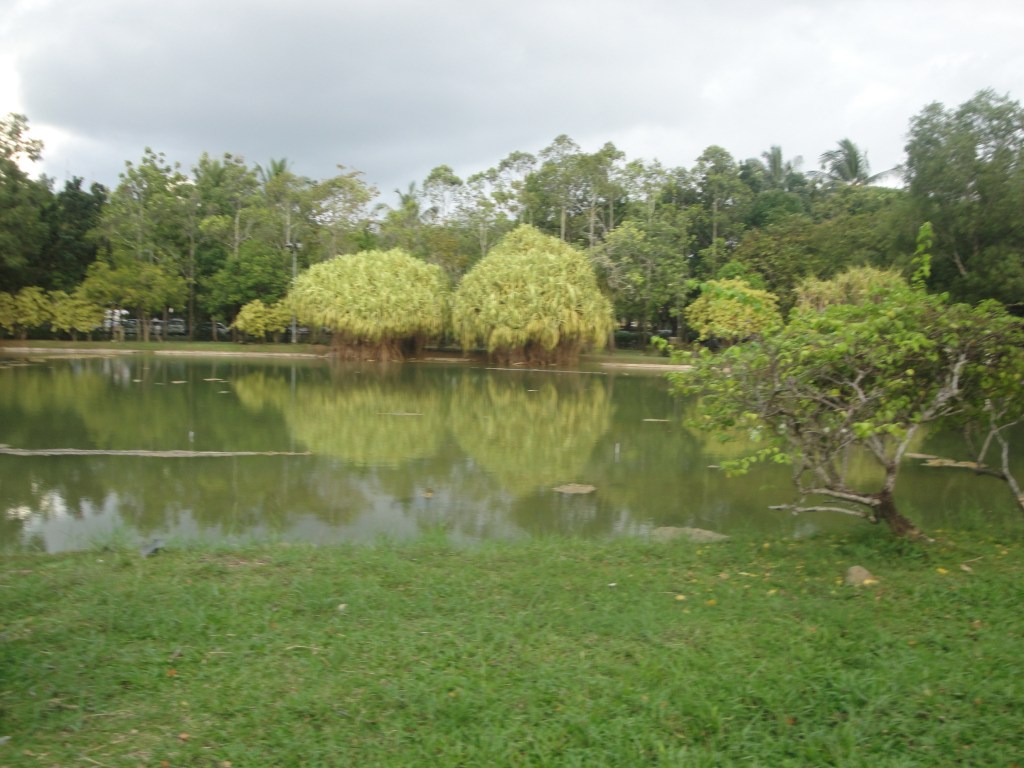
Just outside the Eagle square is Taman Legenda or Legenda Park. It means the park of the legends. Legenda Park is a 20 acre park based on the theme of legends popular in Langkawi folklore and myths from the past to the modern times. It is basically a park made on reclaimed land and there is a man made beach also attached to it. It was started as a park with entrance fees but with the passage of time, the entrance has become free but the monuments and sculptures inside the park show signs of decay and lack of maintenance. It is a beautiful park located at a perfect location near the Kuah Jetty and Eagle Square. I did not see many locals but saw a lot of tourists sitting in park overlooking the sea and reading book. I cannot think of any better place in Langkawi where one can go with a cup of coffee and a book and spend two three wonderful hours reading while enjoying the cool breeze coming from the sea. The park is full of local fruit trees which provide shade to the walking trails.

Each sculpture in the park represents a story from the folklore or myths popular in Langkawi such as two giants who were good friends and later turned into two mountains of Mat Cincang and Gurung Raya after they fought with each other and were turned into mountains by lightening from the sky. However, the most popular story on the island is of Mahsuri who was falsely charged with adultery and executed in 1800’s. Today it is favourite of joggers and while there are no facilities inside the park, the shopping centers just outside the park make it easy for the visitors. While we were inside the park, it started to rain and the weather became really pleasant. We took shelter in the Pavilion of the Chinese Princes. It represents the story of a Chinese Princes who was about to marry the son of Roman Emperor. But there was a fear among smaller kingdoms that they would stand no chance against two big empires coming together through marital alliance. To stop the marriage a Phoenix took the princes hostage while she was sailing to Italy for her marriage and brought her to Langkawi and killed the Prince when he came to rescue the Princes. However, when he brought the body of the Prince to the Pavilion where the Princess was kept hostage he realised that even after death the Prince is near the Princess. He realised that the union was intended by the gods and left the earth in disgrace at his mistake.

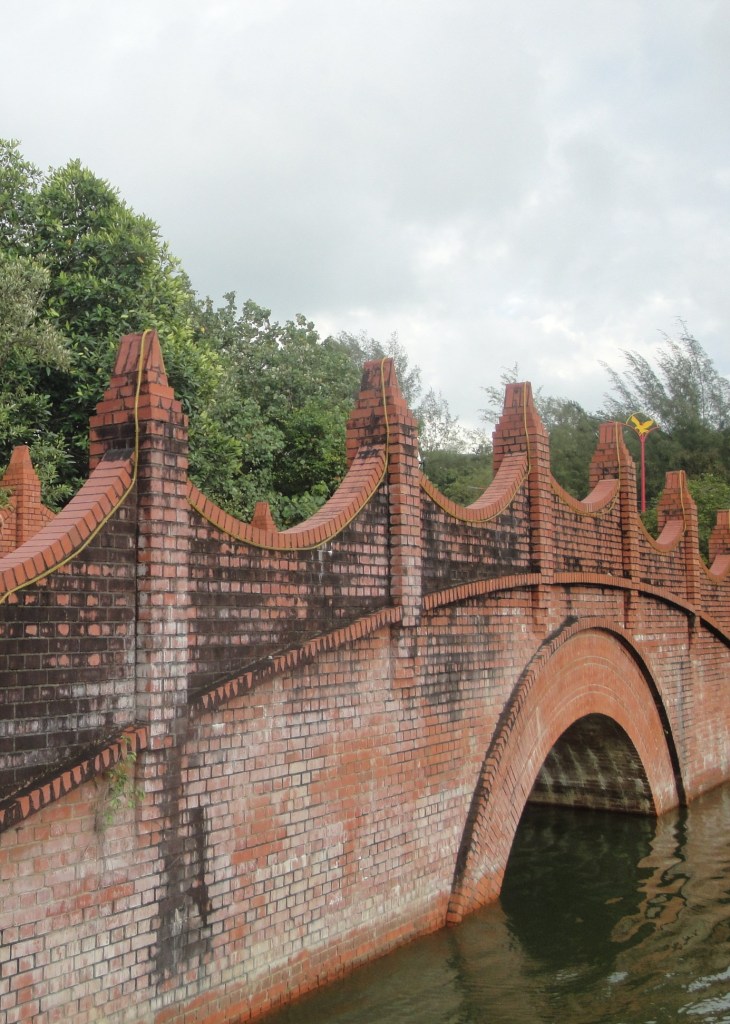
Colonial Era Bridge connecting the Eagle Square to the Legenda Park. Photo Credit & © Mohsin Aziz.
Pathway inside Legenda Park. Photo Credit & © Mohsin Aziz.
Monitor Lizard in Legenda Park. Photo Credit & © Mohsin Aziz.
Its raining in Langkawi. Inside Legenda Park. Photo Credit & © Mohsin Aziz.
View of the bay from the Legenda Park, Langkawi. Photo Credit & © Mohsin Aziz.
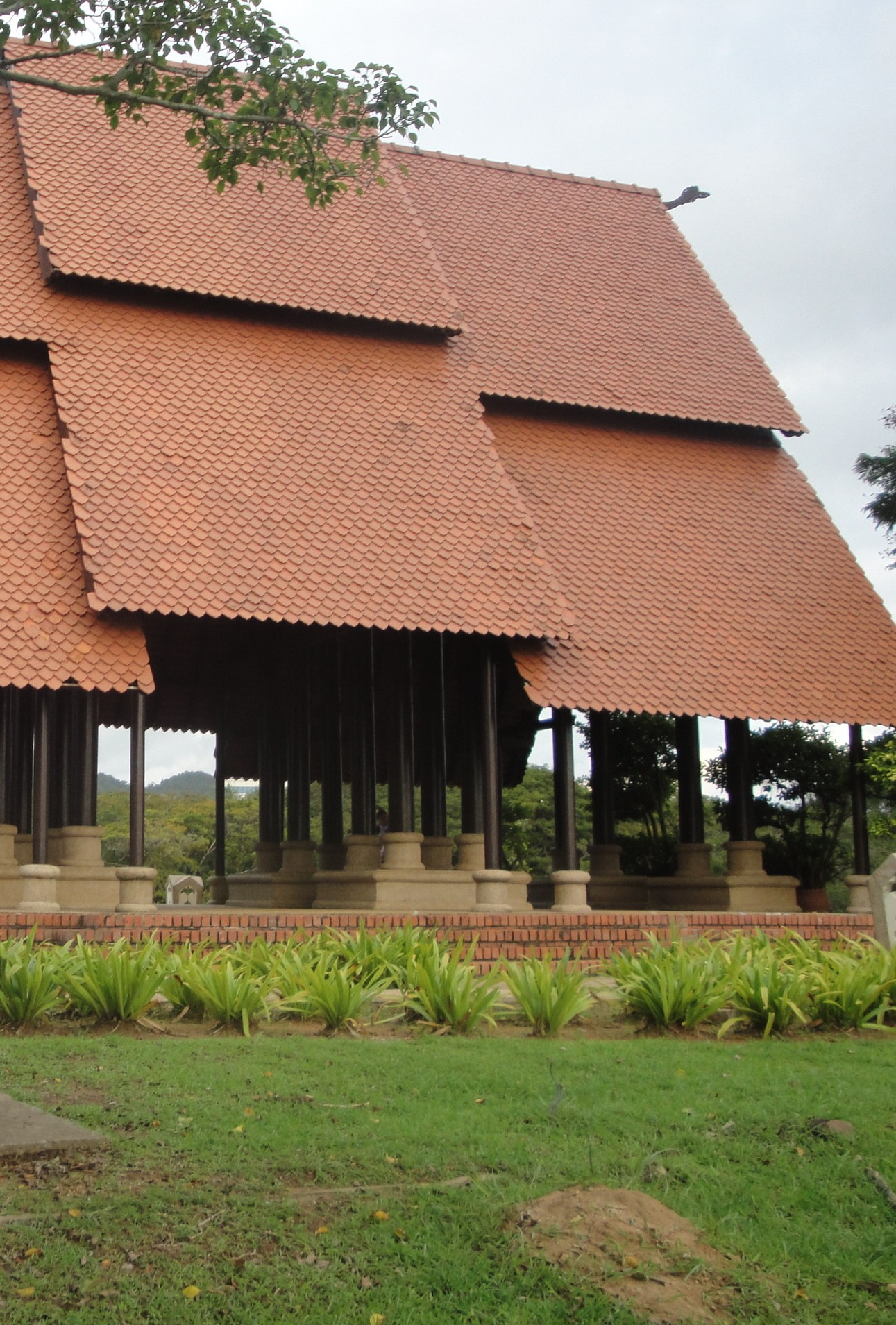
Pavilion of the Chinese Princes. A place to take refuge during rain at Legenda Park, Langkawi. Photo Credit & © Mohsin Aziz.

Temurun Waterfall

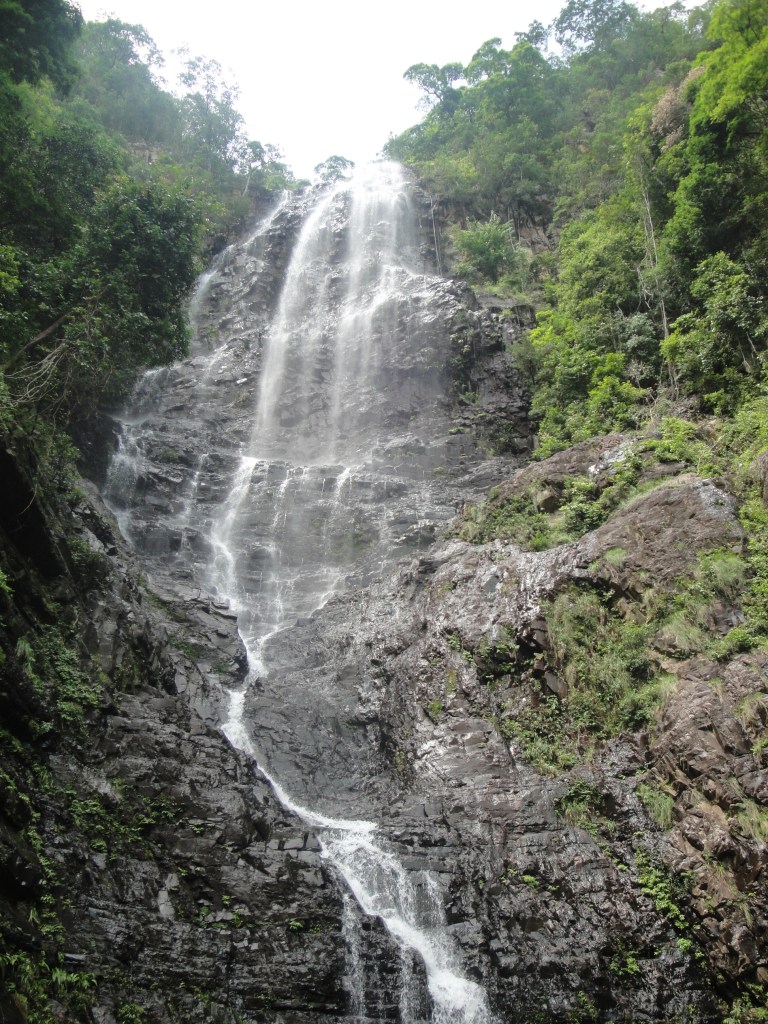
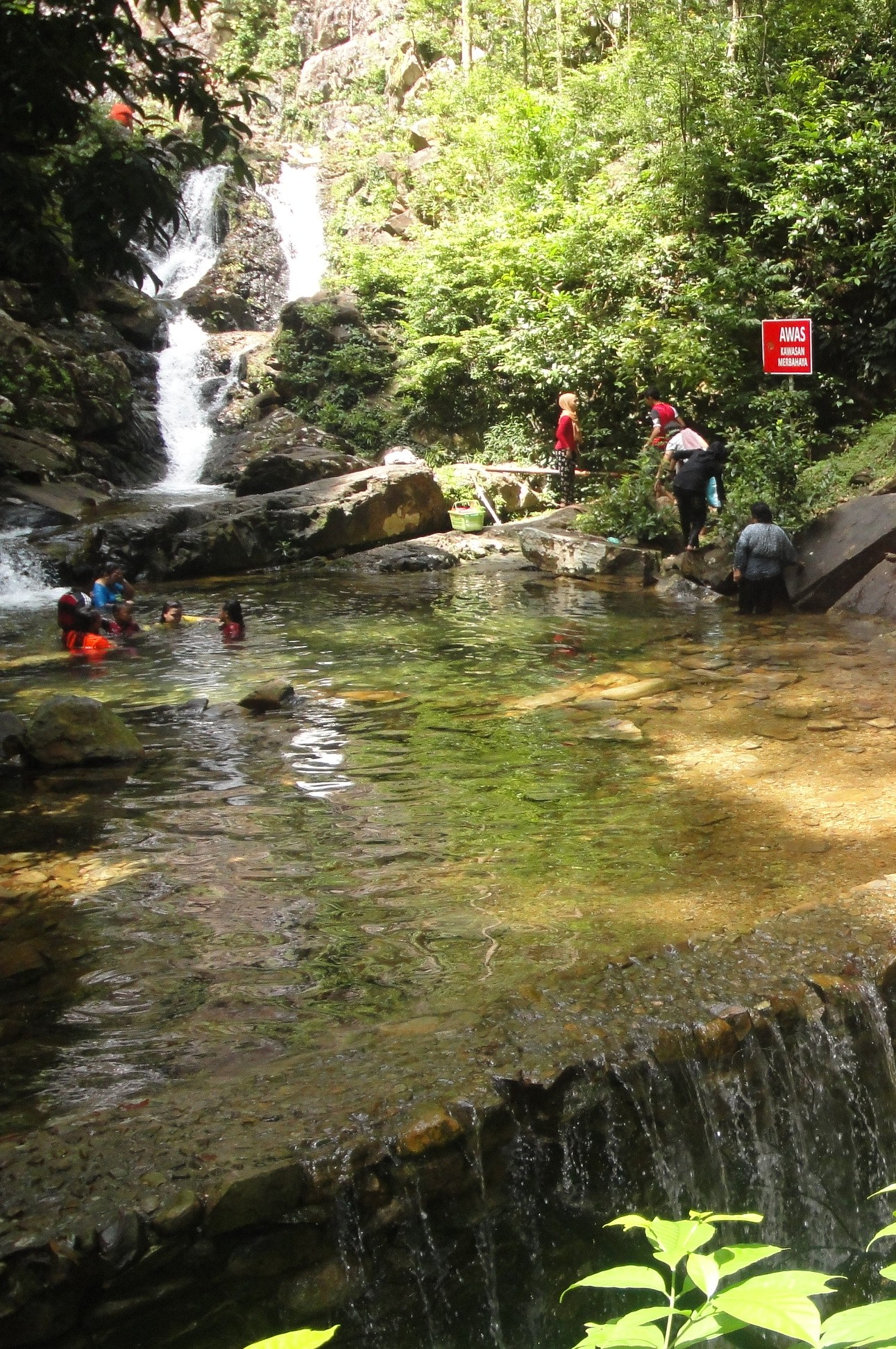
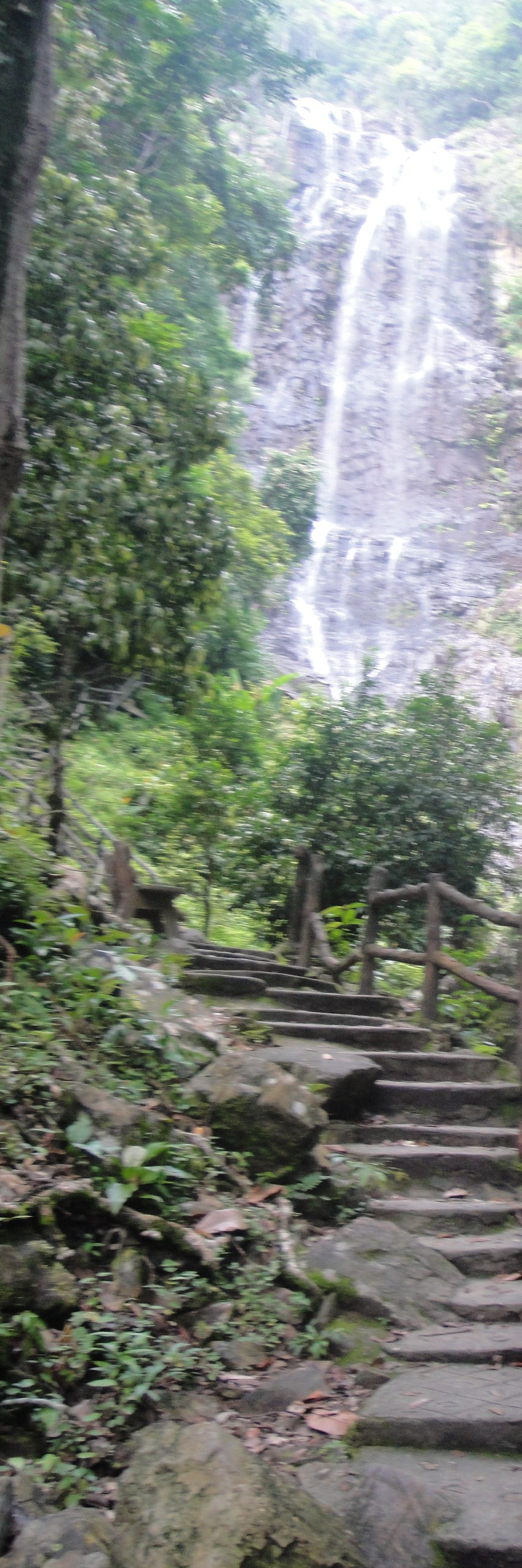
Next day was Friday and it was decided that we go to the Temurun Waterfall early and come back to the hotel before Juma Prayer Time. Temurun waterfall is in Datai Bay area of Langkawi. Since it was Friday we found difficulty in finding taxi to go to the waterfall. Finally, one elderly taxi driver agreed to take us there. It was around 30 minutes car drive from our hotel in Kuah. Temurun waterfalls are three tier falls totaling a drop of 200 meters making it the highest waterfall in Langkawi. There is a car park along the main road. From the car park it’s a 5-minute walk stepped walk in the rain forests of Mount Mat Cincang to reach the lowest fall. The place is full of butterflies and there are some wild monkeys also. We were lucky as when it started raining heavily on the way to the waterfall. Due to rains, the waterfall was in full flow with water spraying all over. There were families bathing in the waterfall. The area is surrounded by tall rain forest trees making the whole place very beautiful. The uppermost part of the waterfall is the most beautiful. The cascading waters were a sight to behold. There is a pool at its bottom where the water falls and above and accumulates before going down. That is a good place to immerse oneself in water. The water was very cool and due to the water falling from quite height, there was mist everywhere creating a wonderful experience. We spent around two and a half hours at the waterfalls and thoroughly enjoyed our stay there.

Temurun Waterfall, Langkawi. Photo Credit & © Mohsin Aziz.
The pool formed at the bottom on topmost level at Temurun Waterfall. Photo Credit & © Mohsin Aziz.
Stairs leading all the way up to the top pool at Temurun Waterfall. Photo Credit & © Mohsin Aziz.

Across the road to the car park is the famous pebbles beach which I could not go as only one hour was left for Friday Prayers. By the time we reached hotel it was time for Friday prayers. Leaving family at hotel, I immediately left for the Mosque. As I came out of the hotel and was trying to find my way to the mosque, a taxi driver offered me to drop to the mosque as he was also going there to pray Juma. No need to mention that he did not take any money. Masjid Hana is the biggest mosque on the island. The khutbah (sermon) was PowerPoint khutbah. This was my first experience of PowerPoint khutbah. The Imam came to the mimbar (pulpit) with a laptop. There were many big television screens in every section of the mosque. The khutbah given by the imam was actually a PowerPoint presentation. It was easy for people to see and hear in every part of the mosque. It is common experience that the engagement level of the audience in more if they can see the speaker as compared to sitting in a corner from where they can not see the speaker. From that point of view, the concept of putting on screens in every part of he mosque and outside as well looked like a good idea. It was a new experience for me. After the prayer, i just stood outside for some time to see people coming out. There were a lot tourists from different parts of the world who had come to pray. I had a 10 minute walk around the mosque to see the mosque from outside. I came back walking to the hotel.

Kilim Karst Geo Forest Park

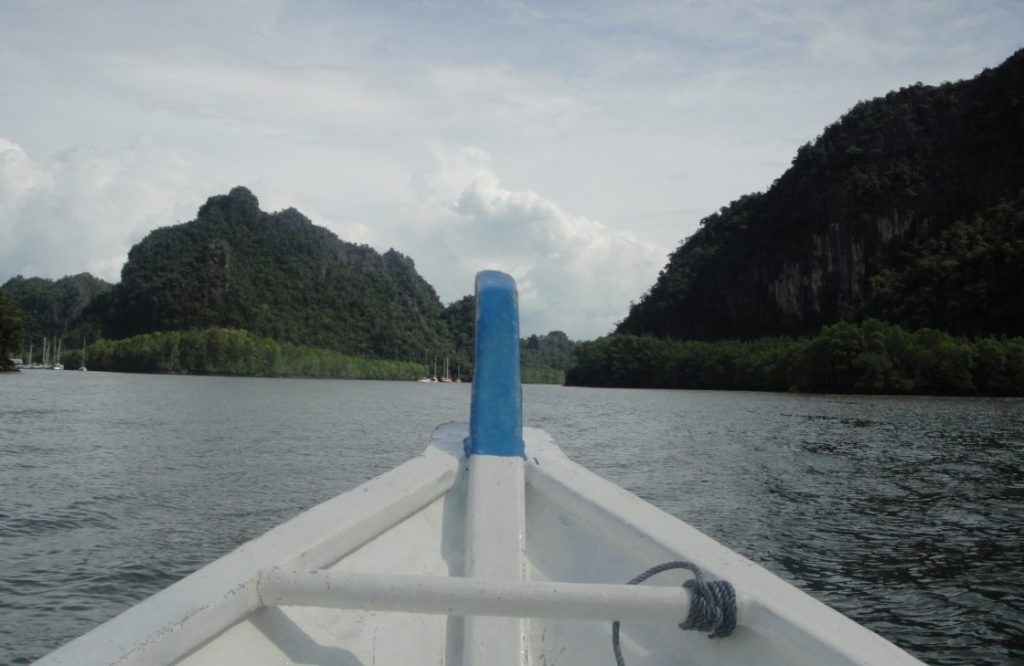
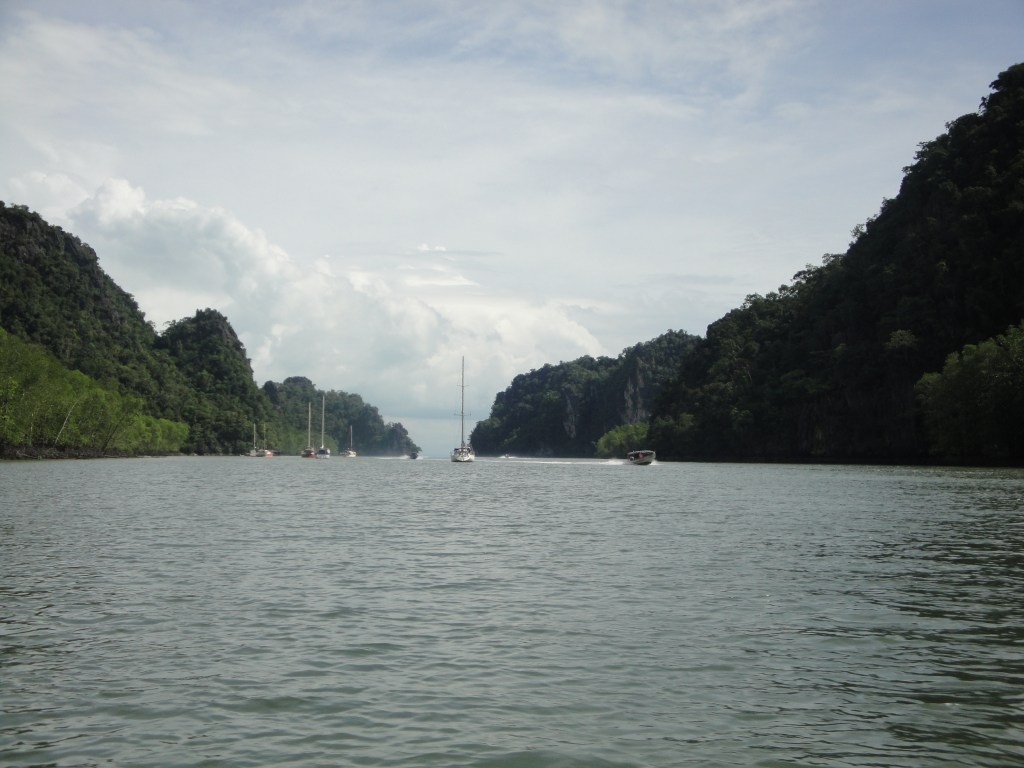
Kilim geo forest is located on the eastern side of the Langkawi island near Kilim village. It is about 100 square kilometers of mangrove forests, Kilim river, beaches, caves and Karst mountains arising out of the seabed. The estimated life the limestone mountains is around 500 million years. They are covered with thick rainforest trees. The trees are lush green making the whole place very soothing to the eyes. There are also numerous caves. Some of the famous caves are bat caves, crocodile cave and legend cave. The best way to explore the Geo Forest is to hire a boat and go around the various landmarks. Previous day while coming from Pentai Cenang beach, I asked the taxi driver about the Kilim Park. He not only provided necessary information but also offered to arrange a guided tour. I took his number. Back in hotel I checked the various guided tours offered and their prices and realised that the deal given by the taxi driver was quite reasonable as it also included pick and drop from the hotel to the park. I called him and fixed the time for the next day. Still I was a bit apprehensive. I was feeling what marketing guys called cognitive dissonance. I part of me assured me that I have made the correct decision while another part of me cautioned that I may not get what is promised. Anyway, next day he was dot on time. The drive to the geo forest from my hotel in Kuah took around 20 minutes. The road is surrounded by tall green trees making the journey all the more enjoyable. Once at the taxi stand near Kilim Village (named after the Kilim river), we met our guide for the day. Our guide, Abdul Rahman, was a young man of around 20 years of age. He spoke reasonably good English. We said goodbye to our taxi driver who told us that he has to go somewhere but will be back before our tour ended. Abdul Rahman took us to the jetty where his boat was docked. Our journey started in the emerald green waters of the Kilim river.

Journey begins on Kilim River, Langkawi. Photo Credit © Mohsin Aziz.
Limestone Mountains covered with Trees alongside the Kilim River, Langkawi. Photo Credit & © Mohsin Aziz.

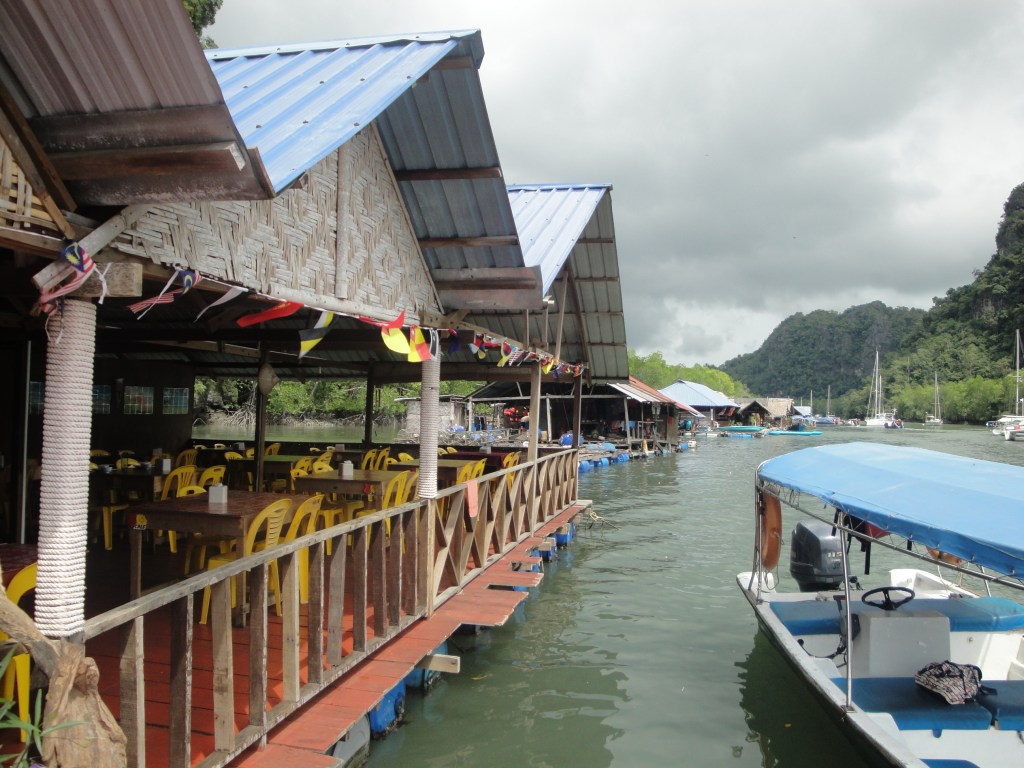
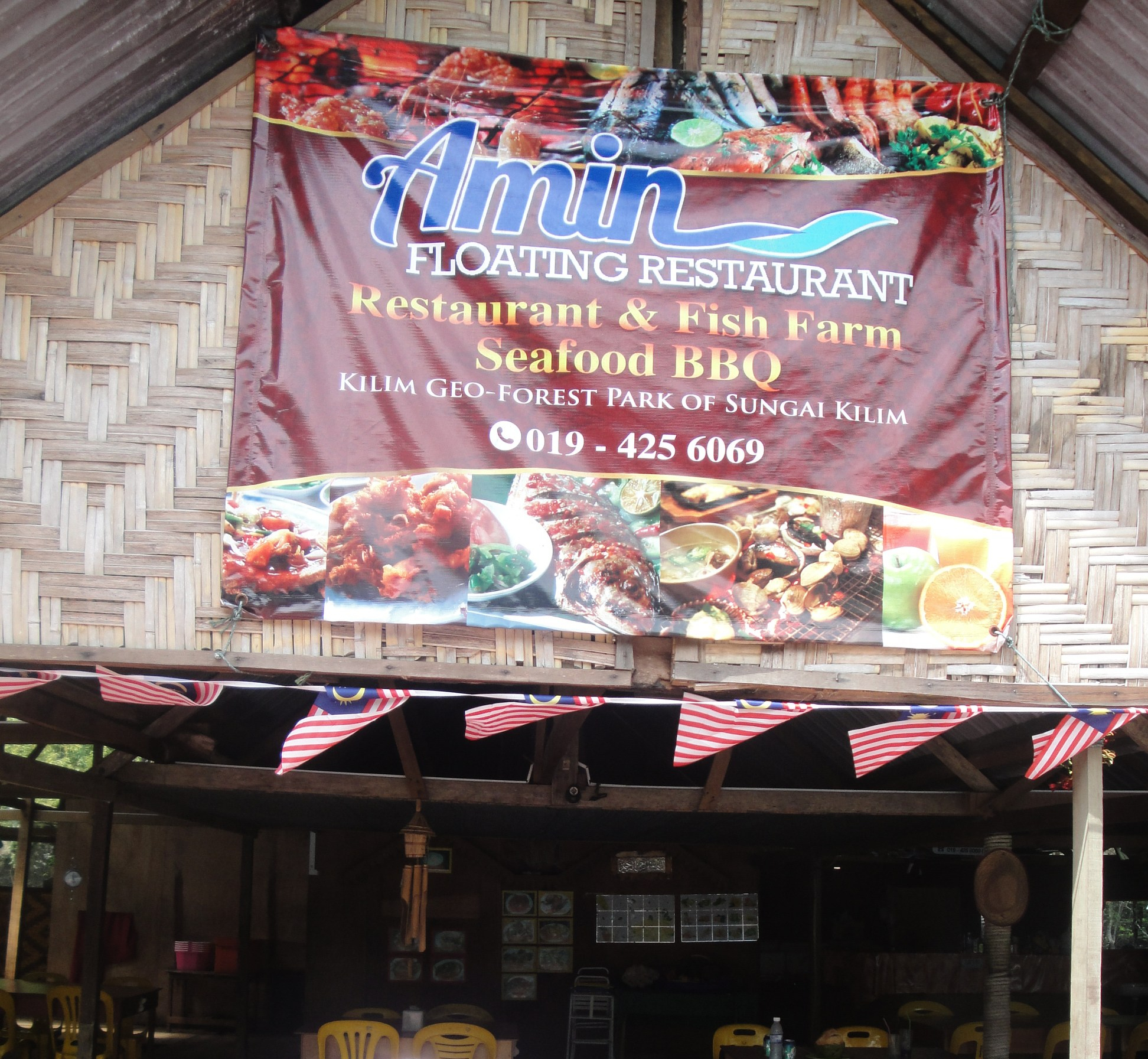
There are numerous floating restaurants and floating fishing farms on the Kilim river. Our first stop in the river was a floating fish farm cum restaurant. The name of the restaurant was Amin Restaurant. It was also a floating fish farm. The owner, Mr. Daud was very welcoming. He was friend of Abdul Rahman. That’s common for tour guides any where. They get a percentage of sale for bringing in customers.

One can choose fish from the various containers on the boat where fish farming is done and carry on the tour. By the time, one comes back the fish is fried and ready to be enjoyed. I decided not to eat fish but we took some sandwiches, fresh coconut water and coffee.

One of the floating restaurants on the Kilim river. Photo Credit & © Mohsin Aziz.
Amin Floating Restaurant and Fish Farm on Kilim River. Photo Credit & © Mohsin Aziz.

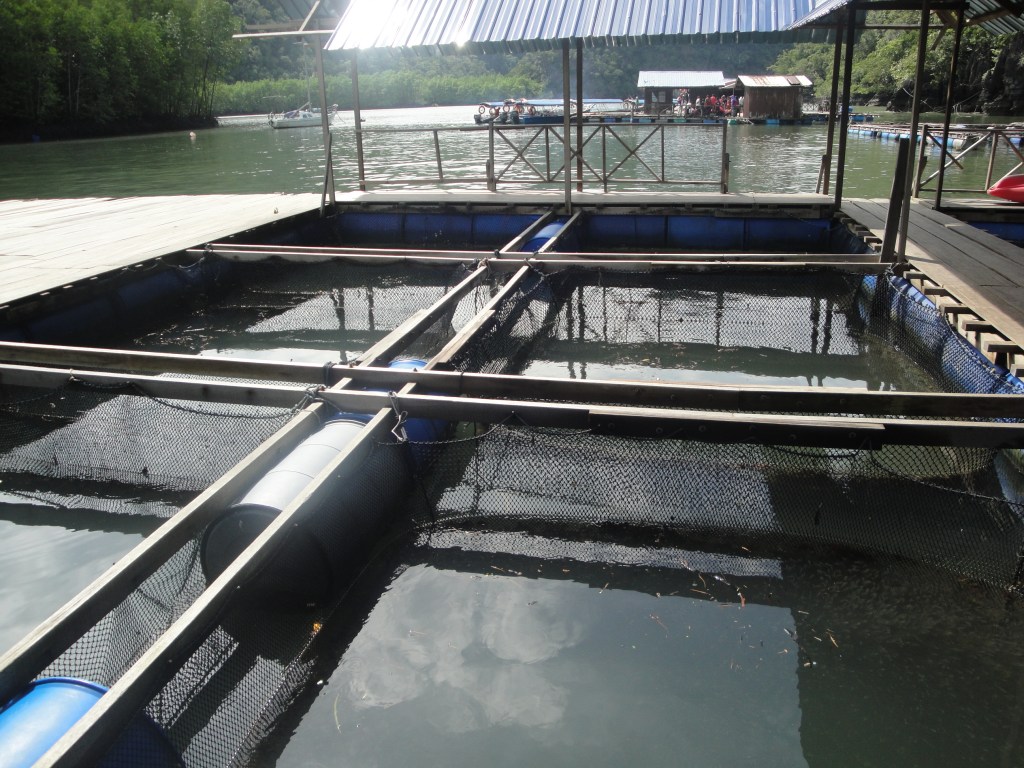
Mr. Daud was kind enough to show us the various stages of fish farming on his floating farm. There were various tanks submerged in river water from the boat but the fish could not go out as there were mesh around them. In these floating farms the owners don’t have to worry about water as fishes are in there natural habitat. Smaller fishes are kept in containers on the boat. When they are big enough, they are kept in these mesh nets. There was one container in water which had only four fishes. We came to know that those were pet fish of Mr. Daud. Each one had a name and they responded when Mr. Daud called out their names. They were Khadija, Aisha, Abdullah and Abdul Rahman. There were crabs and other varieties of edible sea creatures that were farmed there.

Fish Farming at Amin Restaurant and Fish Farm on Kilim River, Langkawi. Photo Credit & © Mohsin Aziz.
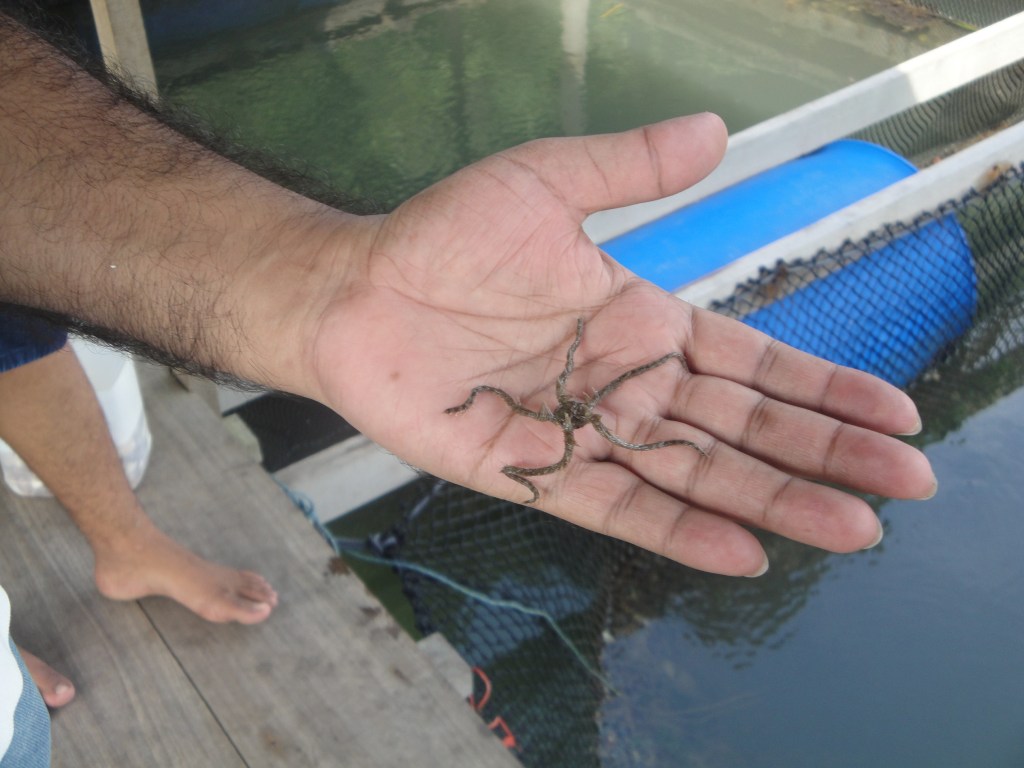
I don’t know what i am holding in my palm on the Amin Floating Fish Farm, Langkawi. Photo Credit & © Mohsin Aziz.

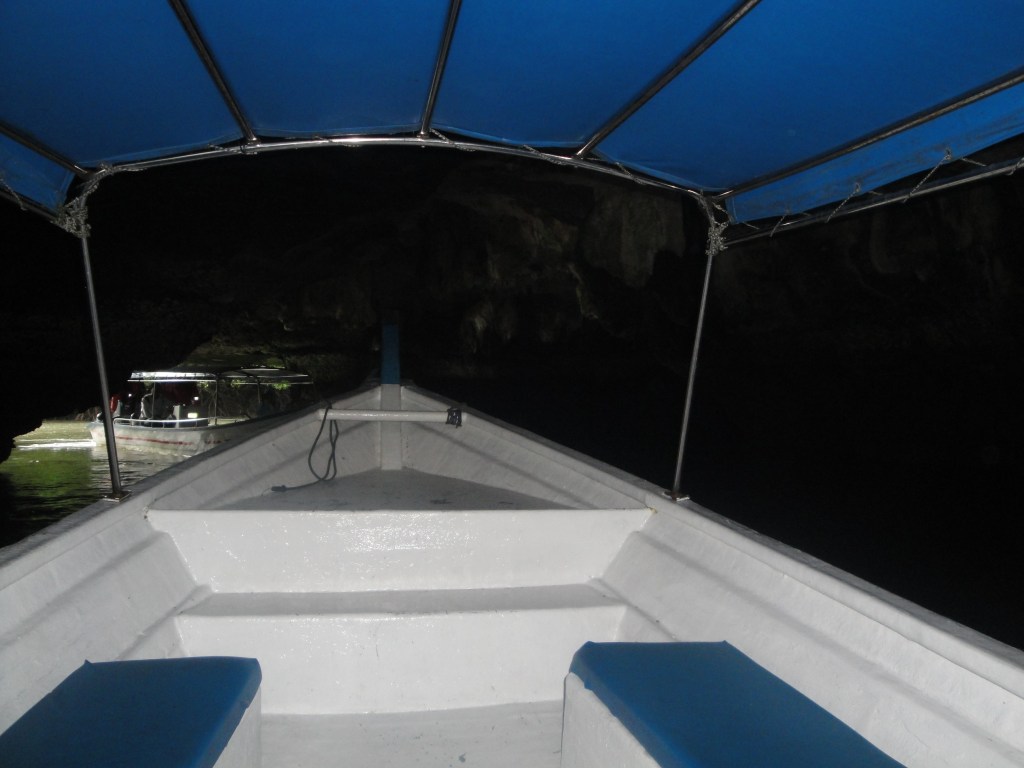
From the floating restaurant we were taken to the crocodile cave. There are crocodiles in the Kilim river. However, crocodile cave has been just named after crocodiles. It is not special meeting place for Kilim crocodiles. The roof of the crocodile cave is low and hence it can not be accessed by boat during high tide. Yes Kilim river has high and low tide like oceans and seas. Kilim river is connected to the Sea of Andaman and hence the tides along with the sea. Luckily when we reached the crocodile cave, it was low tide and our boat was able to go inside. It is a group of few small mountains which are hollow from below at certain points thus creating caves. We were all afraid looking for crocodiles but there was none to be seen.


Our Boat inside the crocodile cave. Its day time and almost dark inside. Photo Credit & © Mohsin Aziz.

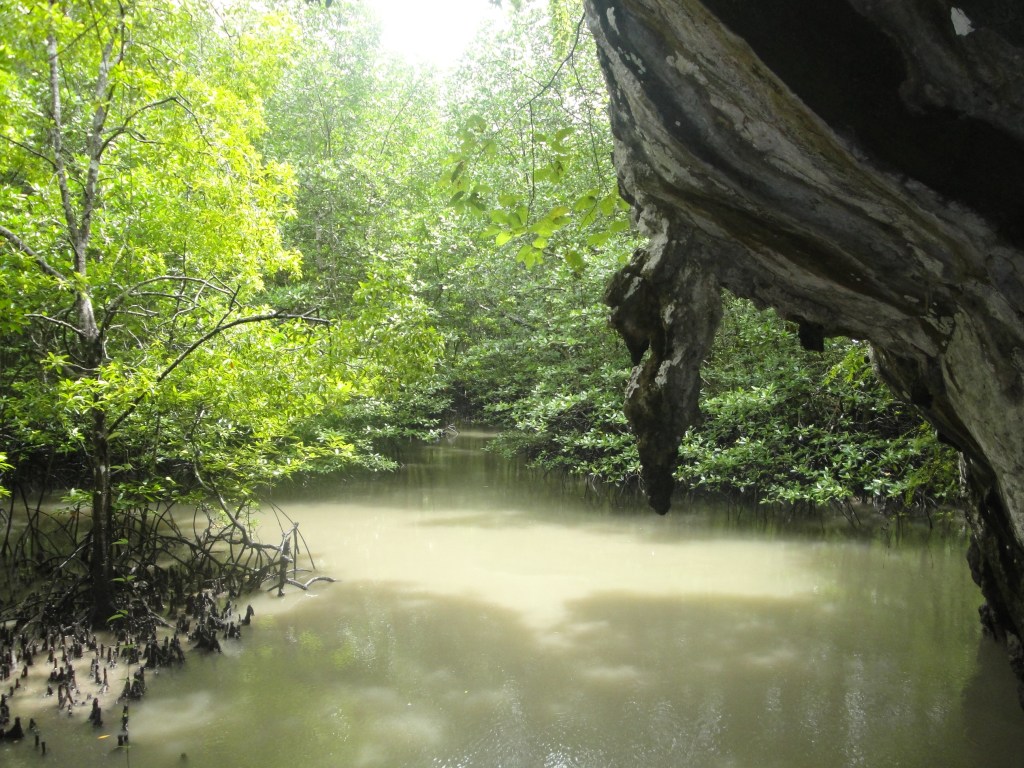
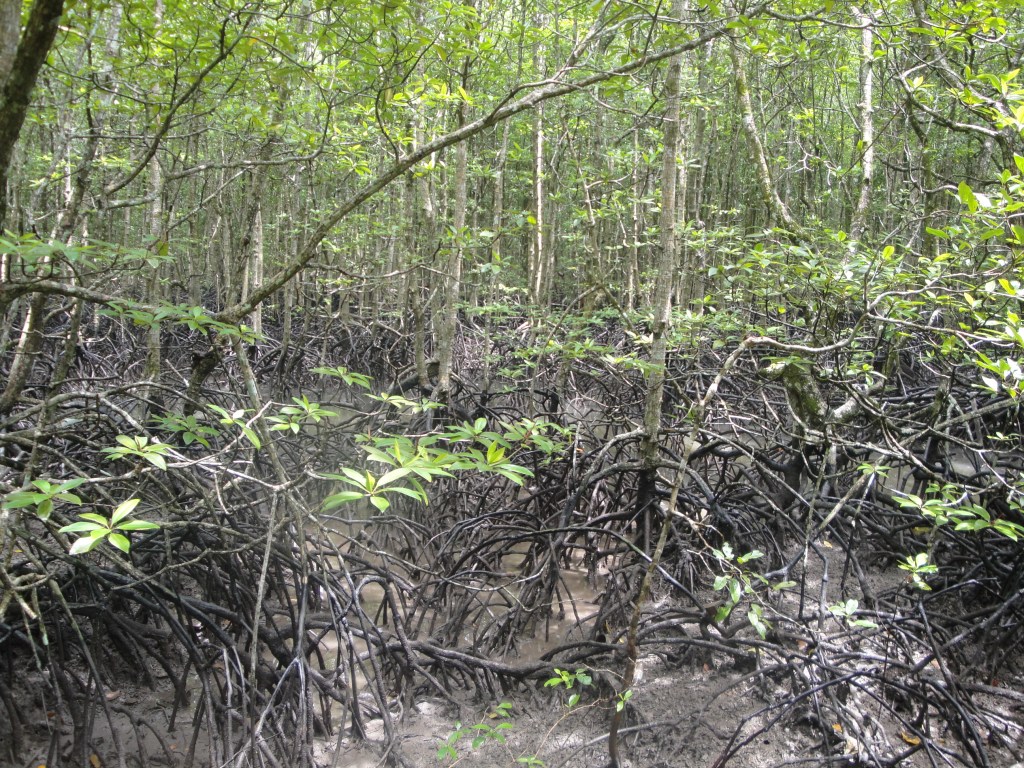
There are mangroves and limestone Karst mountains on both sides of the Kilim river. The mangroves are partially submerged plants which grow in saline and brackish coastal water. They are an important part of ecosystem and protect the area around them from flooding. They have to ability to store vast amount of carbon and are a key to combat climate change.

Our boat coming out of the cave and entering the mangroves. Photo Credit & © Mohsin Aziz.
Mangroves in Kilim Geo Park, Langkawi. Photo Credit & © Mohsin Aziz.

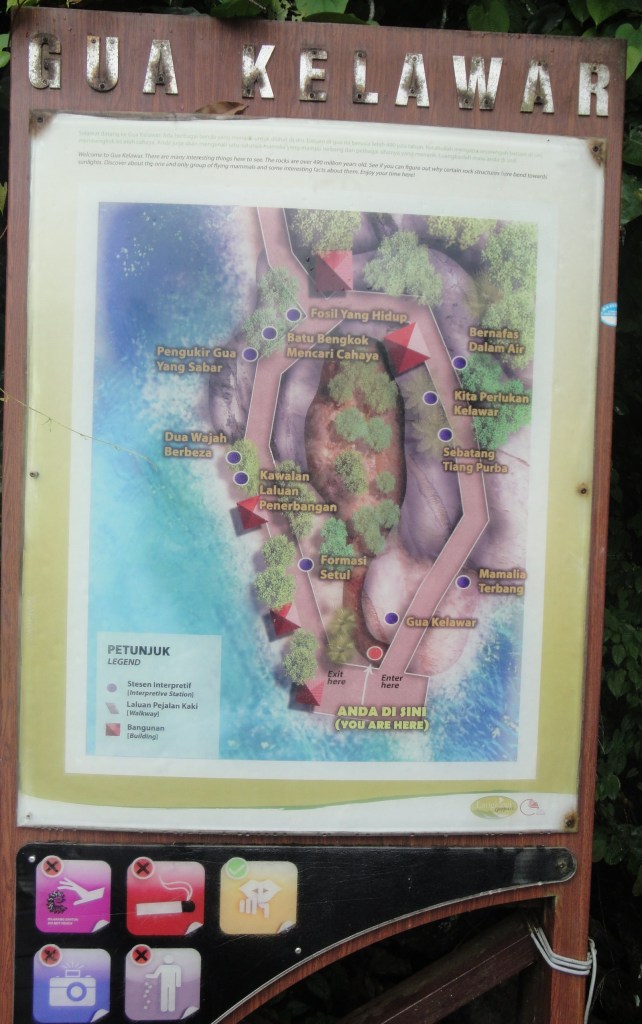
A little later we entered the Gua Kelawar (the bat cave). We were given torches by our guide to see bats inside as the cave as the cave is pitch dark inside.

Map of Gua Kelawar (Bat Cave) Trail at the entrance of the cave. Photo Credit & © Mohsin Aziz.
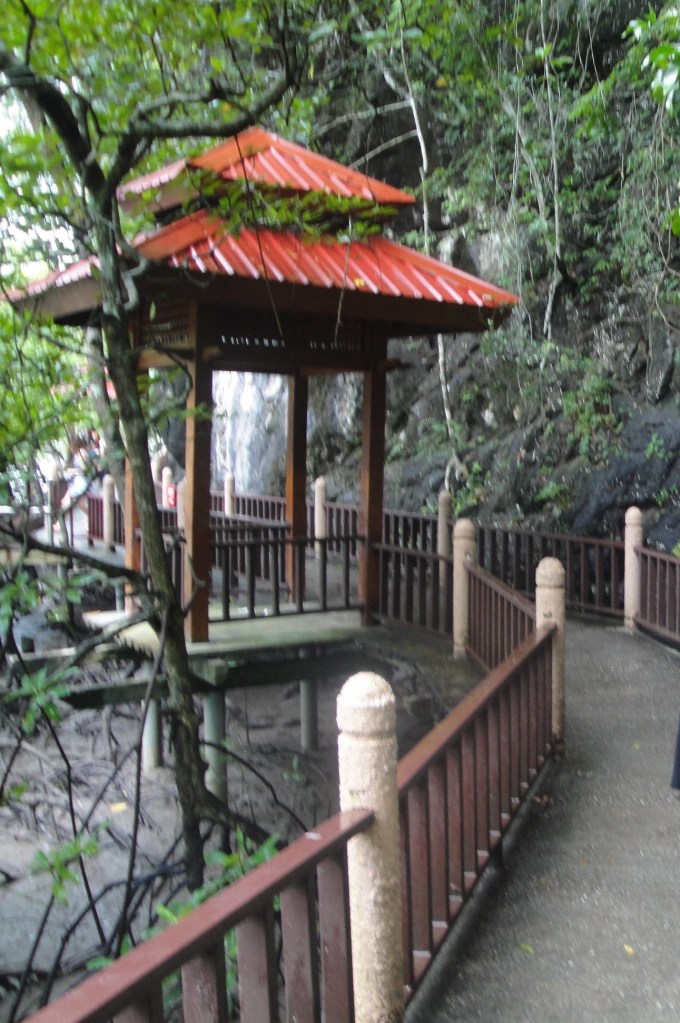
Wooden bridge which meanders through the mangrove at Kilim Geo Forest. This is also the route to the Bat Cave. Photo Credit & © Mohsin Aziz.

The route to the bat cave is through a wooden bridge which makes its way through the mangroves. The bridge has places to stop and take rest. The rest places are strategically located along the route and gives tourists time to not only rest but also marvel at the mangroves. We entered the bat cave with one more family. It was pitch dark inside. Even torch lights were not enough. When we put the torchlight on the roof of the cave we could see thousands of bats hanging upside down from the roof.

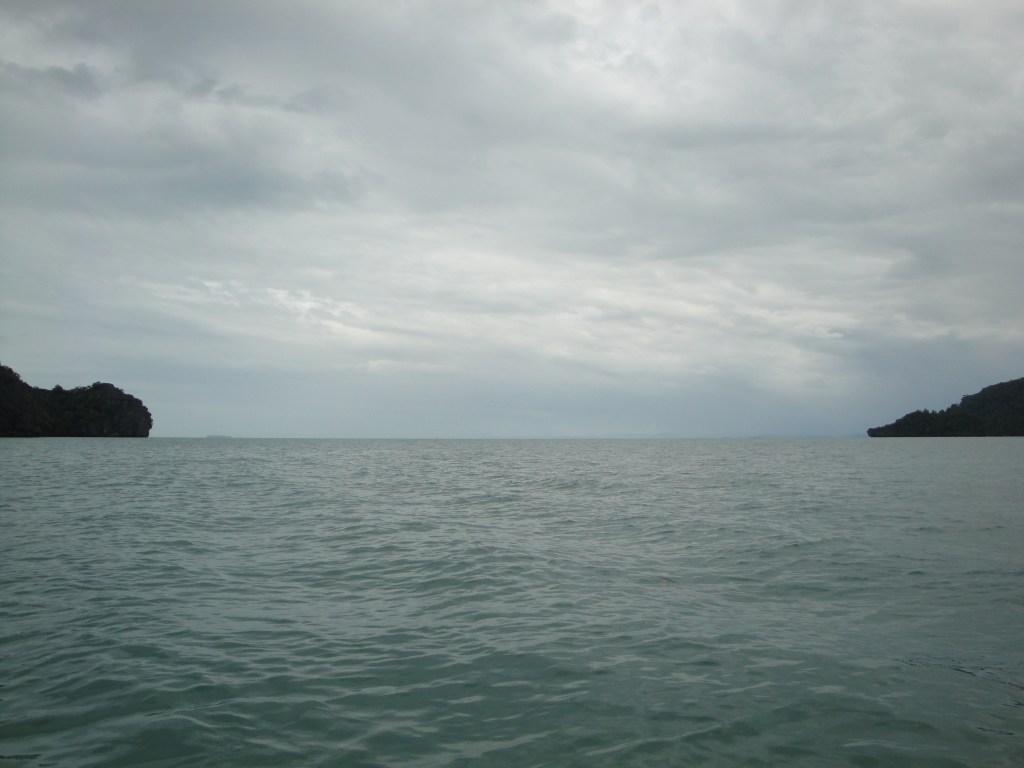
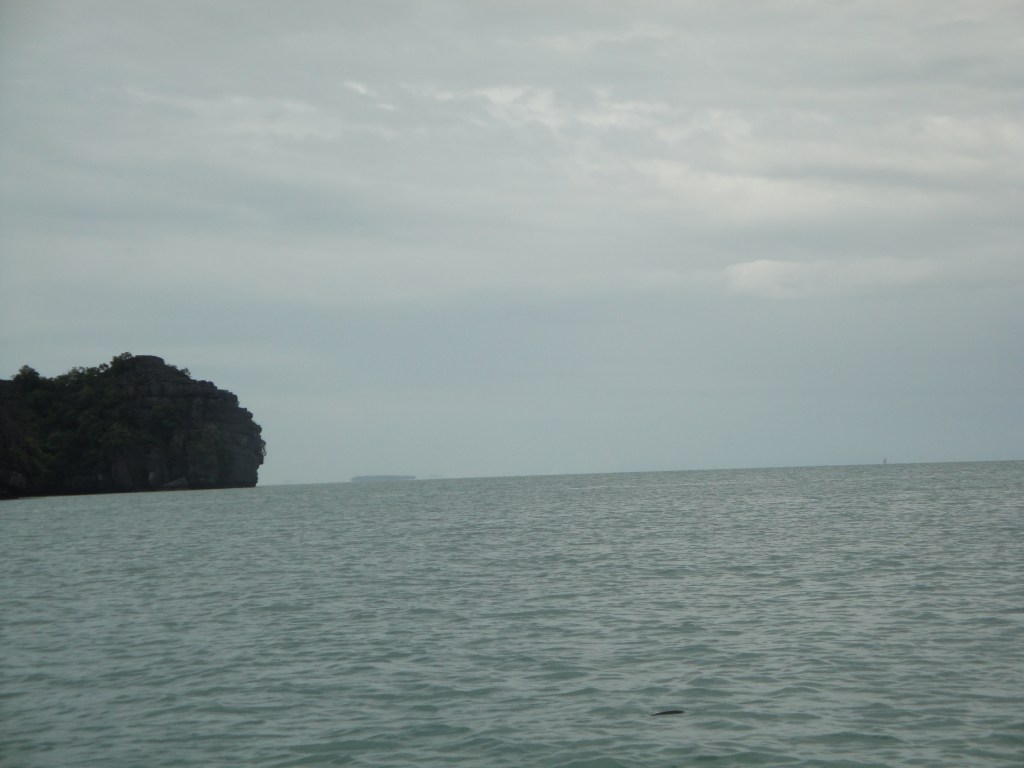
After our tour of bat cave was time to go out in the Andaman Sea. The Kilim river is surrounded by Karst Mountains on both the sides. However at one end there is an opening through which the river merges with the Andaman Sea. While we were going to the open sea, it started to rain. In the beginning it was only a drizzle however within ten minutes there was quite heavy rain with winds. The boat started to rock. Thankfully, our boat had a cover at top. I could see people in other boats getting totally drenched as their boats were open. We were worried as this was something new for us. Sitting in a small rocking boat with heavy rain and winds. I told Abdul Rahman to return back but he was very calm. He said that it was rainy season and the rain was not heavy. But after fifteen the rain became really heavy and we started our return journey. While returning we saw a lot of Kites and brown Eagles swooping down into the river to catch fish. By the time we came back to the jetty it was four hours and we did not even realise how time just flew away. Our taxi driver was waiting for us at the taxi stand as promised. We bid goodbye to Abdul Rahman and came back to hotel.

Hole in the wall. The point which connects Kilim River to Andaman Sea. Photo Credit & © Mohsin Aziz.
Kilim River meeting Andaman Sea. Photo Credit & © Mohsin Aziz.
Finally we are in the Andaman Sea. Photo Credit & © Mohsin Aziz.

By the time returned to our hotel it was evening. We were all tired and decided to spend some time in hotel before venturing out at night for dinner. We took a taxi and told him to take us to any restaurant which served North Indian dishes (yes it was a very particular request). He took us to Pentai Cenang area which had lots of restaurants. We went to one called Mumbai and had a nice North India Paneer dish along with Chicken Biryani. Another day we came to the same area and went to Taj Mahal restaurant which serves very good Mughlai and Arabic dishes. In fact, the restaurant had two separate dining areas with Indian and Arabic decorations. They served really good Shawarma and Chicken Kadahi.

Sky Cab

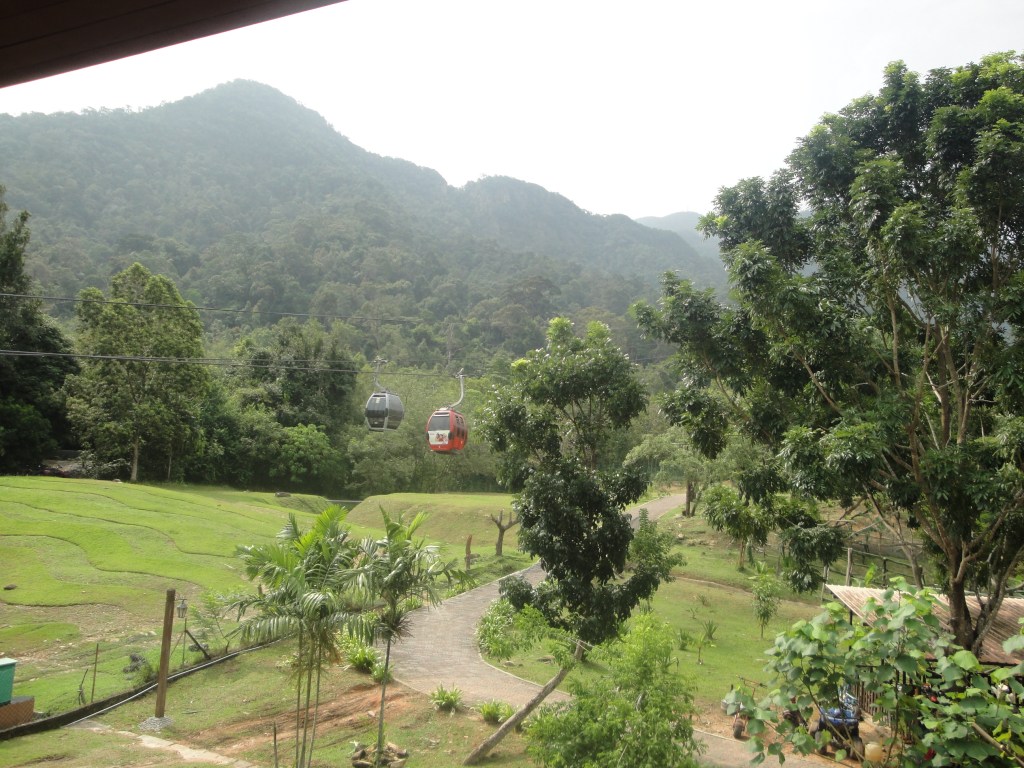
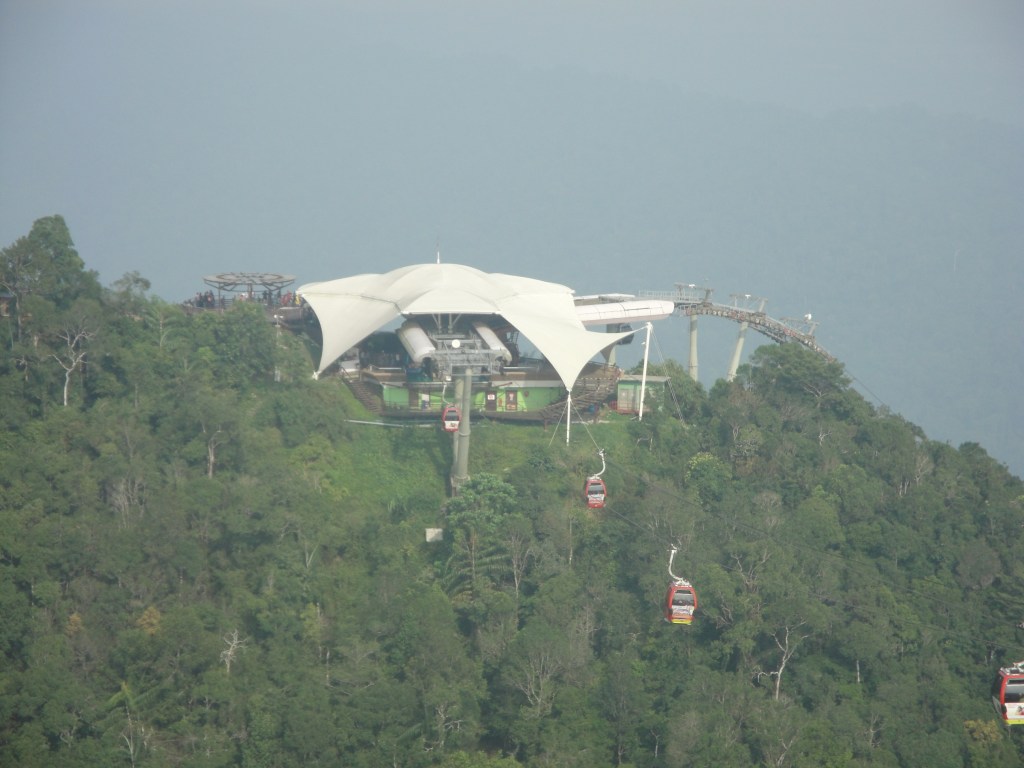
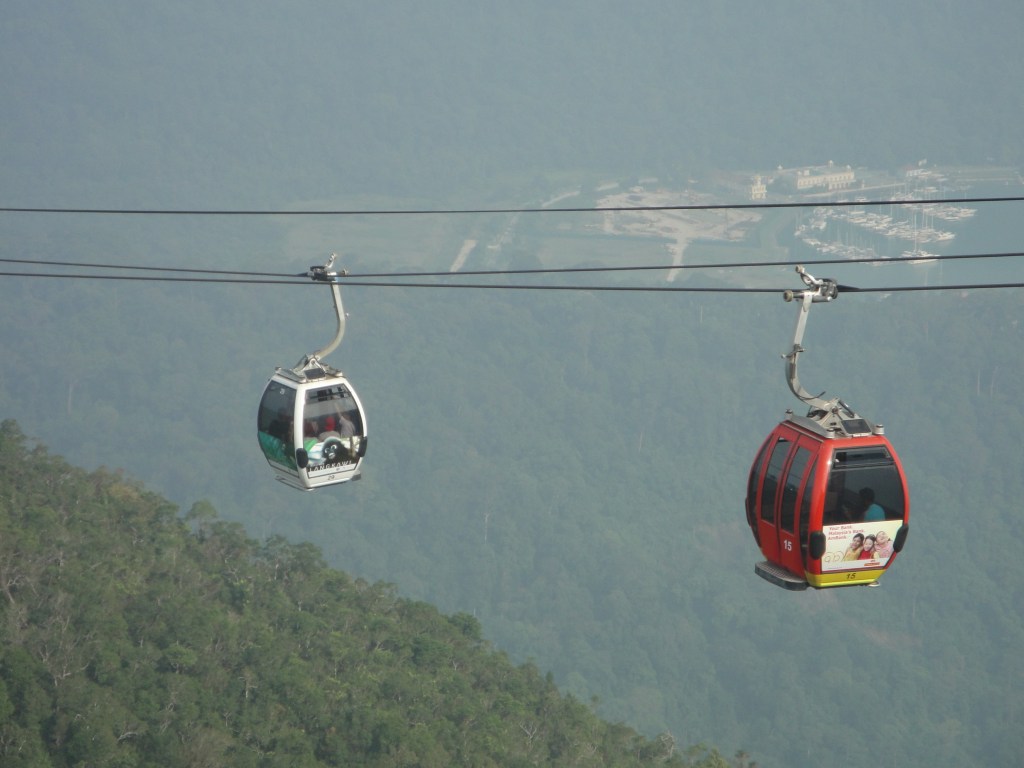
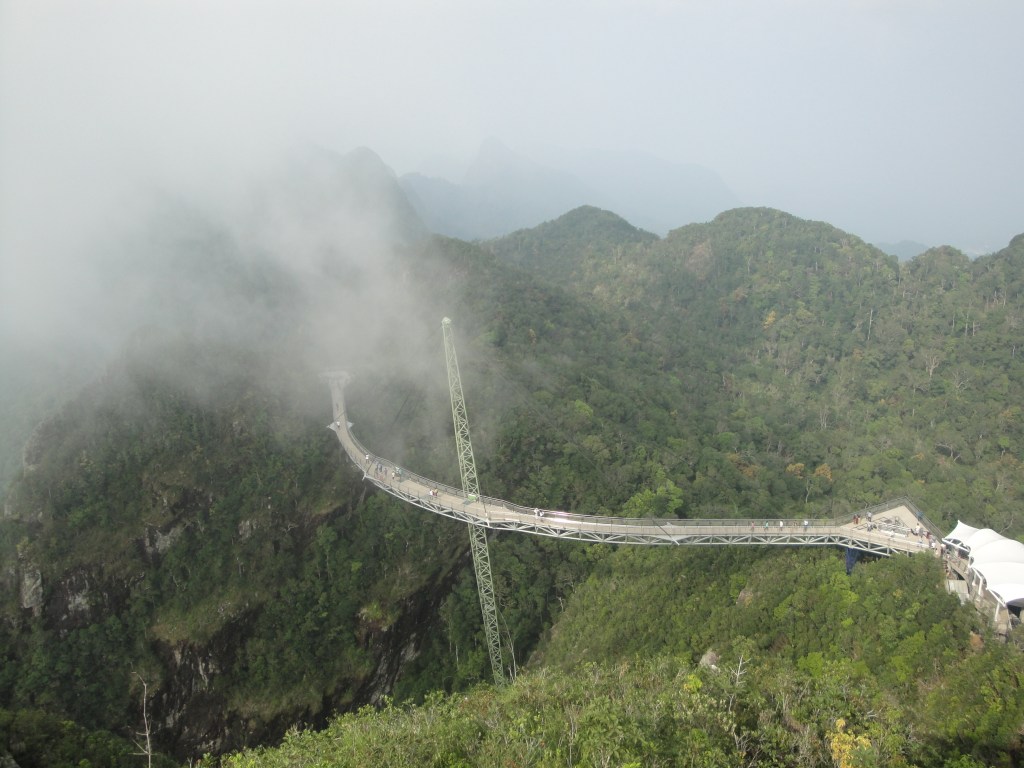
The Sky Cab in Langkawi is a feat of engineering. This is one of the must do activity in Langkawi. The ticket cost also included a 5 minute Sky Dome 3 D show which to me looked like a waste of time. The ride itself was amazing with very nice view of the island while going up. The entrance is through oriental village which has lots of activities and restaurant also. The tickets start from 35 RM which seemed very reasonable. There are express lane tickets also which put you ahead of the line but they come at a cost. The view from the top is amazing. Surprisingly the upward journey was more scary as compared to coming down which is very smooth. One up at the station, it mist all around with very cool Sea breeze coming from Andaman Sea. Langkawi sky bridge is accessible from the top station. In face one has to go down the Mountain from the top station to reach Langkawi sky bridge. The steps are very slippery and become even more during rainy season. Langkawi sky bridge connects two mountains and is perhaps the most photographed Langkawi landmark. Camera is allowed and there is no fees for bringing camera. One on the sky-bridge, the mobile starts picking signals from Thailand and we started getting messages welcoming us to Thailand and what numbers to add for calling home (i.e. Malaysia). The same happened during boat ride from Kilim to Andaman Sea. Thailand is across Langkawi.

Ground Station of Sky Cab. Photo Credit & © Mohsin Aziz.
Sky Cab station at the top. Photo Credit & © Mohsin Aziz.
On the way to the top. Photo Credit & © Mohsin Aziz.
Famous Langkawi Sky Bridge. Photo Credit & © Mohsin Aziz.
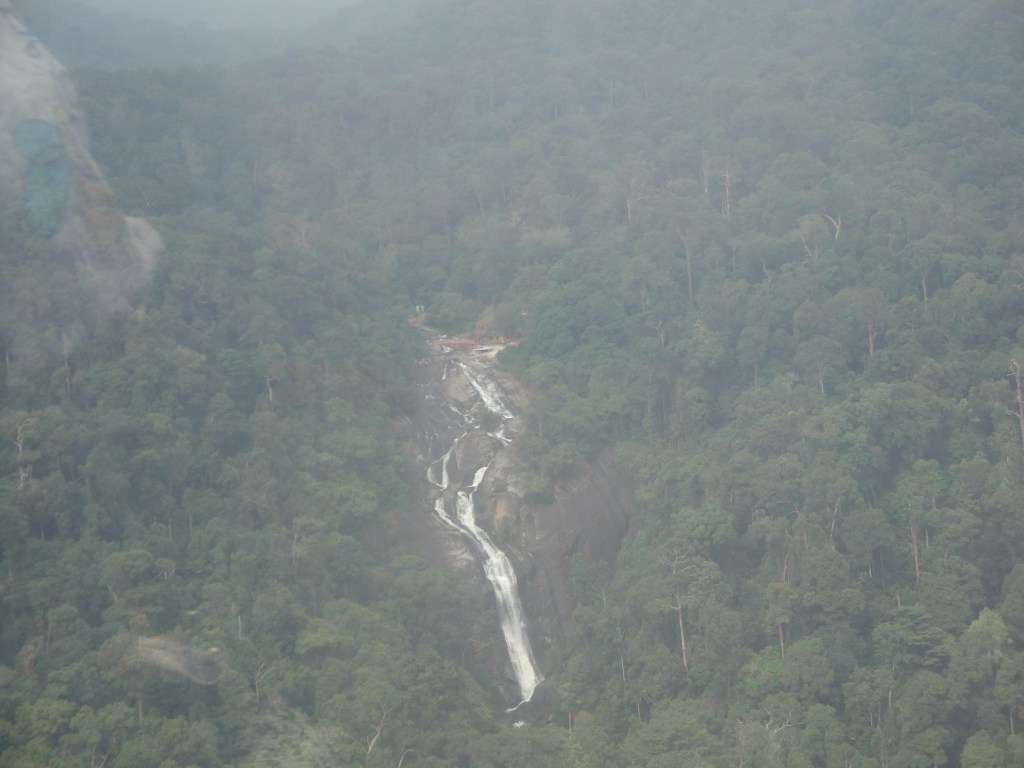
Seven Sisters Waterfall as seen from the Sky Cab. Photo Credit & © Mohsin Aziz.

On our down journey we could see beautiful waterfalls. The most famous being the seven sisters. I could not visit it, but saw it from the sky cab. It is called so because it forms seven ponds at different levels while dropping from almost 90 meters. Maybe I can visit it some other time in future if luck takes me again to Langkawi. There is no doubt that of all the places that I have visited so far, Langkawi is one where me and my family would like to go again. Whenever, we think of Langkawi, we think of a peaceful laid back island with lush green rain forest trees, drizzle and cool breeze. It indeed is a beautiful place.

Note: This journey took place in September and October 2015. Written during lock-down of 2020 from notes.