From CAB to CAA

The Rajya Sabha on Wednesday i.e. 11 December 2019 passed the Citizenship Amendment Bill or CAB. It was previously passed by the Lok Sabha on Monday i.e. 2 December 2019. The bill was signed by the President of India on Thursday i.e. 12 December 2019, thus making it Citizenship Amendment Act or CAA.

According to the act, the members of Hindu, Sikh, Buddhist, Jain, Parsi and Christian communities who have come from Pakistan, Bangladesh and Afghanistan till 31 December 2014 citing persecution shall not be treated as illegal immigrants but given Indian Citizenship. The six communities identified in the Act will be given Indian Citizenship after 5 years. Earlier the duration was 11 years. The Act also gives immunity to illegal immigrants if they are facing legal cases. However, the act will not be applicable to the Assam, Meghalaya, Mizoram and Tripura as included in the schedule six of the Constitution. The Act will also not apply on areas covered under Inner Line Permit or ILP as notified under Bengal Eastern Frontier Regulation, 1873.

A large section of the population in the states of Assam and Tripura are opposing the act saying that the act nullifies the provisions of the Assam Accord of 1985. They also fear that if citizenship is granted to illegal Bengali speakers (both Hindu and Muslim), it will undermine their culture and language. It is pertinent to mention here that the Assam Accord fixed March 24, 1971 as the cutoff date for deportation of illegal immigrants irrespective of religion. The Assam Accord was signed by the Government of India, Government of Assam, All Assam Students’ Union (AASU) and Assam Gana Sangram Parishad in 1985 after years of protests in Assam. The present protests in Assam are only against CAA and not against National Register of Citizens or NRC.

Slowly the protests spread to other parts of the country. However, the tipping point came with police assault on the students of Jamia Millia Islamia University in Delhi and subsequently on Aligarh Muslim University at Aligarh. The reports point out the brutality of police on the defenseless students of both the Universities. There are claims and counter claims from the students and the police. Both the educational institutions have been closed till January 5, 2020. Uddhav Thackeray has on record compared the police attack on Jamia Millia Islamia to the Jallianwala Bagh massacre. A fact finding team by human rights activist, Harsh Mander, described the attack on the students of Aligarh Muslim University as more brutal than even Jamia. There has been a long list of colleges and universities where protests by students have been registered against police assault on Jamia Millia Islamia and Aligarh Muslim University. Some of the prominent Universities that have joined the protest against CAA are Madras University, Punjab University, Pondicherry University, Nadwatul Ulama, Punjabi University, Osmania University, Jawaharlal Nehru University, Delhi University, Jadavpur University, Indian Institute of Technology (Madras), Mumbai University, Indian Institute of Technology (Mumbai), Tata Institute of Social Sciences, Indian Institute of Management (Bangalore), Indian Institute of Management (Ahmedabad), Aliya University etc.

NRC was first done in Assam as per the Assam Accord. The whole process was monitored by the Honorable Supreme Court of India. It was Assam specific exercise. However, the results of the NCR were not to the liking of many and hence the CAB (now CAA) was brought in. Yes, standalone CAA may not be damaging to a section of Indian population. However, when used in conjunction with NCR it becomes lethal. It would allow the filtration of Muslims because NCR assumes one to be a non-citizen and it is left to the person to prove that he / she is a citizen. However, the CAA allows Citizenship to everybody except Muslims. Even otherwise, prima facie, the CAA is against the provisions of the Constitution of India, particularly, Article 14. Article 14 of the Constitution of India states that “The State shall not deny to any person equality before the law or the equal protection of the laws within the territory of India”. By leaving out the Muslims from its net, it contradicts this basic principle of the Constitution. The Honorable Supreme Court of India has accepted the plea of concerned citizens to look into the legality of the Act. However, chances that it would be declared null and void by the court look slim. In the meantime, the Union Cabinet has approved to create a National Population Register (NPR). Many argue that NPR is nothing but old wine in new bottle. It is another method of implementing NCR by a different name.

It is worth remembering that the Honorable Supreme Court of India has refused to stay the implementation of CAA 2019. However, it has issued notice to the central government on a batch of petitions challenging the constitutional validity of the Act. A bench headed by the Chief Justice of India said that the matter will be heard in January when the apex court opens after winter break. Now all eyes are on the Highest court of the land to bring closure to the matter.

References and for more information, please see:

http://timesofindia.indiatimes.com/articleshow/72498580.cms?utm_source=contentofinterest&utm_medium=text&utm_campaign=cppst

India Today (2019, December 12) What is Citizenship Amendment Bill: All you need to know about CAB. Available at: https://www.indiatoday.in/india/story/citizenship-amendment-bill-all-you-need-to-know-about-cab-1627516-2019-12-11. Accessed on 12 December 2019

Economic Times (2019, December 2) Citizenship Amendment Bill passed in Lok Sabha. Available at: https://economictimes.indiatimes.com/news/politics-and-nation/lok-sabha-passes-citizenship-amendment-bill-2019/articleshow/72447352.cms. Accessed on 12 December 2019.

Times of India (2019, December 12) Citizenship (Amendment) Bill gets President’s accent, becomes Act. Available at: https://timesofindia.indiatimes.com/india/citizenship-amendment-bill-gets-presidents-assent-becomes-act/articleshow/72498580.cms. Accessed on 13 December 2019

The Wire (2019) ‘More Brutal Than Even Jamia’: AMU Fact Finding Report Accuses UP Police of Violence, Islamophobia. Available at: https://thewire.in/government/amu-caa-protests-up-police. Accessed on 23 December 2019.

Apurva Vishwanath. & Kunain Sheriff M. (2019, December 23). Explained: What NRC+CAA means to you? Available at: https://indianexpress.com/article/explained/explained-citizenship-amendment-act-nrc-caa-means-6180033/. Accessed on 23 December 2019.

https://timesofindia.indiatimes.com/india/wont-roll-out-cab-2-non-bjp-states/articleshow/72499408.cms

https://globalnews.ca/news/6301241/india-protests-citizenship-bill-explainer/

https://indianexpress.com/article/explained/explained-how-to-be-a-citizen-of-india-earlier-now-6165960/

Times of India (2019, December 18) Available at: https://timesofindia.indiatimes.com/india/sc-decides-to-examine-constitutional-validity-of-citizenship-amendment-act/articleshow/72864701.cms. Accessed on 18 December, 2019

Gulf News (2019, December 18). India: Supreme court issues notices to Centre on petitions challenging CAA validity. Available at: https://gulfnews.com/world/asia/india/india-supreme-court-issues-notices-to-centre-on-petitions-challenging-caa-validity-1.1576650901831. Accessed on 19 December 2019.

https://en.wikipedia.org/wiki/Citizenship_(Amendment)_Act,_2019

https://en.wikipedia.org/wiki/Citizenship_(Amendment)_Act,_2019

https://www.nationalheraldindia.com/blog/blog-questions-i-would-like-to-put-to-honorable-amit-shah-on-caa-and-nrc-2

https://www.nationalheraldindia.com/blog/blog-questions-i-would-like-to-put-to-honorable-amit-shah-on-caa-and-nrc-2

https://timesofindia.indiatimes.com/india/granting-citizenship-is-centres-call-states-have-no-say-experts/articleshow/72564874.cms

https://www.indiatoday.in/mail-today/story/shaken-and-stirred-from-punjab-to-tamil-nadu-caa-fire-singes-india-1629201-2019-12-18

https://thewire.in/politics/rajasthan-opposition-citizenship-amendment-act-ashok-gehlot

https://www.thehindu.com/news/national/kerala/rival-fronts-bury-differences-join-hands-against-caa/article30324285.ece

https://www.thehindu.com/news/national/p-chidambaram-interview-citizenship-amendment-bill-is-a-clear-signal-a-blunt-signal-to-muslims/article30289448.ece?utm_source=taboola

https://www.thehindu.com/news/national/scientists-scholars-call-to-scrap-citizenship-bill/article30259403.ece?utm_source=taboola

https://www.thehindu.com/news/national/javed-akhtar-aparna-sen-swami-agnivesh-and-others-flay-cab-nrc/article30271214.ece?utm_source=taboola

https://www.thehindu.com/news/national/citizenship-law-discriminatory-against-muslims-un/article30300560.ece?utm_source=taboola

https://www.thehindu.com/news/national/citizenship-amendment-bill-united-states-legislators-express-concern/article30290519.ece?utm_source=taboola

https://www.thehindu.com/specials/understanding-the-citizenship-amendment-bill-2019/article30283717.ece?utm_source=taboola

https://timesofindia.indiatimes.com/entertainment/hindi/bollywood/news/dont-be-silent-dont-be-violent/articleshow/72862116.cms

https://timesofindia.indiatimes.com/entertainment/hindi/bollywood/news/dont-be-silent-dont-be-violent/articleshow/72862116.cms


Gravestones and Sebils of Istanbul

Before visiting Turkey, I had no idea about the importance of either gravestones or sebil in the history and culture of Turkey. However, while strolling on the streets of Istanbul, particularly in Sultanahmet and Eyup districts, I saw a lot of graves with unique tombstones. Similarly, I saw a lot of Sebils, some still functional, some dysfunctional, some broken and some with great design depicting the architecture of their times.

Gravestones

Most schools of legal interpretation in Islam do not look favorably either at concrete grave or gravestones. However, during my recent visit to turkey I found out that gravestones are an integral part of Turkish culture. In turkey there is a whole culture and tradition of tombstone art. Most of them are like a mini biography of the diseased. According to the French Novelist, Andre Malraux, Ottoman tombstones make “death warm up to life”

One of the most iconic is the tombstone of Ibrahim Pasha who died in 1725. He was a Kaptan i Derya (Naval Captain). His tomb shows a captain with an anchor, rope and broken mast. It is symbolic of captain entering a ship that will take him to his destination in next life the way it took him to his destination in this life.

The graves of different Sufi orders and their dervishes can also be distinguished from different colour of clothes and coverings on the grave. For example, round hat on the gravestone signifies Sufi of Bektashi order. Different colours are also used to signify different professions such as green colour is used for scholars and leading scientists. Similarly, broken rosebud signifies a young female.

It’s not only the design of the gravestone and the art on it but what is written is also important. Sociologists and historians can decipher a lot from the writings on gravestones. Here is a small sample of some of written words on the gravestones of Istanbul.

  • See, what these gravestones tell you,

          One lie ended here and one truth has begun


  • “Oh visitor, this young women lying beneath this stone was one of those cleanest, purest and smartest. The fate laid her on the soil that you are beholding now. This rare flower, which death picked when she was young, was one of the finest examples of intellect and chastity. Recite Al Fatehah for her innocent soul. 26 January, 1910. Wednesday.”


  • “It is He who is permanent

         Come, oh my Effendi, fix your gaze on my gravestone

         If you are smart enough, act wisely

        I used to wander all around, see what happened to me?

       I died in the end, a gravestone erected upon me”


  • I hid, I didn’t say, I secretly put my trouble to sleep

          Every life shall taste death”


And the best one which I liked a lot is this one:

  • “WHY! Are we killing each other? If we wait for a while, we’ll all die!”


Most of the gravestones not only mention the name of the deceased but also the date of birth and date of death. And yes, please don’t be confused when you find that according to their birth and death dates on their tombstones you end up calculating the age of the departed soul as 200 years or more. This confusion is because on many tombstones different calendars are used for writing the date of birth and date of death. It is common to find the date of birth mentioned according to the Hijri Calendar while the date of death mentioned according to the Gregorian Calendar and vice versa. This creates confusion regarding the age of the dead. I asked my guide but he could not give me any satisfactory answer. Newer gravestones don’t have this confusion.

 Sebil

Turkey has a long tradition of Sebils (in Urdu also the word sabil or sabeel is used for the same meaning. It may be one of the many Turkish origin words in Urdu). A sebil is a kiosk where drinking water is distributed to the passerby for the purpose of getting sawab. Sometimes sweetened drinks are also distributed. The earliest of example in Istanbul is Efdalzade Sebil constructed in 1496. Sebils were traditionally constructed at the gate of the Mosques or at important road crossings to help the travelers. It is said that Istanbul had well over 1000 sebils before piped water was supplied to the residents. Sebils served an important social function as the whole neighborhood gathered to collect water from them. Once piped water was supplied, sebils lost their importance.

Sebils were constructed either by Sultans or their viziers or their mothers, wives, daughters and sisters. Rich people and their household also participated and contributed generously in the construction of sebils. Despite losing their utility over the years, still some beautiful sebils are present all over Istanbul. These sebils not only supplied clean drinking water to the residents but are also great pieces of architecture in many cases. Their architecture reflects the changing styles over the centuries. Some of the more well-known and beautiful sebils (cum fountains. Fountains are called selsebil or Cesmesi) of Istanbul are:

  • Uskudar Ahmet III: It was constructed by Sultan Ahmet III in the year 1728 situated at Uskudar square of Istanbul. It is made of marble. It is decorated by calligraphy of verses from famous Diwan poets.
  • German Fountain: Also known as Alman Cesmesi (does it sound like urdu word chasma for fountain?). It was gifted by the German Kaiser, Wilhelm II, to mark his visit to Istanbul to meet Ottoman Sultan, Sultan Abdulhamid II in October 1898. It was actually built in Germany and transported to Istanbul piece by piece and reconstructed in 1900. The interior is covered with the tughra (symbol) of Sultan Abdelhamid II and Wilhelm II.
  • Ahmed III Sebil: It is situated in front of the Bab-i.Humayun of the famous Topkapi palace and has really unique architecture. It was built in 1728 by Sultan Ahmed III. It has floral motifs and calligraphy on it.
  • Tophane Square Sebil: This is another historical sebil with beautiful architecture in Beyoglu District. It was constructed by Sultan Mahmut I in 1732. It was restored in 2006.
  • Saliha Sultan Cesmesi: This fountain was built by Saliha Sultan, wife of Sultan Mustafa Han. It was built in 1732. The story of Saliha Sultan and the building of the fountain is stuff of fairytale.

Besides these there are many small sebils at many places. Most of them are nonfunctional but each one has a story to tell of the years gone by.

For references and more information please see:

  • Sumner-Boyd, Hilary; Freely, John (2010). Strolling Through Istanbul: The Classic Guide to the City. New York: Tauris Parke Paperbacks.
  • Kahraman, M. (2018). The causes of the formation of sebil and fountain in Istanbul and the effects of these constructions on the city of Istanbul. The Journal of International Social Research, Vol. 11, Issue 59, October. Available at: https://www.academia.edu/37628292/THE_CAUSES_OF_THE_FORMATION_OF_SEBIL_

AND_FOUNTAIN_IN_ISTANBUL_AND_THE_EFFECTS_OF_THESE_CONSTRUCTIONS_

ON_THE_CITY_OF_ISTANBUL. Accessed on 22 November 2019.

The tomb of Hazrat Abu Ayyub Al Ansari (RAA) at Eyup Sultan

Istanbul has lot to offer to a tourist. Very few cities in the world can claim history and display history the way Istanbul does. There are innumerable places of historical importance from Byzantine era to Ottoman era. One such place is Eyup Sultan or Eyup (that’s how Ayyub (RAA) is written in Turkish). Eyup Sultan is a municipality and a district of the city of Istanbul extending from Golden Horn all the way to the shores black sea. It is an historically important district for Turks. It is also one of the important stop on the itinerary of most tourists to the city of Istanbul. Eyupsultan district derives both its name and importance from the presence of turbe (Turkish for grave) of Hazrat Abu Ayyub Al Ansari (RAA). In Turkish it is called Eyup Sultan Turbesi (meaning the grave or tomb of Abu Ayyub). I realised that the Urdu word turbat meaning grave or tomb has come from the Turkish word turbe. Allama Iqbal’s poem “Syed ki lohe turbat” is a good example of that. Here Syed refers to Sir Syed Ahmad Khan. During my recent visit to Turkey, I visited the Eyup Sultan on 9 August 2019.

Hazrat Abu Ayyub Al Ansari (RAA) was a companion of the Prophet Mohammad (SAW). His name is Khalid ibn Zayd ibn Kulayb. He was a prominent Ansar (Helper) who hosted the Prophet (SAW) after Prophet’s Hijra (Migration) from Mecca to Medina. The story of Hazrat Abu Ayyub Al Ansari (RAA) becoming Prophet’s host is interesting one. When the Prophet (SAW) migrated from Mecca to Medina, it was the wish of every Ansar to host Prophet (SAW) at his house. While the companions were eager, the Prophet (SAW) declared that he will stay in that house where his She Camel (Qaswa) will sit. Qaswa stopped and sat in front of the house of Hazrat Abu Ayyub Al Ansari. Thus he became the Prophet’s host in Medina till Prophet (SAW) got his own house built.

Hazrat Abu Ayyub Al Ansari (RAA) participated in the campaign to capture Constantinople. It was the first Arab siege of Constantinople. The year was 670. He died during the campaign. At that time his age was about 80 years. During that campaign Muslim armies were unable to capture Constantinople. It was later captured and renamed Istanbul. On his deathbed Hazrat Abu Ayyub Al Ansari (RAA) wished to be buried as near to Constantinople as possible. As per his wish the Muslim army buried him deep inside enemy territory near the walls of the then Constantinople city.

Today his trube is an important place for many in Turkey. The words “EYYUB EL ENSARI (Hz.) TURBESI” are written above the entrance door. There are dresses available for ladies to cover themselves before entering the turbe. On entrance one finds a glass enclosure which contains the hair of the Prophet (SAW). I am not sure about it. There are many places all over the world which claim something similar. I saw something similar at Hazratbal shrine in Srinagar also. After the Prophets (SAW) relics is the turbe and next is the exit door. I saw lots of Turks, particularly, standing and praying in front of the turbe. 

Once the Ottomans captured Constantinople, the turbe of Hazrat Abu Ayyub Al Ansari (RAA) became an important place in the Ottomans scheme of things. It is outside the city walls near the Golden Horn. A mosque was built next to the tomb and it is called Eyup Mosque. The Eyup Mosque was built by the famous Ottoman Architect Mimar Sinan during the reign of Mehmed the Conqueror. The main entrance to the Mosque carries the Quranic Verse “The Mosques of Allah shall be visited and maintained by such as who believe in Allah and the Last Day” (9:18, Al Qur’an). There is a courtyard in between the mosque and the tomb. The mosque of Eyup was used to host the coronation ceremony of the Sultans. Today the area surrounding the tomb and the mosque is called Eyup district. I was told by my tour guide, Mr. Serkan (True Blue Tour) that every Friday, a marching band plays Ottoman military music. It would not be out of place to mention that Ottoman military bands are thought to be the oldest version of marching bands in the world. I was also told that during the month of Ramadan people from various parts of Istanbul come to the Mosque for prayers and lot of shops come up and whole place becomes lively.

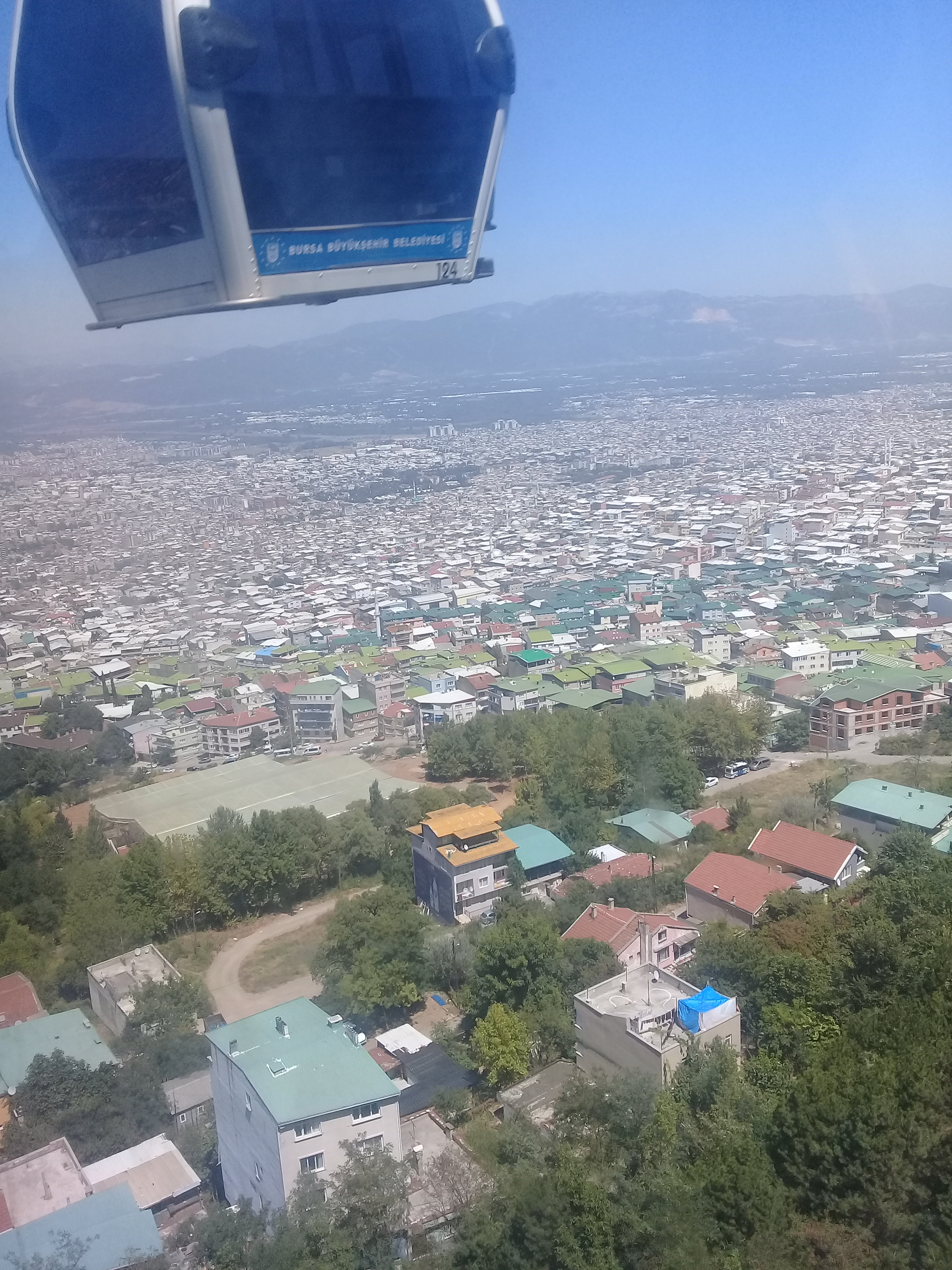
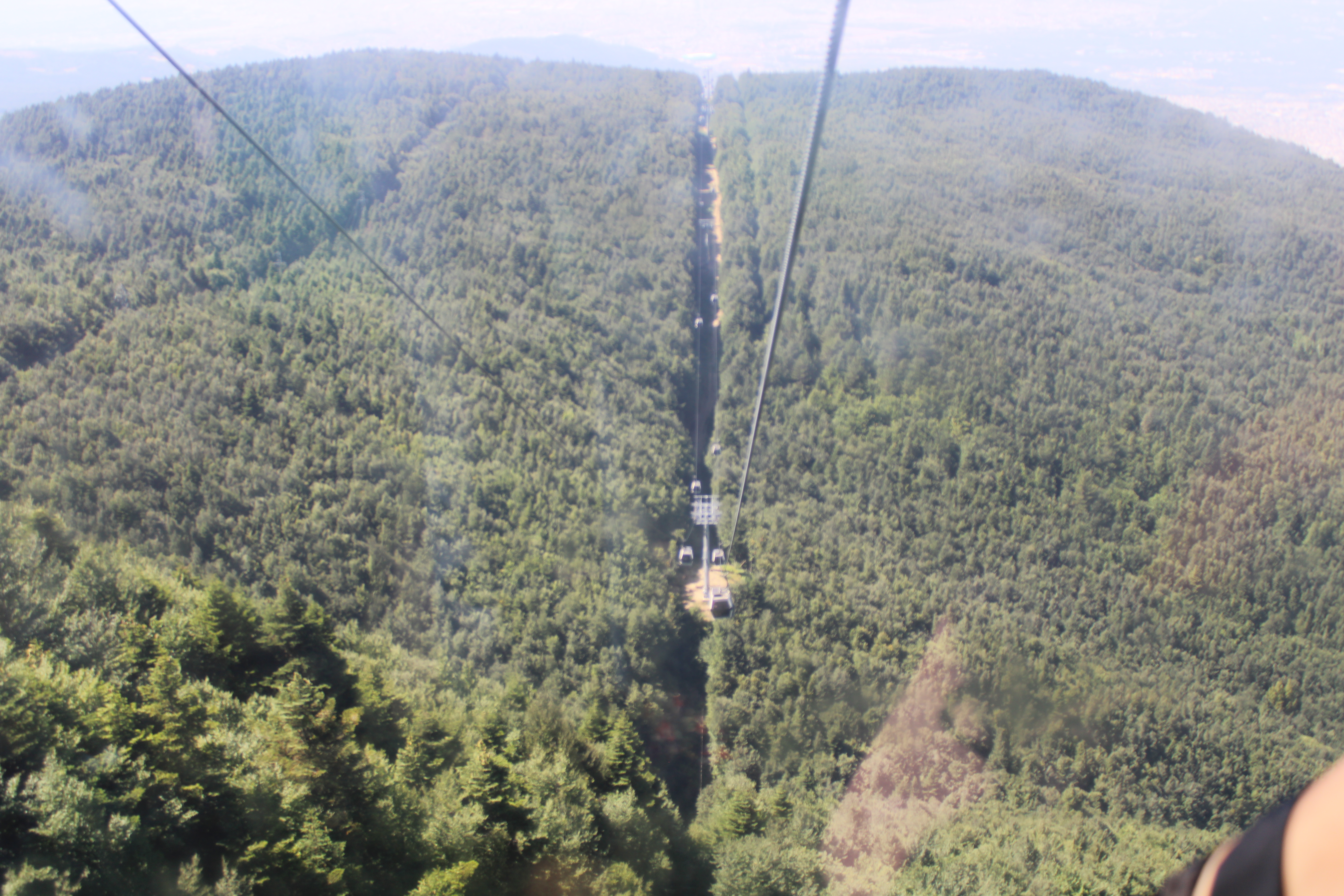
Besides the tomb and the Mosque, the Eyup district is also known for its graveyard. The graveyard is in the vicinity of the tomb. It was the ardent wish of those higher up in Ottoman hierarchy to be buried near the companion of the Prophet (SAW) thus making it the most sought after cemetery not only in Istanbul but in the whole of Turkey. Today it is not only the oldest but also the biggest cemetery in Istanbul. One peculiar feature of graves in Turkey is the tombstone which is specially carved according to the profession and the position of the dead. There are different types of tombstones in the cemetery. The path behind the mosque leads to the cable car. A 2-3-minutes ride of the cable car will take you to another important Istanbul landmark – Pierre loti hill.

Note: I personally don’t visit individual graves. However, this was the grave of one of the most important Sahabi e Rasool (SAW). I do visit graveyard as per the hadith of the Prophet Mohammad (SAW). The visit allowed me to understand the importance of the place for Turks and its importance in the history of Turkey.

For reference and more details see:

49th National Day of Sultanate of Oman

Today is the 49th National Day of Oman. National Day of Oman is celebrated every year on 18th November. First National Day was celebrated in 1970 after His Majesty Sultan Qaboos Bin Said first ascended to power in that year. It is celebrated to commemorate the Omani Independence from Portugal. This year will be the 369th anniversary of independence from Portugal. It is also the 79th birthday of Sultan Qaboos Bin Said. This makes Oman one the longest independent countries in the world.

Like every year, streets across Muscat and the rest of Oman are decorated and lighted up in the colour’s of Oman’s red, white and green flag. This year the lighting installations are in the shape of musical instruments and musical notes besides the usual flower shaped installations. Royal Oman Police (ROP) has also allowed people to decorate their cars for a limited period of time to celebrate Oman National Day. As usual there will be lots of shows and activities including fireworks across the country. Most of the major shopping centers have announced 49 percent discount to mark the occasion. Internet giant google has  also joined in by putting Omani Flag as google doodle on http://www.google.com and chrome browser.

The next National Day will be special as His Majesty will complete 50 years as Sultan of Oman. Preparations have already started. Competitions have been already announced to choose the theme and logo. All the Omani citizens and residents of the Sultanate are encouraged to participate in it.

It would not be out of place to mention about the tremendous progress which Oman has made in the last five decades under His Majesty Sultan Qaboos bin Said. Today Oman is a stable and peaceful country. Oman has also made tremendous progress in the field of education. One thing which distinguishes Oman from many countries is the tolerance of Omani society towards people of other cultures and faiths. The population of Oman is around 4.5 million out of which around 2 million are expatriates from all over the world working and living peacefully and happily in Oman. Oman has peaceful relations with all the countries including its neighbors. It would not be out of place to mention that Oman follows the Ibadi madhab or maslak (i.e. school of fiqh) of Islam. Oman was one of the earliest regions to voluntarily accept Islam in the lifetime of the Prophet Muhammad (May Peace Be Upon Him).

Happy National Day to Oman. May Allah always shower His Blessings on this peaceful and beautiful country.


Azaan in Istanbul

Author: Mohsin Aziz

One of the highlights of any visit to Istanbul is to listen to the Azaan (Muslim call to prayer) or Ezan, as they call in Turkey. Istanbul is a city of Mosques with their distinct architecture. The city has more than 3000 Mosques.

Different places have different traditions of Azaan timing. Some cities, Azaan is given at the same time in all the mosques. Some cities there are differences of 10 or 15 minutes between different Mosques. Istanbul has a tradition of giving Azaan in continuity. Azaan will start in a Mosque and before it finishes, it starts in another Mosque and before that finishes it will start in some other and this continues reverberating the atmosphere for long time. This can be experienced in any part of Istanbul. However, the two most sought after places to experience Azaan in Istanbul are the Galata Tower and the area between Blue Mosque and Aya Sofia or Haagia Sofia. Many tourists to the city define these as their most memorable moments of their visit to Istanbul.

Azaan from Galata Tower

Azaan at Blue Mosque and Aya Sofia

Listening Azaan from Galata Tower

Galata tower is a medieval nine story tower in the Istanbul’s Galata / Karakoy district near the junction of Golden Horn with Bosphorus. The tower was built during the reign of Emperor Justinian. At that time, it was known as Christea Turris or the tower of the Christ and was also called Melagos Pygros or the Great Tower. At present the tower has a restaurant and café at the top from where one can enjoy the skyline of Istanbul. Listening Azaan from Galata Tower is a unique experience. Azaan comes from different directions and then there is Golden Horn on one side with sun setting in the distance in the waters. Tourists wait for long time to climb the tower to be there at right time to experience the magic.

Listening Azaan at Blue Mosque and Aya Sofia

Istanbul has lot to offer to a tourist. There is plenty to choose from Blue Mosque to Aya Sofia to Princess Island to Hazrat Ayyub Mosque to Pierre Lotti Hills. I had no idea that there is a sort of synchronized Azaan between Blue Mosque and Aya Sofia (Aya Sofia was a church built by Emperor Justinian I, later Ottoman Mosque and presently museum since 1935). Presently Aya Sofia is a museum and no prayers take place there but Azaan is still given five times a day. However, Azaan is given from a place just outside the Aya Sofia and not ftom inside. It was my tour guide Mr. Serkan ( True blue Tour) who drew my attention towards it. First the Muezzin at the Blue Mosque started the Azaan and stopped after first line. Immediately after the Muezzin at Aya Sofia started the first line and waited for the Muezzin at Blue Mosque to say second line. This continued till the complete Azaan was said. Because both are synchronised with each other and both the Muezzin’s wait for each other, the Azaan continues for many minutes. There were literally hundreds of tourists between the two historical places just waiting for the Azaan to start. I was there at time of Maghrib Azaan (Azaan given for prayers offered at sunset). Somehow that time lot of seagulls also came flying all over the place. Maybe because they get leftovers from tourists to eat. Seeing them circling over the Blue Mosque while listening to the beautiful Azaan was like seeing Angels descending on the Mosque to pray. It was a beautiful and surreal experience. This was, no doubt, one of the highlights of my tour of Istanbul.

On the lighter side, me and my family did pray Maghrib in Blue Mosque afterwards.


Supreme Court Pronounces Judgement on Babri Masjid

Finally, the judgement has come in the long drawn Babri Masjid case. As promised earlier by all the Muslim organisations, the decision has been accepted with grace and humility though, naturally, with sadness. There was a sense of despondency in some, sense of resignation in some and sense of relief for some at the final closure of the case. For most Muslims under 40 years of age, they have virtually grown up with the issue and are emotionally attached to it. It has to be remembered that the 16th century Mosque was destroyed on 6th December 1992 despite undertaking from state government to protect it.

Five Judges led by Chief Justice of India, Ranjan Gagoi, gave judgement on 9 November 2019 thus, hopefully, drawing curtains on the longest land dispute between Hindus and Muslim in Independent India. The other Judges were SA Bobde, DY Chandrachud, Ashok Bhushan and S. Abdul Nazeer.

The judgement puts an end to the uncertainty. While giving the 2.77 acre of land to the Temple, the supreme court accepted the assertions of the Muslim plaintiffs on almost every point except giving possession to the Muslims. The Supreme Court of India accepted most the arguments put forward by the Muslims such as:

  • Supreme Court accepted the Muslim assertion that the Archeological Survey of India report of 2003 does not prove that a temple was demolished to construct the Babri Masjid
  • Supreme Court also accepted the Muslim assertion that Ram Lalla can be a juristic person but not the Ram Janamsthan. However, the Court did not apply the law of limitation on Ram Lalla
  • The Supreme Court clearly accepted that the Muslims offered prayers in the inner courtyard.
  • Supreme Court accepted that the demolition of Babri Masjid was a violation of law.
  • The Supreme Court also accepted that the placement of Idols in the Babri Masjid on 22-23 December 1949 was an illegal act and an act of trespass.

Despite accepting almost every point raised by Muslims, the Supreme Court in its wisdom gave the final judgment in favour of a Ram Mandir. The final decision was based on the assertion by The Supreme Court that the Sunni Waqf Board has not been able to establish its claim of adverse possession. Looking at the operative parts of the Judgement, it seems that The Supreme Court has upheld the Majoritarian point of view, as pointed out by Faizan Mustafa, but it did reparation and invoked Article 142 of The Indian Constitution (Article 142 deals with the special powers of the Court) and directed the Uttar Pradesh Government to allot a 5 acre plot to Muslims to construct Mosque. The Court further said that the Mosque should be constructed at a ‘prominent site’. For the time being, the ownership of 2.77 acre that comprised the Mosque and courtyard have been given to the Government for a period of three months. The Supreme Court has ordered the Government of India to constitute a trust within three months to oversee the construction of Ram Mandir at the site.

As suggested by Madhav Godbole, former Union Home Secretary, the Mosque should be rebuilt by the Government of India as promised by the then Prime Minister of India, P. V. Narasimha Rao, at the time of Mosques demolition. Better still, the Supreme Court could have ordered the same trust to build the Mosque as well. However, there are certain points to ponder. Various possibilities arise from this Judgment.

  • Firstly, a decision whether to go for review petition against the order or not? Theoretically this is one last legal option left to be explored. There are many, for example Wajahat Habibullah, who favour review petition to take the case to its logical conclusion. But it seems unlikely as pointed out by  Imam Ahmad Bukhari of Delhi’s Jama Masjid.
  • Secondly, whether to accept the land given in lieu of Babri Masjid or not. This is most probable as the Sunni Central Waqf Board chairman has hinted that the Waqf Board will accept the land.
  • Thirdly, if the land is accepted then what to do with that land. One option is to make a Mosque. There are already many Mosques in Ayodhya. What purpose will one more Mosque serve? The case was not about a Mosque. Many times alternate land was offered to Muslims in liue of Babri Masjid. Muslims always rejected the offer and continued their legal battle with the promise that they will follow the Courts ruling. Second option is to take the land and not do anything with the land.  The third option as suggested by many is to make an educational institution with a small functional Mosque in it.

I am not in a position to say what will be the final decision of the Sunni Central Waqf Board in this regard and whether the All India Muslim Personal Law Board (AIMPLB) will go for review petition or not. I just wish that good comes out of this and this decision leads to an India which is at peace with itself and every community is free to practice its religion without let or hindrance. The final outcome of the decision will be clear only after some time and Historians and Sociologists in future will decide as to how this decision affected the polity and society of India and how it changed India.

References and for more, Please see:

Henry, N. (2019, November 9) Ayodhya Explained: Supreme Court Chose Faith Over Law, Jurist Faizan Mustafa Says. Avilable at: https://www.huffingtonpost.in/entry/ayodhya-explained-supreme-court-faizan-mustafa-says_in_5dc694b5e4b02bf57940668f. Accessed on 11 November 2019.

Shrma, B. (2018, December 5) There Is No Evidence Of A Temple Under The Babri Masjid, Just Older Mosques, Says Archeologist. Available at: https://www.huffingtonpost.in/2018/12/04/there-is-no-evidence-of-a-temple-under-the-babri-masjid-asi-lied-to-the-country-say-archeologists_a_23604990/?ncid=other_huffpostre_pqylmel2bk8&utm_campaign=related_articles. Accessed on 11 November 2019.

Bisht, A. (2019, November 9). As Hindus rejoice, Muslim reaction mixed over Ayodhya verdict. Available at: https://www.aljazeera.com/news/2019/11/hindus-rejoice-muslim-reaction-mixed-ayodhya-verdict-191109131954176.html. Accessed on 9 November 2019.

Masih, A. (2019, November 11) The mosque should be rebuilt by Government of India. Available at: https://www.rediff.com/news/interview/mosque-should-be-rebuilt-by-government-of-india/20191111.htm. Accessed on 11 November 2019

Ayodhya case: Sunni Waqf Board likely to take decision on accepting land on Nov 26. Available at: https://timesofindia.indiatimes.com/india/ayodhya-case-sunni-waqf-board-likely-to-take-decision-on-accepting-land-on-nov-26/articleshow/71992492.cms. Accessed on 11 November 2019.

What Is The Result Of The Ayodhya Case? 10 Things To Know About The SC’s Verdict. Available at: https://www.huffingtonpost.in/entry/ayodhya-verdict-babri-demolition-ram-temple-key-points_in_5dc64591e4b00927b2335eca?ncid=other_huffpostre_pqylmel2bk8&utm_campaign=related_articles. Accessed on 11 November 2019.

Outlook India (2019, November 11) Ex-NCM chief Wajahat Habibullah says Ayodhya verdict ”deeply flawed”, favours review. Available at: https://www.outlookindia.com/newsscroll/exncm-chief-wajahat-habibullah-says-ayodhya-verdict-deeply-flawed-favours-review/1660144. Accessed on 11 November 2019.

Supreme Court verdict on Ayodhya: Jama Masjid Shahi Imam says matter shouldn’t be stretched further. Available at: https://economictimes.indiatimes.com/news/politics-and-nation/supreme-court-verdict-on-ayodhya-jama-masjid-shahi-imam-says-matter-shouldnt-be-stretched-further/articleshow/71984503.cms?from=mdr. Accessed on 10 November 2019.

Damage, desecration & demolition of Babri Masjid illegal act, says SC. Available at: https://timesofindia.indiatimes.com/india/damage-desecration-demolition-of-babri-masjid-illegal-acts-says-sc/articleshow/71989378.cms. Accessed on 10 November 2019.

Disputed Ayodhya site goes to temple, Muslims to get alternative land: SC. Available at: https://www.business-standard.com/article/current-affairs/disputed-ayodhya-land-goes-to-temple-alternate-5-acre-land-for-mosque-sc-119110900411_1.html. Accessed on 10 November 2019.

May Kartarpur Corridor Heal Wounds

On 9 November 2019 the Kartarpur corridor between India and Pakistan will open to mark the 550th birth anniversary of Guru Nanak. Guru Nanak is the first Guru and founder of Sikhism. It will be inaugurated on the either side by the respective Prime Ministers. It will be a momentous occasion for Sikhs all over the world. The Kartarpur corridor between India and Pakistan will connect the Dera Baba Nanak Sahib in Punjab (India) to Gurdwara Darbar Sahib in Punjab (Pakistan). The corridor will allow devotes from India to directly visit the Gurdwara Darbar Sahib without Visa. So far devotees had to take visa and travel through Lahore making it both time consuming and costly affair. The other option was to see the Gurdwara Darbar Sahib from an elevated platform on the Indian side. Border Security Force had put binoculars to facilitate devotees.

The significance of the Gurdwara Darbar Sahib for devotees lies in the fact it was built to commemorate the site where Guru Nanak settled and tilled land after his four famous journeys. Guru Nanak lived there for the last 18 years until his death in 1539. It was at this place that Guru Nanak built the first Sikh commune. For Sikhs it is the second holiest city after Janam Asthan. Janam Asthan is the birth place of Guru Nanak located at Nankana Sahib, Pakistan.

To mark the occasion, the governments of both India and Pakistan have announced a series of measures. Pakistan government has issued a commemorative coin and stamp to mark the occasion. Pakistan is also establishing Baba Guru Nanak International University in Nankana Sahib. Similarly, a decision was taken in India to establish Jagat Guru Nanak Dev Punjab Open University.

It has been termed as a corridor of peace. Let’s hope that it actually becomes a corridor of peace and heals wounds and bring people together. Congratulations to Sikh brothers and sisters all over the world on the occasion of 550th birth anniversary of Guru Nanak.

References and for more information, please see:

https://www.financialexpress.com/lifestyle/travel-tourism/kartarpur-gurdwara-uncertainty-over-kartarpur-corridor-continues-pakistan-yet-to-approve-indian-list-of-pilgrims/1756586/. Accessed on 7 November 2019.

https://www.hindustantimes.com/cities/pakistan-issues-coin-to-mark-guru-nanak-s-550th-birth-anniversary/story-2ydRfb66ej1vS0wBCha9zL.html. Accessed on 7 November 2019.

https://www.indiatoday.in/education-today/news/story/punjab-govt-to-establish-open-university-in-guru-nanak-s-name-1612802-2019-10-25. Accessed on 7 November 2019.

https://www.indiatoday.in/education-today/news/story/pakistan-begins-process-to-set-up-guru-nanak-university-1613621-2019-10-29. Accessed on 7 November 2019.

https://gulfnews.com/world/asia/pakistan/imran-khan-to-open-kartarpur-corridor-to-india-on-november-9-1.67265938. Accessed on 7 November 2019


Sorry My Dear Times of India, the logic doesn’t add up

This refers to an article in the Times of India dated 31 October 2019 entitled “Hindi with 8.74 lakh speakers is most popular Indian language in US” (Kably, L, 2019). The news report takes data from American Community Survey Data 2018. This data provided by US Census Bureau explores as to how many people in USA speak a language other than English at home as first language. The data itself is a pointer to demographic changes which have taken place in USA due to immigration. For example, some of the major languages which are spoken in USA as first language at home besides English are Spanish, Chinese and Arabic.

Since the report by The Times of India focuses on Indian languages, it analyses the absolute and percentage changes in the speaker of Hindi, Telugu, Tamil, Bengali and Gujrati languages. According to the report the number of Hindi speaking population in USA rose by 43.5% over a ten-year period. The percentage increase for Telugu was impressive 79.5%. However, in terms of absolute number of people speaking Hindi was the highest among Indian languages spoken in USA. The report further tells us that Gujrati speaking population has declined in terms of absolute numbers.

The said report provides further insight about the Bengali and Tamil speaking population. It says that “The Bengali-speaking US-based population at 3.75 lakh has shown rise by nearly 68% over the same eight-year period. This is followed by those who speak Tamil, showing a rise by 67.5% to stand at 3.08 lakhs as of July 1, 2018. However, it should be noted that individuals from countries other than India also speak Bengali (predominantly Bangladesh). Tamil is spoken in countries such as Sri Lanka, Singapore and Malaysia. Immigration experts say the spike in Bengali speaking population may also be representative of a larger inflow to the US from Bangladesh”.

However, the report does not give any breakup of either Punjabi or Urdu. There are Indian origin people in USA who speak Punjabi or Urdu at home as their first language. The reasoning given by The Time of India is based on false logic. It mentions that “As a dominant percentage of Urdu and Punjabi speaking populace in the US is anecdotally said to hail primarily from Pakistan, TOI has ignored these statistics in its analysis”. I don’t know if this is discrimination against Punjabi and Urdu speakers or plain incompetence by the TOI reporter.

If the news can cover information about Bengali and Tamil languages with clarifications about non-Indians also speaking these languages, a similar clarification could have been given about the other two languages. Instead TOI just decided to ignore both Punjabi and Urdu based on so called anecdotal evidence.

Last time I checked, both Punjabi and Urdu are in the Eighth Schedule of the Indian Constitution. Eighth Schedule of the Indian Constitution contains a list of 22 scheduled languages. Punjabi is officially first language of the state of Punjab and Second official language of Delhi and Haryana. It is the 11th most spoken in India with 33.1 million people mentioning it as their mother tongue. Similarly, Urdu is first language of the Union Territories of Jammu and Kashmir and Ladakh. Besides Urdu is second official language in the states of Uttar Pradesh, Telangana, Delhi and Bihar. Urdu is the 7th most spoken language in India with 50.7 million reporting it as their mother tongue.

Ignoring these two languages by giving logic that more Pakistanis than Indians speak these two languages in USA doesn’t make them Pakistani languages and hence not being covered in the news doesn’t make any sense at all. By the same logic Bengali should not have been part of this news also.

We identify languages with geography and ethnic groups for reference purpose only. A language does not belong to any country or geography. All the languages belong to humanity. Urdu is my mother tongue but Hindi and Punjabi are also my languages as much as Urdu. Sorry My Dear Times of India, The Logic Doesn’t Add Up.

Note:

For reader’s benefit, here is a list of 22 Languages in the eighth schedule of the Indian Constitution along with the number of speakers in millions arranged in descending order.

Sr. No. Language Speakers in Millions
1 Hindi 528
2 Bengali 97.2
3 Marathi 83
4 Telugu 81
5 Tamil 69
6 Gujrati 55.5
7 Urdu 50.7
8 Kannada 43.7
9 Odia 37.5
10 Malayalam 34.8
11 Punjabi 33.1
12 Assamese 15.3
13 Maithili 13.6
14 Santali (also called Santhali) 7.3
15 Kashmiri 6.8
16 Nepali 2.9
17 Sindhi 2.7
18 Dogri 2.6
19 Konkani 2.25
20 Manipuri 1.8
21 Bodo 1.48
22 Sanskrit 0.02

Compiled from: Statement 1- Abstract of Speakers’ Strength of Languages and Mother Tongues – 2011

References and for more information, please see:

Statement 1 – Abstract of Speakers Strength of Languages and Mother Tongues – 2011. Ministry of Home Affairs, Government of India.

Kably, L. (2019, October 31) Hindi with 8.74 lakh speakers is most popular Indian language in US. Available at: https://timesofindia.indiatimes.com/india/hindi-with-8-74-lakh-speakers-is-most-popular-indian-language-in-us/articleshow/71828154.cms. Accessed on 31 October 2019.

Gulf News (2018, July 1). Census: More than 19,500 languages spoken in India as mother tongues. Available at: https://gulfnews.com/world/asia/india/census-more-than-19500-languages-spoken-in-india-as-mother-tongues-1.2244791. Accessed on 3 November 2019.


The Art and the Science of Fragrance

Author: Mohsin Aziz

Everybody loves to wear good fragrance. The word perfume is derived from the Latin word “Perfumare” which means to “to smoke through”. The quest for fragrance is probably as old as the human civilization. The One of the oldest recorded use of fragrance is by Mesopotamians. Egyptians also used fragrances on religious occasions. There are records of fragrances being used in the Indus Valley Civilization. The art was further refined by the Romans and later Arabs. However, many of us don’t know the difference between the different types of fragrances usually available in the market.

Layers or Notes of Fragrance

Most perfumes are composed of three-part structure or layer. How long the fragrance will last on the wearer depends on how many layers it has and what is the concentration level of Essential Oils in the overall composition. These layers are called notes. Just like musical notes, these fragrance notes have separate smell individually but when combined together they produce a new smell. The character of the fragrance depends on the various combinations of these notes and is also called as Perfume Accord. Fragrances are usually anchored in three notes called Top Note, Heart Note and Base note.

Top notes are also called the head notes. Top note is comprised of most volatile chemicals. These are light molecules that evaporate quickly. The wearer perceives it immediately upon application. The common top notes are Citrus, Orange zest and Ginger. Lasts usually up to half an hour.

Heart notes are also called middle notes. The chemicals comprising the Heart note are less volatile than Top Note. The wearer perceives it after the Top notes evaporates. It may last up to one hour. The most common heart notes are rose, lemongrass, nutmeg, lavender and jasmine.

The Base note appears after the heart note evaporates. The common base notes are cedar wood, sandalwood, amber, oak moss, vanilla, amber and musk. Base notes may last up to eight hours.

 Division based on concentration levels

 Parfum

Parfum or perfume is also known as extrait de parfum or pure parfum. It lasts the longest usually up to 8 hours. Parfum is costliest among all fragrances because of high fragrance concentration. Essential Oil concentration may range anywhere between 15 % to 40%. For people with dry skin, Parfum is better option than other fragrances as the alcohol level is least in it.

 Eau de Parfum

Eau de Parfum or parfume (a.k.a. EDP) has concentration level between 15% to 20%. It is less costly than Parfum and has more alcohol content than Parfum. It normally lasts up to 4 to 5 hours. Suitable for dry skin and is the most common fragrance available and perfect for everyday use.

Eau de Toilette

The Essential Oil concentration in Eau de Toilette (a.k.a. EDT) is usually between 5% to 15%. It is much cheaper than either Eau de Parfum or Perfume and is most commonly available in the market. Its affect lasts up to two to three hours depending on the concentration level. The term Eau de Toilette comes from the French word “faire sa toilette” which means “getting ready”. They need to be reapplied every two hours.

Eau de Cologne

Cologne comes in concentration level of 2% to 4%. Eau de Cologne is much cheaper due to low concentration and also usually comes in larger bottles as the affects wears out after about 1 to 2 hours.

Eau de Fraiche / After Shave / Mist

Eau de Fraiche is similar to Cologne but they have even lower concentration of 1% to 3% of Essential Oils. The alcohol content is very less in Eau de Fraiche. Besides Essential Oil it mostly contains water.

After shave has similar level of concentration to Eau de Fraiche but high alcohol content. It lasts around 2 hours.

Mist are fragrances with low Essential Oil concentration and low alcohol concentration. It is mostly water. Due to very low alcohol content it can be applied on hair also without causing damage.

It is not necessary that the same order is always followed. Usually EDP will have more concentration than EDT. However, different perfume companies use different percentages and there are EDT which have more concentration than some EDP.

A few things to remember

It is advisable to store perfume is a dark place at room temperature. Never store perfume at a place where it is exposed to sunlight or too much heat as the evaporation will speed up and the quality of fragrance will go down.

Similarly make sure to decide for yourself as to what suits you. What looks very pleasant for your friend may not be a good choice for you. Fragrances react differently to different bodies and sweat.

If you are buying Eau de Fraiche, After Shave, Mist, Eau de Toilette or Eau de Cologne, immediate decision may be taken. But if you are buying Eau de Parfum or Parfum, never take a decision after smelling the perfume strip which is given to you in the perfume shops with perfume sprayed over it. It’s always better to use a fragrance and give sometime to yourself before deciding whether you still want to go for it or not? Spray some perfume on your wrist and go for rest of the shopping. Once you are done with your shopping, maybe one hour later, decide whether you still want to buy it or not. By this time, the top note has given way to heart note and maybe some early signs of base note are also clear. If you decide without giving yourself time, your decision will be based on Top Note smell only.

There is lot of confusion regarding how are where to apply fragrance. It’s a personal decision. However, little science will always help us. Eau De Fraiche, Eau de Toilette or Eau de Cologne should be ideally applied on body immediately after taking shower. Pores are open and the body reacts very well to these after shower.

For Eau de Parfum or Parfum, the best place to apply is on the pulse point as the pulse will keep the parfume warm and will consistently spread the perfume. Pulse points are those points where the blood vessels are closest to the skin. These spots emit heat and help in constant diffusion of fragrance. These pulse points are the inner wrist, behind ear lobes, base of the throat, behind knees, chest and the inner elbow. Don’t rub the surface after applying. Just spray and leave it as it is. Rubbing will disturb the chemical bonding and the fragrance will not last. This is true for applying Eau de Toilette and Cologne also. For even longer lasting effect, apply some petroleum jelly on pulse points before spraying the fragrance. For summer, floral scents are better while musky scents are better for winter.

Happy Fragrance.


Sir Syed Excellence Award 2019

As mentioned in my earlier blog (my first), Sir Syed Excellence Award for 2019 has been given by the Aligarh Muslim University. The award in the International category has been given to the Oxford Centre for Islamic Studies, Oxford. In the National category it has been awarded to the Darul Musannefin Shibli Academy, Azamgarh.

The awards were given on the occasion of Sir Syed Day Celebrations on 17 October 2019 at a function held at the Athletics Ground of Aligarh Muslim University. The chief guest of the program was Dr. Frank F. Islam, an Aligarh alumnus and USA based Entrepreneur.

Dr. Farhan Nizami accepted the award on behalf of the Oxford Centre for Islamic Studies. He is founding director of the Centre. In his acceptance speech, Dr. Nizami said that “The Centre serves as a bridge between the east and the west” and that “its very presence at Oxford symbolizes a commitment to the promotion of cooperation and friendship between peoples and cultures”.

On the relationship between the Oxford Centre for Islamic Studies and Aligarh Muslim University he said that “there is a connectivity between that and this University. To this audience it would be obvious where the idea of the Centre has come from. Sir Syed’s vision for Aligarh has no doubt been an inspiration”. He further said that “Sometimes, the Centre has been described as an Aligarh at Oxford just as Sir Syed had visualized an Oxford at Aligarh

Dr. Nizami further said that Sir Syed “remains a beacon of guidance and inspiration not only here in Aligarh but for many around the world. They have much to thank Sir Syed for and much to be grateful for”. About the relevance of Sir Syed and his thoughts in present times, Dr. Nizami pointed out thatthe questions that Sir Syed put to the Muslims of India over a century and a half ago remain as relevant today as they were then and, therefore, needs to be asked still and answered as best as we can for our times and for our circumstances”.

Professor Ishtiyaq Ahmad Zilli accepted the award on behalf of the Darul Musannefin Shibli Academy. He is present director of the academy since 2008. In his acceptance speech, Prof. Zilli said that the “Darul Musannefin was established a century ago by Allama Shibli who was a close associate of Sir Syed and a renowned teacher of MAO College. Sir Syed and MAO College played an important role in the development of the personality of Allama Shibli. Similarly, services of Allama Shibli for the MAO College are remarkable

Professor Zilli further said that “Today it is not even possible to visualize the state of mind of Indian Muslims after the failure of the first war of Indian Independence in 1857. In the life of any community, the road from power to slavery is extremely painful. It is not easy to visualize and start something grand in such an environment. It required vision, indomitable courage and perseverance. These characteristics are very difficult to find in an environment of defeat and helplessness. After seeing Jama Masjid, Strachey Hall and Victoria Gate, who can say that these were built by a community who had just lost everything? This extraordinary effort was a reflection of yearning to regain the lost glory. It was a symbolic indication of trying to move from the present darkness to a bright future and also a pointer to future possibilities. When the political power was lost, Sir Syed laid the foundation of Kingdom of Knowledge and Enlightenment. It was not just an institution where degrees were awarded to get government jobs but it fulfilled many cultural and psychological needs of the besieged Muslim community”.

 Coming back to the contribution of Darul Musannefin Shibli Academy, Prof. Ishtiyaq Ahmad Zilli said that the “Shibli Academy had no parallel in the history of Muslim scholarship. As a matter of fact, in our history, Baitul Hikmat is the only institution that can be truly called the predecessor of Shibli Academy”. However, he pointed out that “there is a huge difference between the two. Baitul Hikmat had at its disposal the unlimited resources of the Abbassid Caliphate at its peak. Contrary to that the scholars of Darul Musannefin who had nothing but commitment for the service of their community, trust in God and the courage of conviction.”

Talking about the literature produced by the Darul Musannefin, he further stressed thatthe literature which has been prepared by the academy on subjects such as The Life of the Prophet (PBUH), Life of the Companions, Islamic History, Indian History, Literature, Philosophy, etc. has no substitute. It has no parallel not only in the Indian Subcontinent but in the wider Muslim World”.

It would not be out of place to mention that both the institutions which were awarded this year were started by the people associated with Aligarh Muslim University. Interestingly, the Directors (Dr. Farhan Nizami and Professor Ishtiyaq Ahmad Zilli) of both the institutions who accepted the award on the behalf of their respective institutions are also alumnus of Aligarh Muslim University.

 Jo Abr Yahan Se Utheyga, Wo Sarey Jahan Pe Barsega

Note: The speech by Professor Ishtiyaq Ahmad Zilli was delivered in Urdu. If there is any mistake in the translation, it is my fault.