Shibli College

Shibli National Post Graduate College, Azamgarh

The aftermath of the first war of independence in 1857 was a comprehensive, devastating and massive cycle of retribution from the British against Indians in general and Muslims in particular.  The indiscriminate retribution left a trial of destruction everywhere. Sir Syed was shaken to the core. However, unlike ordinary individuals who were left wondering what has struck them, Sir Syed decided to do something for the Muslims to help them come out of their ignorance, penury and loss of power. He started a series of activities from establishing Scientific Society to School at Ghazipur. However, the culmination of efforts was the establishment of Madrasatul Ulum at Aligarh in 1875. It immediately drew a legion of resistance from various quarters. However, at the same time Sir Syed was able to collect a group of distinguished individuals around him at Aligarh. Soon the college along with Tahzibul Akhlaq made people think about their course of action. Slowly but surely it started making a positive influence on the Muslim mindset regarding English education.

One of the earliest manifestation of this was the establishment of an English medium school at Azamgarh. The school was started by Allama Shibli Nomani. Shibli joined Aligarh in February 1883 and just after four months of service at Aligarh he laid the foundation of National School at Azamgarh City on 26 June 1883. Shibli became the secretary of School and arranged land from his family for the same. The school became middle school in 1887 and High School in 1895 (Nadvi, S.S., 1943, pp. 133-134). It became Inter College in 1940 and first degree college of the district in 1946 (Al Azmi, M.I., 2019). Post Graduate classes started in 1970 in various science and arts disciplines. In the beginning the College was affiliated to the Agra University. Later it was affiliated to Gorakhpur University. Since 1988, it is affiliated to Vir Bahadur Singh Purvanchal University, Jaunpur. The College also study centre for many courses in distant mode for various Educational Institutions of National repute. It offers various courses of Maulana Azad Foundation (New Delhi) and Uttar Pradesh Rajarshi Tandon Open University (Prayagraj). It is also a study centre for several professional and technical courses of Jamia Millia Islamia (New Delhi)

At present the College is a Muslim Minority College with five faculties and 24 departments offering a range of courses at Graduate and Post Graduate level. The College also offers Ph.D. facility in various disciplines. The college has following Faculties and Departments (http://shiblicollege.ac.in/About.aspx):

Faculty of Science – It comprises of Department of Botany, Department of Chemistry, Department of Mathematics, Department of Physics, Department of Zoology, Department of Computer Science

Faculty of Arts – It comprises of Department of English, Department of Geography, Department of Hindi, Department of Philosophy, Department of Sociology, Department of Urdu, Department of Arabic, Department of Persian, Department of Defense and Strategic Studies, Department of Sanskrit, Department of Economics, Department of History, Department of Political Science, Department of Education.

Faculty of Commerce comprising of Department of Commerce

Faculty of Law comprising of Department of Law

Faculty of Education comprising of Department of Teacher Education offering B.Ed.

At present Shibli National Post Graduate College is one of the biggest Muslim Minority Post Graduate College in India contributing to the progress and prosperity of the community and Nation and carrying forward the mission of Aligarh Movement.

Notes:

Founder: Allama Shibli Nomani

Place: Azamgarh City, Uttar Pradesh, India

Minority Status: Muslim Minority

Website: http://www.shiblicollege.ac.in

References:

Al Azmi, Mohammad Ilyas (2019) Shibli National School Azamgarh ki tareekh ka ek warq. Tahzibul Akhlaq, September, Vol. 38, No. 9, pp. 42-45.

Nadvi, Syed Sulaiman (1943) Hayat e Shibli. Darul Musanneffin Shibli Academy, Azamgarh.

Syed Fazlul Hassan Maulana Hasrat Mohani

Mohsin Aziz

(Residential halls of Aligarh Muslim University: Person behind the name series/ blog 7)

Chupke chupke Raat din ansoon bahana Yaad hai

Humko abtak ashiqui Ka wo zamana Yaad hai

(Maulana Hasrat Mohani)

Hasrat Mohani Hostel

Hasrat Mohani hostel is one of the hostels in Sir Shah Sulaiman Hall. It is a boys hostel.

Birth and Early Life

Syed Fazlul Hassan popularly known as Maulana Hasrat Mohani was born in town Mohan of district Unnao, Uttar Pradesh in 1875. It was the year when Sir Syed was laying the foundation of Madrastul Uloom at Aligarh which later developed into Mohammadan Anglo Oriental College in 1877 and later into Aligarh Muslim University in 1920.

He passed middle school in 1894 from Mohan Middle School and got government scholarship based on his extraordinary performance in the whole district. In September 1894 he was admitted to government high school in Fatehpur in class 2. Within three months on 1st December 1894 he was promoted to class 4th based on his performance. When in May 1895 exams were held he topped the exams and by July 1895 he was again promoted, this time to class 6th. In class 6th the teachers were so impressed that within one month i.e. on 15 August 1895 he was again promoted to class 7th. He again scored highest marks in class 7th. By 1899 Hasrat passed the exam of inter, again securing highest marks in his class (Khalique Anjum, 1994)

At Aligarh

After passing Inter in1899 Hasrat decided to go to Aligarh for higher studies. At that time Sir Dr. Ziauddin Ahmad was professor of Mathematics at Mohammadan Anglo Oriental College. When Sir Ziauddin saw Hasrat’s name in official Gazette as a topper he immediately invited Hasrat to come to Aligarh for higher education (Majrooh Gorakhpuri, 1951).

Hasrat reached college on ekka. He was wearing loose pyjama, old shoes and was carrying his pandaan in one hand. Immediately someone called him khala Jaan. Hasrat had truly arrived at Aligarh in style. But soon he became favourite of students at the college and students gave him title of Maulana which became part of his name till death.

While at college his name was thrice written in discipline book. It became a reason for not allowing Hasrat to stay in College premises. When Hasrat came to Aligarh he was a brilliant student. However Hasrat got himself involved in so many cultural activities at Aligarh that he managed only second division in Graduation.

Urdu e Mualla

After graduation in 1903, Hasrat started a magazine by the name of Urdu e Mualla from Aligarh. Urdu e Mualla published articles against the imperialists. Hasrat had to pay heavy price for this. When in 1908, Hasrat criticized British police action in Egypt in Urdu e Mualla. He was imprisoned for his writings.

When Urdu e Mualla was closed, Hasrat opened Swadeshi Store at rasalganj area of Aligarh. It was called Mohani Swadeshi Store. On his indomitable spirit Allama Shibli said in amazement ‘tum aadmi ho ya Jin? Pehley shayar they phir sayasatdaan baney, ab baniye baney huye ho’. Similarly in his inimitable style Akbar Allahabadi quipped

Bhai Sahab ab tum Rakh do apna qalam

Hath main lo ab tejarat Ka alam

It is generally believed that Swadeshi movement was Started by Congress but the fact is that it was Hasrat who was the first person to not only give the but actually walk the talk by opening the Swadeshi store where only different Indian products were sold.

Politics

In 1904 he joned Congress and in 1905 he joined swadeshi tehreek run by Bal Gangadhar Tilak. In 1921 he coined the slogan Inquilab Zindabad which was later popularized by Bhagat Sigh. In fact the slogan became the most popular slogan of the freedom movement and still remains one.

Hasrat was involved in the communist movement in India from the very beginning. He was one of the founders of communist party of India (CPI). CPI’s first office was innaugrated in 1925 in Cawnpur (Kanpur). It was innaugrated by Hasrat Mohani by waving red flag. He was the president of the reception committee of All India Conference of Communists held in Kanpur on December 25-26, 1925 (Raza Naeem, 2018). In his own words he was a Muslim Communist:

Darweshi-o-inqilab maslak hai mera

Sufi momin hoon, Ishteraqi Muslim

He joined Muslim League as well for sometime. He parted ways with Jinnah as Hasrat did not want India to be partitioned. He was also an important member of Progressive Writers Association. He wore many hats at the same time.

Inquilab Zindabad

Hasrat Mohani was the first to propose to propose the concept of complete Independence or purna swaraj in 1921. However, Gandhi accepted the idea only 10 years later as Gandhi thought in 1921 that its time has still not come (Telangana Today, 2022)

Jail

In 1908 Hasrat was jailed for his political thoughts. At that time he was member of Congress. He was given imprisonment for two years and a fine of 500 rupees. To recover the fine police auctioned his personal library which contained some rare handwritten manuscripts. According to Hasrat many of those had no second copy. In Hasrat’s words the valuable books were put in a gunny bag like wood or sawdust and auctioned at a very low price.

After his release from prison he was again politically active. On 10th April 1916 Hasrat attended Aligarh Muslim University committee session at Lucknow. Still it was a college and the committee was holding sessions to press the demand for university status to the college. After attending the event Hasrat reached Aligarh and was arrested on 13th April 1916 from his home in Aligarh. This was his second arrest and imprisonment. He was imprisoned for being invited to be part of the Provisional Government of India-in-exile which was formed in Kabul by some prominent freedom fighters. It was composed of Raja Mahendra Pratap as President, Maulana Barkatullah as Prime Minister, Maulvi Ubaidullah Sindhi as home minister, Maulvi Bashir as war minister and Champakraman Pillai as foreign affairs minister. Before invitation could reach Hasrat, the British government got wind of it and arrested him. However he was allowed home cooked food and visits by family members.

His third arrest was in 1922 from Kanpur. A year earlier in Ahmedabad session of Congress in 1921 he presented the concept of complete Independence. The speech which he delivered in the session was considered revolt by the Raj and he was again imprisoned for two years. He was arrested from Kanpur and brought to Ahmedabad and put in baramati jail. This time sentence was rigorous imprisonment. He has himself described it in the following couplet:

Hai mashqey sukhan jaari, chakki ki mushaqqat bhi

Hai ek turfa tamasha Hasrat ki tabiyat bhi

His imprisonment could not deter him or break his spirits. In his own words:

Rooh azaad hai khayaal azaad

Jism e hasrat ki qaid hai bekar (Dewaney Hasrat Mohani, 1914)

When during his rigorous imprisonment ramzaan came Hasrat did not miss his fast. In his own words:

Kat Gaya qaed main mahey ramzaan bhi Hasrat


Garchey samaan sehar Ka tha na iftari Ka

Krishna loving Maulana

Hasrat never hid his love for Krishna. In fact he went to Mathura to play Holi. In his words

Mathura keh hai Nagar ashiqui Ka

Dam bharti hai aarzoo usi Ka


Har zarrah sarzameen e Gokul

Dara hai Jamal e dilbari Ka

Visit to Europe

In April 1939 Hasrat visited England by ship from Karachi. From Karachi he went to Basra. From Basra he went to Baghdad. From Baghdad he went to Beirut. From Beirut his ship went to Marseilles and onward to London. In London he met many people including Mr. MC Donald and Colonel Muir and discussed various political issues. Hasrat stayed in London for two months. According to Hasrat he travelled third class and spent 16 pounds sterling for his journey by ship. His discussions in London focussed on five topics: Indian federation, Government of Nizam Hyderabad, Albania, Palestine and Hijaz railway (Hasrat Mohani, 1939).

After Independence

Hasrat was among the lucky freedom fighters who saw India’s freedom in their lifetime. After Independence Hasrat became both member of parliament as well as member of Constituent Assembly. Both the memberships allowed him liberal allowances but Hasrat never took allowances. He did not even avail the facility of free housing for which he was entitled. Whenever he attended session of the parliament or Constituent Assembly he would stay in a mosque near parliament or stayed in Dar ul Amaan in Ballimaraan.

Poet

Hasrat was poet par excellence. He knew the art of writing ghazal in very simple language which could be understood by everybody. He considered Mir Taqi Mir as master poet.

Sher merey bhi Hain purdard wa lekin

Meer Ka Sheva e guftaar kahaan se laun

At the same time Hasrat was very proud of his poetry as well and expressed it several times in his poetry.

Hasrat teri is pukhta kalami ki hai kya baat

paya hai kisi aur sukhanwar ne hai kab rang

Hasrat teri shagufta kalami pe aafreen

Yaad a gain naseem ki rangeen bayaniyaan

(Dewaney Hasrat Mohani, 1914)

Wife

Hasrat got married to Nishat un Nisa in 1901. She was daughter of Syed Shabib Hassan Mohani who was lawyer in Hyderabad High Court. She was educated in Urdu, Arabic and Persian languages. She was a huge support to Hasrat. When Hasrat went to jail she wrote “Tolerate the trouble you have faced with like a man. Don’t worry about me or house at all. Beware you should not feel any type of weakness“. She even came to the court and fought the case of Hasrat with bravery.

Death

On 13 May 1951 Maulana Hasrat Mohani breathed his last in Lucknow after prolonged illness. His death was widely covered in national newspapers and journals. Many poets wrote on his death. Asar Rampuri said:

Kaamlaney Adab o Sher pe Aya hai wo Saal


Jis main aksar ne piya sagharey sahbai e ajal

(Asar Rampuri)

Thus ended the life of a freedom fighter who did not give an inch to the Britishers and valiantly fought his entire life for the freedom of India. His frequent visits to the jail could not deter him. He died on his own terms true to what he wrote in one of his jail terms,

Dushman ke mitaaney se na Mita hoon Na mitonga

Aur Yun to main faani hoon, fana meray liye.

References:

Khalique Anjum (1994) Hasrat Mohani. Ministry of Information and Broadcasting, Government of India: New Delhi.

Hasrat Mohani (1914) Intekhab Deewaney Hasrat Mohani, Matba Faizey Aam, Aligarh.

Telangana Today (2022) Hasrat Mohani: The poet who first called for complete independence, coined ‘Inquilab Zindabad’. 14 August.

Saleem, Anika & Bayat, Ali (2022) Hasrat Mohani’s letter writing from British prison. Zaban o Adab. Vol. 15. No. 1.

Majnoon Gorakhpuri (1951) Hasrat Number, Urdu Adab, p. 81.

Hasrat Mohani (1939). Hasrat Mohani Ka Safar e Europe. Mustaqil (January -August), Kanpur, Pp. 1-4.

Raza Naeem (2018) Protecting the memory of Maulana Hasrat Mohani, Muslim and Communist. The Wire. Available at: https://thewire.in/history/maulana-hasrat-mohani-muslim-communist. Accessed on 25 January 2024.

Shamsul Ulama Allama Shibli Nomani

(Residential halls of Aligarh Muslim University: Person behind the name series/ blog 5)

Mohsin Aziz

Adab aur mashriqi Tarikh ka ho dekhna makhzan

To Shibli sa waheedey asr wa ektaye zameen dekhen

(Malulan Altaf Hussain Hali)

Shibli hostel is part of Mohsinul Milk Hall. Mohsinul Mull Hall or MM Hall is a male residential Hall of Aligarh Muslim University. The Hall was established in 1963 with the first Prime Minister of India, Pandit Jawaharlal Nehru, laying it’s foundation stone.

Early Life and Education

Shibli was born in extraordinary times. He was born in May 1857 in Bindwal village of District Azamgarh. The first war of Indian Independence was underway and Shibli was born on the day when freedom fighters had broken the gate of Azamgarh Jail and released fighters from there. His fathers family belonged to Rajpoot converts. His given name was Mohammad Shibli which he later changed to Shibli Nomani (Nadvi, Syed Sulaiman, 1986). As per the norm in Azamgarh, all the inhabitants of Bindwal now use the surname of Nomani with their names. Shibli was a poet par excellence. In the beginning he used the takhallus (nom de plume) of tasneem. However, he has often used the takhallus of nomani and shibli also particularly in his Persian poetry. However both the takhallus were used as per the meter of the poem (Nadvi, Syed Sulaiman, 1986). It was due to Sir Syed’s efforts that modern education gained acceptance in the present day eastern Uttar Pradesh. Shibli’s father was also an admirer of Sir Syed. Shibli’s early education was under Hakeem Abdullah of Jairajpur Village. Later he studied under the guidance of Maulvi Shukrullah. Later he studied Arabic from Maulvi Faizullah. Maulvi Faizullah was head of Madrasa Ulum Arbia which was opened by Shibli’s father along with some others in Azamgarh. Later Shibli was admitted to Madrasa Chashmai Rahmat, Ghazipur. Chashmai Rahmat was famous in those days because of Maulana Farooq Chirayakoti who used to teach there. At Chashmai Rahmat, Shibli became student of Maulana Farooq Chirayakoti. Shibli studied both Arabic and Persian from Maulana Farooq Chirayakoti and completed his education under him (Nadvi, Syed Sulaiman, 1986).

After completing his education under Maulana Farooq Chirayakoti, Shibli went to several other cities in search of further knowledge. First he went to Rampur and studied usool and fiqh for about one year from Maulana Irshaad Hussain. From Rampur, Shibli went to Deoband. He did not take part in classes at Deoband but used the library and studied farayez there. From Deoband, Shibli went to Lahore. At that time Maulana Faizul Hassan Saharanpuri was professor of Arabic Literature at Oriental College Lahore. Maulana Faizul Hassan Saharanpuri could not find any time for Shibli to teach as his whole day was already scheduled for various students and activities. However, the persistence of Shibli paid off and Maulana Faizul Hassan Saharanpuri offered to teach Shibli. But the schedule of teaching is very interesting and an example of the dedication of both the teacher and the student. Maulana Faizul Hassan Saharanpuri used to walk to the College. The only time available to Maulana Faizul Hassan Saharanpuri was when he was going to and coming from college. Shibli agreed to the arrangement. Shibli started taking lessons from Maulana Faizul Hassan Saharanpuri during his walk from home to College and from College and home. In the meantime, it was vacation time and Maulana Faizul Hassan Saharanpuri travelled to his hometown in Saharanpur. By this time, teacher had seen dedication of the student. Maulana Faizul Hassan Saharanpuri took Shibli with him to his hometown so that he can teach Shibli during his vacation. The visit proved to be very beneficial and allowed Shibli to develop his command over Arabic Literature and Poetry further. It was during this time that Shibli memorized hamasa and studied jumharatul arab . Shibli’s next teacher was Maulana Ahmad Ali Mohaddis Saharanpuri. Shibli studied Hadees from him and got a sanad e hadees from his teacher. Shibli wanted to continue his education further under Maulana Ahmad Ali but got a chance to go for hajj. He took permission from his ustad and proceeded for hajj journey. At that time, Shibli’s age was 19. Thus ended the educational journey lasting 14 years (Nadvi, Syed Sulaiman, 1993).

Hajj

During hajj, Shibli made full use of his free time and visited libraries in Madinah and benefitted from the large collection of hadees books there. Shibli has shared many interesting anecdotes and stories from his hajj journey. Shibli shared story of an Indian Hajj pilgrim who used to travel barefooted braving thorns. Once after getting tired he sat down and started removing thorns from his feet. Shibli went near him. The haji asked Shibli to sit and recited the following couplet:

Abley rotey hain khoon, ranj bada hota hai

Koi kaanta jo kafe pa se juda hota hai

Time in Judiciary

Shibli’s father and his maternal uncle both were successful lawyers of Azamgarh. Shibli’s father wanted him to join judiciary. Shibli was not very much interested but started preparation for Judicial exam. He used to study and his younger brother, Mehdi Hassan, would listen what Shibli has preparing. When the results came out for the year 1879, Shibli was not selected but his younger brother Mehdi Hassan who did not prepare for the exam but only listened to Shibli passed the exam. This shocked Shibli and he realised the importance of English language. His brother knew English. He decided to prepare again. He started reading law books and prepared his own notes for studies. His hard work paid off and he was selected in 1880 exam. In fact his notes proved to be so good that many of his friends got selected using the notes. He started practicing law at Azamgarh in 1880-81 but could not continue for long. Very soon his father found out that Shibli is always speaking the truth and it was difficult for him to continue his practice. Hence the practice was stopped.

Sir Syed and Aligarh

Shibli’s father was supporter of Sir Syed’s mission for the spread of education from the beginning. When Sir Syed was posted at Ghazipur, he had already started propagating his ideas about English education. Sir Syed created a favorable environment towards modern education. Shibli’s father, Sheikh Habibullah was an ardent admirer of Sir Syed. His father contributed to the College fund during Sir Syed’s tours of Azamgarh district. When Sir Syed started Madrasatul Uloom in 1875 at Aligarh which later became MAO College, Shibli’s father sent his younger son to study at MAO College. When he came to meet his son in October 1881 to Aligarh, Shibli also came along with his father. For the occasion, Shibli wrote an Arabic Qasida (laudatory poem) for Sir Syed and presented it to Sir Syed. Sir Syed liked it so much that he published it in Aligarh Institute Gazette (15 October 1881, Vol 16, No. 2, p. 1175).

Later Shibli joined Aligarh in 1883 as Professor of Persian and Assistant Professor of Arabic for a salary of 40 INR. In 1886 he was given full professorship of Arabic as well. In the beginning he stayed outside college but after sometime Sir Syed made arrangements for Shibli’s stay near his house (Islahi, Z.I., ). A small banglow was given to Shibli just behind the Sir Syed House (I am witness to the ruins of the banglow in my childhood. It was popularly called Shibli ki Kutiya or Shibli’s hut as it was very small. Now there is no trace of that very small banglow. It is indeed sad that the historical room which was given to Shibli by Sir Syed was allowed to deteriorate and then destroyed). Besides teaching Arabic and Persian, he was additionally given the charge of Darse Quran by Sir Syed himself. In fact, it was the beginning of Darse Quran at the college. Among his Darse Quran students, one can count Maulana Mohammad Ali Jauhar and Sheikh Mohammad Abdullah. He was also involved in the curriculum development at the college and wrote a book as per the wish of Sir Syed entitled “lujnatul islam” which was included in the college curriculum. The rights of the book were given to the college by Shibli so that college could monetarily benefit. When Sir Syed was facing flak from ulema for promoting english education, Shibli wrote his famous poem Subh e Ummeed in favour of college and Sir Syed in which he traced the history of muslims and their downfall and urged fellow muslims to support Sir Syed as he was trying to get them up once again. To the naysayers of Sir Syed and College he wrote:

Syed se hai agar bhu’z lillah

Wo khadim e qaum agar hai gumrah

Kutch aap hi intezaam kartey

Islam ko nek namm kartey (Shibli Nomani)

At another place he very beautifully described the personality of Sir Syed in the following words:

Soorat se ayaan jalaley shahi

chahrey par faroghey subhey gahi

wo mulk pe jaan deney wala

wo qaum ki naaw kheney wala (Shibli Nomani)

It was at Aligarh that he came into contact with Prof. T. W. Arnold. Shibli learned French and modern research methodology from him. Two became very good friends. It was through Arnold and Sir Syed’s library that Shibli got to educate himself about Orientalists and their work. Reading the work of orientalists gave the idea to Shibli to write heroes of Islam series of which Al Farooq is the perhaps most famous.

Travel to Turkey, Syria and Egypt

In 1892, Shibli decided to travel to Turkey, Egypt and Syria. In fact Shibli had planned a Heroes of Islam series for which enough reference was not available in India at that time. The basic thought behind this journey was to collect reference and consult books for his upcoming project. Although he did not plan to write travelogue but after return to Aligarh, on the request of many people decided to write account of his journey which resulted in Safarnama e Rome o Misr o Shaam. The travelogue is a complex and masterful account of his travels to the Ottoman lands where he met a wide variety of people, visited schools and libraries and gave account of day to day life of the places he visited. The riveting account by Shibli of his travels makes the travelogue a classic of Urdu literature. Shibli wanted to write a series of books on his journey. Shibli’s journey started on 26 April 1892 from Aligarh. At that time Shibli was professor of Arabic and Persian in the College. The summer vacations of the college were usually for three months. Due to his service in the college, Shibli was also entitled to 3 months of privilege leave. Shibli combined the two leaves and took 6 months off from the college and started his journey along with Thomas Arnold who was also associated with the college. Thomas Arnold was Professor of Philosophy at the college. He was not only a colleague of Shibli but Shibli had learnt French from Thomas Arnold. Shibli learnt that Arnold was traveling to England during the vacation. Shibli decided to accompany Arnold for a part of the journey to travel to the Ottoman lands. There are many interesting anecdotes, observations and accounts in the travelogue. One incident is worth mentioning. Shibli mentions that one morning after leaving the port of Aden, the engine of the ship developed some problem. There was chaos everywhere and the captain and crew of the ship were looking worried. Shibli got worried and immediately went to Arnold. He saw Arnold calmly sitting on a chair on the deck of the ship and reading a book. Shibli asked Arnold that is this the time to read a book? Are you not worried? Arnold’s reply is worth writing in gold. Arnold told Shibli that if the ship is going to be drowned then the whatever little time is left is very precious, and to waste such precious moments is nothing but foolishness. It took the crew eight hours to fix the engine and the journey continued (Shibli, Nomani, 1335 Hijri corresponding to 1916). It was during this journey that Shibli was honoured by the Ottoman Sultan. Shibli was given tamgahe majidia. It was first title to be awarded to anybody from the college except Sir Syed. However, Shibli could not use the medal because the permission from the British Crown was not granted (Shibli, Nomani, 1916).

In Istanbul Shibli was able to create a network of well connected people. He visited libraries, schools, madrasas and colleges. The strict discipline and common routine for students and common dress impressed Shibli. He was also impressed by the large residential halls for the students rather than separate rooms which were prevalent at MAO College at that time (Shibli, Nomani, 1916). After returning to India, a similar residence, namely Zahoor Hussain Ward, was started at the MAO College (Jalal, Ayesha, 2021, p. 25) However, what impressed Shibli most was the tradition of Monogram of the College or School on the collar of students coat. The monogram was written in Naskh and was embossed. Shibli reports that the monogram of the college on the black coat of the students distinguishes them from others. In his words ‘itna khushnuma maloom hota hai ki bayaan se bahar hai’ (looks so beautiful that it can not be explained in words) (Shibli, Nomani, 1916). Most probably the tradition of Black sherwani with university monogram on the collar at Aligarh Muslim University is related to this journey.

Title of Shamsul Ulama

After his return from Turkey, he was given the title of Shamsul Ulama by the government. At that time Shibli was only 37 years of age. It was a great honour not only for him but also for the college. It was for the first time that a professor of college was given such high honour. Only Sir Syed was recipient of honour from the government upto that time. Celebrations were held in the college. First program was jointly held by the Ikhwanus Safa and Lujnatul Adab on January 19. Later another function was held on February 17 in the Strachey Hall where European Officers, their ladies, college community and notables of Aligarh were present. It was in this function that he was given the Khilat, robe of honour (Zilli, I. A., 2024 ).

Establishment of National School

It was the affect of Aligarh that just after four months of service at Aligarh, Shibli decided to start an English medium school at Azamgarh. Shibli came to Aligarh in February 1883 and on 26 June 1883, National School was started in Azamgarh City. He became secretary of school and arranged land from his family. The school became middle school in 1887 and High School in 1895 (Nadvi, S.S., 1943, pp. 133-134). It became Inter College in 1940 in first degree college of the district in 1946 (Al Azmi, M. I., 2019). At present, it is the biggest minority educational institution in Uttar Pradesh after Aligarh Muslim University.

Hyderabad

Shibli was in Hyderabad from February 1901 to May 1905. Shibli’s stay at Hyderabad proved to intellectually very fruitful as he was able to write a number of his books during his relatively short stay in Hyderabad.

Nadwatul Ulama

Nadwatul Ulama is a Islamic Seminar based in Lucknow. It was formed by first annual convention of Nadwatul Ulama in 1894 by Mohammad Ali Mungeri, Ashraf Ali Thanwi, Mahmudul Hasan and Shibli Nomani. The foundation stone was laid by the then Lieutenant Governor of India, John Briscott Hewitt, on November 28, 1906. Shibli acted as Rector of Nadwa for sometime. During his stay at Nadwa, English was made compulsory for students which was a new concept at that time in any Madarsa. Similar he started a section of Hindi and Sanskrit teaching at Nadwa which was again a new concept in a Madarsa. It was during his stay at Nadwa that young Maulana Azad stayed for six months under the mentorship of Shibli and learned from him. Shibli resigned from Nadwa in July 1913 and shifted to his hometown, Azamgarh.

Darul Musannefin

Shibli always wanted to establish an academy like a think tank where academics can come and stay and do research. His idea was to create an institution with library and living quarters where researcher could do their work in peace. He wanted to establish it at Lucknow when he was at Nadwa. However, he could not get time to do so in Lucknow. Later when he moved to Azamgarh, he decided to establish it there. Although his dream could not materialize during his lifetime but immediately after his death, his close associates and students fulfilled his dream. Shibli had big dreams for the academy. However, three days before his death created an endowment which included his spacious garden, two kutchcha bungalows and about 300 books to form the nucleus of a library. He had, however, created a small group of co-workers and pupils who could carry the work further and had also compiled a few standard works to serve as pilot project. Darul Musannefin Shibli Academy was established on 21 November, 1914 i.e. three days after his death by his disciple and cousin Allama Hamiduddin Farahi and Maulana Syed Sulaiman Nadvi (www.shibliacademy.org., 2024). Today Darul Musannefin is well academy producing work of high quality and boast of almost 300 titles published by it. It has a large library with well over one lakh books and reading hall. There is a large conference hall and Staff quarters. Academy has its own press and it is proud publisher of longest surviving Urdu monthly research journal, Maarif.

Madrasatul Islah

Although the founder of Madrasatul Islah was Maulana Mohammad Shafi, Shibli was involved in the affairs of the Madrasa from the very beginning. Shibli convinced his cousin Maulana Hamiduddin Farahi to join him in this endeavour. Farahi at that time was in Hyderabad. Farahi resigned from his job and joined Madrasatul Islah at Saraimeer, Azamgarh. Today Madrasatul Islam is among the most renowned madarsa of India.

Proposal for Islamic University at Mecca

Shibli was very keen on the establishment of and Islamic University at Mecca. Shibli proposed the idea on 15 April 1913 in Zamindar (famous Urdu daily published from Lahore). He wrote “In my opinion, establishment of a University at Mecca which can impart religious along with modern education is imparted is of utmost importance. It is an established fact that the key to power of a nation is education.” It was a brief proposal along with suggestions regarding syllabus and the reasons for establishing such an institutions at Mecca.

Shibli and Politics

Though Shibli never actively participated in politics but he kept a keen eye on it. He regularly wrote articles and poems on politics. He was supporter of Congress and a strongly opposed Muslim League and its politics.

Shibli wrote an interesting article “Musalmanon ki Political Karvat” (Turning point of Muslim Politics) which is strong critique of Muslim League politics. He calls it ‘strange thing’. He says in this essay that Muslims when asked about their politics mention one hypothetical and useless thing called Muslim league and say that this is Muslim politics. Today thousands of educated (Muslims) think this mirage as river of life. He then says that Muslim League cannot be a true political party even after thousand years. He raised some fundamental questions as to why it came into existence and who established it and called it a tamasha. At another place he called Muslim League as ajeebul khilqat makhlooq (strange creature).

Shibli as Author

Shibli was a prolific author. He did not only write numerous books on several topics but also set very standards. Some of his famous books are: Al Farooque, Al Ghazali, Seeratun Nabi (First two volumes), Sherul Ajam (Five volumes), Mawazna Anis wo Dabeer, Al Mamoon, Seeratun Noman, Aurangzeb Alamgir par ek nazar, Rasail e Shibli, Safarma e rome o misr o shaam, Kulliyat e Shibli (Urdu), Kulliyat e Shibli (Persian), Al Kalaam, Ilmul Kalaam and Lujnatul Islam. Many of these books are pioneers in Philosophy, Criticism, Travelogue and historiography. Most of his books set very high standard of literary language as well as rigorous research.

Shibli the poet

Anybody who has any interest in Urdu poetry must have heard the following couplet. However, very few know that the poet of the couplet is Shibli

Uski saadgi pe kaun na marjaye ae khuda

Ladtey Hain aur hasth main talwaar bhi Nahin (Shibli Nomani)

For somebody like Shibli who was dabbling into so many tasks at the same time, it was not possible to be a full time poet, however, he was a poet par excellence in his own right. Some of his political poems have no parallel. He wrote extensively on current political situation both in India as well events happening on world stage.

Some of his famous poems are: Adle Jahangiri, Adl Farooqui ka ek namoona, Ulam e Zindani, Maulvi ka Shugley Takfir, Muslim League, Ahley Bait Rasool s.a.w. Ki Zindagi, etc.

Main ruh e alam e imkan sharhe azmat e yazdan

Azal hai meri bedari abd khwab e giran mera (Shibli Nomani)

When the kanpur mosque tragegy happened in 1913 and many youngsters died in police firing, he wrote:

Ajab kya hai jo naukhezon ne sab se pehley janen deen

Ke ye bachhe hain inko jald so janey ki adat hai (Shibli Nomani)

Famous writer of times, Deputy Nazeer Ahmad, has written the following couplet praising Shibli’s poetry.

Tum apni nasr ko lo nazm ko chodo nazir Ahmad
Ke iskey wastey mozoon Hain hali aur Shibli (Deputy Nazeer Ahmad)

Accident and loss of a leg

In a freak accident, he accidently fired upon himself and injured one of his legs which had to be cut to save his life. The incident restricted his movement. He became more confined to his home in Azamgarh and fully focused on Siratun Nabi.

It was after the incident when he was invited by another contemporary famous poet, Akbar Allahabadi. Shibli could not go due to health issues and wrote following couplets in response:

Aaj Dawat main na aney ka mujhey bhi hai malal

Lekin asbab kutch aisey hain ki majboor hoon main

Apkey lutf o karam ka mujhey inkaar nahin

halqa dargosh hoon mamnoon hoon mashkoor hoon main

lekin ab main wo nahin hoon ke pada phirta tha

Ab to Allah ke afzal se taimur hoon main

Dil ke behlaney ki bateen hain ye shibli warna

Jitey ji murda hoon marhoom hoon maghfoor hoon main

Death

Shibli died in November 1914 while Hali died in December 1914. Aligarh movement lost two of the most learned pillars of Sir Syed’s Karawan. At the time of Hali’s death, Allama Iqbal mourned the death of Shibli also in the follwing words:

Khamosh ho gaye chamanistan ke raazdar

Sarmaye ghudaaz thi jinki nawae dard

Shibli ko ro rahey they abhi ahley gulistaan

Hali bhi ho gaya sooye firdaus e rah naward

For References and more information, Please see:

Al Azmi, Mohammad Ilyas (2019) Shibli National School Azamgarh ki tareekh ka ek warq. Tehzibul Akhlaq, September, Vol. 38, No. 9, pp. 42-45

Nadvi, Syed Sulaiman (1943) Hayat e Shibli. Darul Musanneffin Shibli Academy, Azamgarh.

Shibli, Nomani (1916) Safarnama Rome o Misr of Shaam. Delhi: Tohfa e Jannat

Jalal, Ayesha (2021) Muslim Universalist Aspirations: Intimacies between the Indus-Gangetic Plain and the Indian Ocean, In Bose, Sugata & Jalal, Ayesha (Eds) Oceanic Islam: Muslim Universalism and European Imperialism. India: Bloomsbury.

http://daak.co.in/safarnama-e-rum-o-misr-o-sham-shibli-nomanis-discovery-european-orientalism/

http://www.turkvehint.org/2018/05/urdu-resources/182/

Zilli, I. A. (2024) Allama Shibli Nomani. http://www.shibliacademy.org

Maulana Hali’s Musaddas-e Madd-o Jazr-e Islam

Mohsin Aziz

Hui pahloye amna se huwaida

Dua e Khalil aur naveed e masiha

Wo Nabion main rahmat laqab paney wala

muraden gharibon ki bar laney wala

musibat main ghairon ke kaam aney wala

wo apney praye ka gham khaney wala

faqiron ka malja gharibon ka mawa

yatimon ka wali ghulamon ka mola

(Hali)

Who has not heard these immortal lines from Musaddas e Hali. Maulana Altaf Husaain Hali’s Musaddas-e-Madd-o-Jazr-e-Islam commonly known as Musaddas-e-Hali (Musaddas on the ebb and flow of Islam) is perhaps one of the most read and recognizable urdu poems. It was first published in 1879 in Tahzib-ul-Akhlaq as well as in book form. The poem recalls Islams glorious past and mourned its decline in India. A poem which Hali called “dry, insipid, plain and simple poem” (Shackle & Majeed, 1997 ) took the Urdu speaking public with a storm (Sadiq, 1995).

The poem was written at the request of Sir Syed who felt that there is a need for a poem which laments the demise of Islam in India just as there was qasidah lamenting the demise of Muslims in Al Andalus (modern day Spain).

Hali first met Sir Syed at a scientific society meeting at Aligarh in 1867. It was Shaifta who brought Hali along with him to the meeting. The second meeting of Hali with Sir Syed was at Lahore. In 1888 Hali travelled to Aligarh at the invitation of Sir Syed and stayed in Aligarh for few months (Khursheed, Ata, 2015). Before meeting Sir Syed, Hali had some reservations about him. But after meeting Sir Syed, Hali was convinced of Sir Syed good intentions and became his supporter. Hali support for the cause of Sir Syed flourished with time and continued even after the death of Sir Syed. Sir Syed requested Hali to write a marsiya on the death of a community after 1857. Hali obliged and wrote Musaddas e Hali and as they say, the rest is history.

It was most probably the reading of Al Rundi’s famous Rithā’ al-Andaluslament for the fall of seville (TIGNOL, E. 2016) that prompted Sir Syed to request Maulana Hali to write on the sad decline of Muslim community in India. Sir Syed told Hali that “there used to be mourners for Andalus but that our times are such that no one until now has mourned the condition of our community”. Sir Syed told Hali “God, my master, gave you a tongue but you do not speak; God gave you the marvelous ability to narrate but you do not use this miracle ; God fills our eyes with tears through rain bearing clouds but you do not let them flow one!” (Aligarh Institute Gazette, Aligarh, 26 Jan. 1878, p. 105.)

Sir Syed was mighty pleased with the musaddas and opined that “with this Musaddas begins the modern age of Urdu poetry (Ross Masud, 1931) and famously said in a letter to Hali that “When, on the Day of Judgemtn, Allah will ask me, “What deeds have you brought”? I will say “I only made Hali write musaddas and nothing else’ (Letter from Syed Ahmad Khan to Hali, Shimla, Park Hotel, 10 June 1879, In M. A. Mannan (2007). This shows that Sir Syed thought that Musaddas is good enough to get salvation for him on the day of judgement. There can not be a better appreciation of a book.

The affect of musaddas was electrifying to say the least. Even stage shows were made on it and the impact was such that people would burst into tears by the end of the drama. A series of poems imitating the style of the musaddas as well as parodies based on it are testimony to both its popularity and impact. Hali was

Ram Babu Saksena (1927) in his survey of urdu literature writes that “It was a revelation, a landmark in the literary history of Urdu language. A new star swam into the ken of Urdu poets. It gave a lead to the national and patriotic poems of India. The poem was printed and distributed and sung in assemblies, pulpits, mosques, and conferences”. In fact Hali is forerunner to Allama Iqbal and Shikwa and jawab e shikwa are without doubt culmination of musaddas hali.

Musaddas had 296 stanzas containing 6 lines each. Hali traces the journey of Islam since its birth in Arabia. It tells how Muslims made tremendous progress in all walks of life and their contribution to the world. It then moves to the fall of Muslims in India from position of power to penury and powerlessness.

It is worth mentioning that Hali gave the copyright of the Musaddas to the college so that the money collected could be used by the college fund. Sir Syed never let go of any opportunity to collect funds for the college. However this was different. It is to the credit of Sir Syed that he refused and told Hali that the Musaddas belonged to the community and the college would have no copyright over it. It is to the credit of Hali that despite paucity of money, he did did not keep copyrights and did not earn any royalty from its sale. Hali dedicated the Musaddas to the nation and to the community and gave open permission for it to be published and distributed by anybody (Hussain, S.A., 1986). For those who do not know urdu, several english translations of the musaddas are available.

References:

C. Shackle and J. Majeed, Hali’s (1997) Musaddas: the flow and ebb of Islam. Delhi: Oxford University Press

M. Sadiq, A History of Urdu Literature (Delhi, 1995), p. 347.

Ross Masud (1931) Khutut e Sir Syed, Ed. Ross Masud: Badayun  

M. A. Mannan (ed), Selected Letters of Sir Syed Ahmad, Aligarh, 2007

TIGNOL, E. (2016). A Note on the Origins of Hali’s -e Madd-o Jazr-e Islām. Journal of the Royal Asiatic Society, 26(4), 585-589. doi:10.1017/S1356186316000080

Ram Babu Saksena (1940) A History of Urdu Literature, pp. 215-216, Allahabad.

Prof Asghar Abbas

Renowned professor, author and critic of Urdu language passed into ages on 7 September 2022. I got to know about his death from my father’s WhatsApp message ‘asghar bhai Ka aaj Delhi Apollo aspataal main inteqal ho gaya’. Inna nillahi wa Inna ilaihi rajiun (unto Him we belong and unto Him shall we return).

Professor Asghar Abbas retired as professor of Urdu from Aligarh Muslim University. Besides his immense contribution to Urdu language he was considered authority on Sir Syed and Aligarh Movement. He was very passionate about Sir Syed and Aligarh Movement. He was Fida-e-Sir Syed in the true sense. He wrote numerous articles and books on Sir Syed and Aligarh Movement. As director of Sir Syed Academy, he published numerous books and edited versions of books by Sir Syed and documents related to Aligarh Movement. His no talk was free of Sir Syed or Aligarh Movement. In his death, we have lost a great scholar of Aligarh Movement. He retired as professor of Urdu from Aligarh Muslim University. As a teacher he was very popular among his students and was well respected by his peers.

For me he was just Asghar chacha. Whenever I was in Aligarh, a visit to his home, Gulshan Dost, in Sir Syed Nagar was a must. After the death of his wife, he confined himself to his house and reduced meeting others. Whenever I visited him he would insist on tea. One by one he would hand over biscuits to me and would cut fruits himself. He never allowed me or house maid to cut fruits. He would cut himself and would give me piece by piece and would ensure that I finish all. Despite all the protests I would be literally force fed. It was his way of showing affection. Despite his age he would make it a point to visit my home just to meet me and enquire about my daughter, Zainab. Whenever I would tell him that chacha I visited you only two days back and why you took the trouble of coming. He would always say “mohsin tumhari mohabbat kheench lati hai aur isi bahaney Zilli saheb se bhi mulaqaat ho jati hai“.

He loved collecting books. His drawing room cum library was part of his drawing room. Hundreds of books from floor to the roof neatly kept in glass shelf were a sight to behold. Whenever his book was published he would personally bring a copy to my house. He knew my father for almost five decades. Both had immense respect for each other. Whenever he met my father the discussion would always be academic. Many times he would come to my house just to discuss meaning of some Urdu words which had Arabic or Persian root from my father. When we were staying in university quarters in Zakir Bagh (C-20) it was near faculty of arts in which Urdu department is situated. At times he would pass by our house. He would ring the bell. Say salaam to my father and would leave for his classes. When we invited him inside the house his standard reply would be ‘bas Zilli saheb ko dekhney Ka Dil chah Raha tha. Dekh Liya tassalli ho Gayi ab chalta hoon. Phir Kabhi fursat se auonga’. It’s hard to find such love, such respect now a days.

He was a thorough gentleman, very soft spoken and always well dressed. Be it sherwani or suit with matching tie, he was known for good taste of cloth selection. Ashgar chacha never learnt driving and always preferred walking or using the services of rikshaw. Later he bought a car and kept a driver but would still prefer walking.

I met him at his residence during my India visit in January 2022. I had chance to meet him again in July 2022 but he was in hospital. During my hospital visit I found him quite week. May Allah rest his soul in peace and May Almighty raise his status in the hereafter.

Maulana Altaf Hussain Hali

Mohsin Aziz

(Residential halls of Aligarh Muslim University: Person behind the name series/ blog 3)

Hali hostel is one of the six residential hostels of Mohsinul Mulk Hall of the Aligarh Muslim University. The foundation stone of Mohsinul Mulk Hall was laid by the first Prime Minister of Independent India in 1963.

Sir Syed had to face lot of criticism and had to overcome many hurdles including that of being declared apostate in his mission but he was fortunate to have found a very dedicated group of supporters also. One of them was Maulana Altaf Hussain Hali, also known as Khwaja Altaf Hussain Hali. Hali was born in 1837 in Panipat and traced his lineage to Hazrat Abu Ayyub Ansari (R.A.A.). Hali’s family settled in Panipat about 700 years before his birth. One of his distinguished ancestor was Khwaja Malak Ali who migrated to India 700 years ago from Herat and settled in Panipat. Khwaja Malak Ali was granted several fertile villages by Ghayasuddin Balban and was appointed Qazi of his area and was given responsibility to control prices and manage graveyards of the learned. He was also given responsibility to give Eid Khutba (Hali, Altaf Hussain, 1927).

Hali enjoys a very prominent position in the history of Urdu literature and poetry. Hali was poet, biographer, author, critic. He was an exceptional prose writer as well. Hali had traditional education as per the norm of the day. He studies Quran, Arabic and Persian in his childhood. At the age of 17 he travelled to Delhi to study in Hussain Baksh ka Madrasa. The Madrasa was situated opposite Jama Masjid (Hameed, 2003). At the same time, Hali started writing Urdu and Persian poetry and took the takhallus (nom de plume) of Khasta (heart broken in the sense of tender heart). It is during his stay in Delhi that he met Mirza Ghalib and was impressed by his poetry. Mirza had may admirers who brought their poetry to him to get his opinion and help for improvement. It was difficult for budding poets to get Mirza Ghalib interested in their poetry and hence to get his guidance. However, when Khwaja Altaf Hussain showed his poetry to Mirza Ghalib, the master poet was impressed (which by the way was not an easy task) and advised Hali to continue to write poetry. Ghalib told him “Young man, I never advice anyone to write poetry but to you I say, if you don’t write poetry, you will be very harsh on your temperament“.

Soon the family found about his whereabouts and brought him back home. Hali got a job at collectors office in Hissar in 1856 (Hussain, S. A., 1986). While Hali was in Hissar, the First War of Independence broke out in 1857. The Britishers termed it mutiny (ghadar) and crushed it with heavy hand. In these difficult times, Hali decided to shift back to Panipat. He stayed in Panipat for almost four years. During this time his daughter Inayat Fatima and youngest son, Khwaja Sajjad Hussain were born. Khwaja Sajjad Hussain did his graduation from MAO college and became the captain of College cricket team. He was politically active and also became the president of student’s union (Hussain, S. A., 1986).

After spending four years in Panipat, Hali once again moved to Delhi. This not only gave him chance to meet Ghalib again but there he also met the rais of Jehangirabad, Nawab Mustafa Ali Khan Shaifta. Shaifta was not only nawab of Jehangirabad but was also a poet of high order who took islah (correction for poetry) from Mirza Ghalib just like Hali It is a tradition in Urdu poetry for young poets to show their kalaam (poetic writings) to an established master poet for correction and guidance). Shaifta offered to take Hali to Jehangirabad and become his son’s teacher guardian. Jehangirabad was near to Delhi. It allowed both Shaifta and Hali to visit Ghalib in Delhi quite often and take islah from him. However, Hali mentions that the company of Shaifta helped him more in his poetry then the islah of Ghalib but with the passage of time, Hali’s respect for Ghalib only kept on increasing. Most probably it was during this time that he changed in takhallus from Khasta to Hali (contemporary) on the recommendation of Ghalib (Hussain, S. A., 1986). When Ghalib passed away in 1869, Hali was deeply affected and wrote marsiya (elegiac poem lamenting the dead). This marsiya is considered one of the finest specimen of marsiya in Urdu poetry despite the fact that Urdu has produced marsiya poets of unmatched quality such as Anis and Dabeer besides many other.

Bulbuley hind mar gaya hehaat

Jis ki thi baat baat main ek baat

Uskey marney se mar gayi dilli

Khwaja nosha tha aur shahar baraat

Ek roshan dimagh tha na raha

Shahar main ek Chiragh tha na raha

In the same year, his friend and mentor, Shaifta also passed away. The death of Shaifta not only deeply saddened Hali but put him in quandary about his job. However, he soon got job in book depot of Punjab government and Hali moved from Delhi to Lahore. This job allowed ample opportunity to Hali to read western literature and opened new intellectual horizons for him. During his stay in Lahore he got in touch with Maulana Mohammad Hussain Azaad. Maulana Mohammad Hussain Azaad was promoting a different type of Urdu poetry which Hali liked very much. In fact, it was Lahore’s stay that changed the direction of Hali’s poetry. During this time, Delhi’s Anglo Arabic College offered him the post of Professor of Arabic which Hali accepted and shifted to Delhi.

Association with Sir Syed Ahmad Khan

Hali first met Sir Syed at a scientific society meeting at Aligarh in 1867. It was Shaifta who brought Hali along with him to the meeting. The second meeting of Hali with Sir Syed was at Lahore. In 1888 Hali travelled to Aligarh at the invitation of Sir Syed and stayed in Aligarh for few months (Khursheed, Ata, 2015). Before meeting Sir Syed, Hali had some reservations about him. But after meeting Sir Syed, Hali was convinced of Sir Syed good intentions and became his supporter. Hali support for the cause of Sir Syed flourished with time and continued even after the death of Sir Syed. Sir Syed requested Hali to write a marsiya on the death of a community after 1857. Hali obliged and wrote Musaddas e Hali and as they say, the rest is history.

Hui pahloye amna se huwaida

Dua e Khalil aur naveed e masiha

Wo Nabion main rahmat laqab paney wala

muraden gharibon ki bar laney wala

musibat main ghairon ke kaam aney wala

wo apney praye ka gham khaney wala

faqiron ka malja gharibon ka mawa

yatimon ka wali ghulamon ka mola

Who has not heard these immortal lines from Musaddas e Hali. Maulana Altaf Husaain Hali’sMusaddas-e-Madd-o-Jazr-e-Islam” commonly known as Musaddas-e-Hali (Musaddas on the ebb and flow of Islam) is perhaps one of the most read and powerful Urdu poems. It was first published in 1879 in Tahzib-ul-Akhlaq as well as in book form. It was written at the request of Sir Syed. The poem recalls Islam’s glorious past and mourned its declined in India. A poem which Hali called “dry, insipid, plain and simple poem” (Shackle & Majeed, 1997 ) took the Urdu speaking public with a storm (Sadiq, 1995).

The poem was written at the request of Sir Syed who felt that there is a need for a poem which laments the demise of Islam in India just as there was qasidah lamenting the demise of Muslims in Al Andalus (modern day Spain).

It was most probably the reading of Al Rundi’s famous Rithā’ al-Andalus, lament for the fall of seville (TIGNOL, E. 2016) that prompted Sir Syed to request Maulana Hali to write on the sad decline of Muslim community in India. Sir Syed told Hali that “there used to be mourners for Andalus but that our times are such that no one until now has mourned the condition of our community”. Sir Syed told Hali “God, my master, gave you a tongue but you do not speak; God gave you the marvelous ability to narrate but you do not use this miracle ; God fills our eyes with tears through rain bearing clouds but you do not let them flow one!” (Aligarh Institute Gazette, Aligarh, 26 Jan. 1878, p. 105.)

Musaddas has 296 stanzas containing 6 lines each. Hali traces the journey of Islam since its birth in Arabia. It tells how Muslims made tremendous progress in all walks of life and their contribution to the world. It then moves to the fall of Muslims in India from position of power to penury and powerlessness.

Sir Syed was mighty pleased with the Musaddas and opined that “with this Musaddas begins the modern age of Urdu poetry (Ross Masud, 1931) and famously said in a letter to Hali that “When, on the Day of Judgment, Allah will ask me, “What deeds have you brought”? I will say “I only made Hali write Musaddas and nothing else’ (Letter from Syed Ahmad Khan to Hali, Shimla, Park Hotel, 10 June 1879, In M. A. Mannan (2007). This shows that Sir Syed thought that Musaddas is good enough to get salvation for him on the day of judgement. There can not be a better appreciation of a book. According to Abid Hussain “thanks to Sir Syed, the community got a poet and the poet got a community” (Hussain, S. A., 1986).

The affect of Musaddas was electrifying to say the least. Even stage shows were made on it and the impact was such that people would burst into tears by the end of the drama. A series of poems imitating the style of the Musaddas as well as parodies based on it are testimony to both its popularity and impact.

Ram Babu Saksena (1927) in his survey of Urdu literature writes that “It was a revelation, a landmark in the literary history of Urdu language. A new star swam into the ken of Urdu poets. It gave a lead to the national and patriotic poems of India. The poem was printed and distributed and sung in assemblies, pulpits, mosques, and conferences“. In fact Hali is forerunner to Allama Iqbal and Shikwa and jawab e shikwa are without doubt culmination of Musaddas Hali.

It is worth mentioning that Hali gave the copyright of the Musaddas to the college so that the money collected could be used by the college fund. Sir Syed never let go of any opportunity to collect funds for the college. However this was different. It is to the credit of Sir Syed that he refused and told Hali that the Musaddas belonged to the community and the college would have no copyright over it. It is to the credit of Hali that despite paucity of money, he did did not keep copyrights and did not earn any royalty from its sale. Hali dedicated the Musaddas to the nation and to the community and gave open permission for it to be published and distributed by anybody (Hussain, S.A., 1986).

Pension from Hyderabad State

In 1887, Nawaab Asmaan Jah, Prime Minister of Hyderabad State, visited Aligarh. Sir Syed introduced Maulana Hali to Nawaab Asmaan Jah. The Nawaab was aware of the scholarship of Hali. He fixed a sum of 75 Hali Sicca per month (Till 1858, the Hyderabad State issued coins in the name of the Mughals. From 1858, Hyderabad State issued its own coins which were named as Hali Sicca meaning current coin to differentiate it from the Mughal coins. It was also called Osmania Sicca. For more details see, Reserve Bank of India website) as pension for Maulana Hali so that Maulana can concentrate on his work without having to worry about earning money for living. Hali immediately resigned from the Anglo Arabic School and dedicated to writing. Now it was difficult for Hali to remain in Delhi as all his friends and mentors had died one by one. In the words of Hali:

Ghalib hai na Shaifta, na Nayyar baqi

Wahshat hai na Salik hai na Anwar baqi

Hali ab isi ko bazme yaraan samjho

Yaron ke jo kutch dagh hain dil par baqi

In 1891, Hali visited Hyderabad as a part of deputation of trustees of Mohammadan Anglo Oriental College, his pension was increased by 25 Hali Sicca to 100 Hali Sicca (Hali, Altaf Hussain, 1927).

Hali’s contribution in the establishment Women’s College, Aligarh Muslim University

After the first war of independence in 1857, there was fierce reprisal from the Britishers. Thousands were hanged and Britishers took control of property of many more. A ten year old girl was one such unfortunate soul. She lost all her family members in 1857 and took refuge with Hali’s family. She spent rest of her life with Hali’s family. Hali was very much impressed by her resilience, patience and piety (Hussain, S. A., 1986). Some of the Hali’s poems are attributed to her. When Sheikh Abdullah started to propagate the idea of a girls school at Aligarh, he faced resistence from the society. To put his point forward, Sheikh Abdullah started a magazine called khatun. In 1905, at the request of Sheikh Abdullah, Hali wrote a poem in support of women’s poem – Chup ki daad (variously translated as homage to the silent and justice for the silent).

Ae maun! behnon! betiyon! dunya ki zeenat tum se hai

mulkon ki basti ho tumhin, qomon ki izzat tum se hai

Go nek mard aksar tumharey naam ke ashiq rahey

par nek hon ya bad, rahey sab muttafiq is per

jab tak jio tum, ilm o danish se raho mahroom yahan

ayi ho jaisi bekhabar, waisi hi jao be khabar (chup ki daad)

Chup ki daad praised women as courageous and caring. The poem talked about the hardships that a women has to undergo in her life. The poem mentioned that men are united in keeping women uneducated and ignorant and want women to remain unaware of knowledge. He besieged men to help women in getting educated and praised Begum Sultan Jahan for her support to the cause and cited her support as proof enough of the truthfulness of the venture. Chup ki daad gained quite popularity and played its role in changing the perception of the society towards women’s education. The poem played important role at a crucial time. The school got support from Begum Sultan Jahan and was opened a few months later (Salim, S., 2021)

The title of Shamsul Ulama

In 1904, Hali was given the title of Shamsul Ulama by the British Government. This title was reserved for the highly learned. The occasion was celebrated everywhere. Allama Shibli Nomani wrote a letter of congratulation. Shibli said “Maulana instead of you I will congratulate the title. Now the title has got respect” (Hussain, S. A., 1986). It would not be out of place to mention that Allama Shibli Nomani himself got the title of Shamsul Ulama from the British Government in 1894 while he was Professor at MAO College. Sir Syed was alive at that time and a grand function was arranged at the college to celebrate the occasion.

Works of Hali

Besides poetry Hali wrote books and articles also. His first book was Tiryaq e Masmoom in 1867. His next book was translation of a geology book from Arabic to Urdu during his stay at Lahore. The copyright of the book was given to University of the Punjab. During his Delhi stay he wrote Hayat e Saadi. His other notable work during that period was Yadgar e Ghalib. His major work in the field of critique of poetry is muqadma sher of shayari. But his magnum opus is biography of Sir Syed Ahmad Khan – Hayat e Jawed. Besides he wrote numerous articles primarily in Aligarh Institute Gazette and Tehzibul Akhlaq (Hali, Altaf Hussain, 1927).

Hali was no doubt a rare person. Very soft spoken but very resolute in his ideas. He talked about women’s education when the society was not ready for it. He openly expressed his ideas without fear or favour. He was a true admirer of Sir Syed and remained associated with the Aligarh Movement till his death. His death was mourned by Allama Iqbal:

Shibli ko ro rahe they abhii ahley gulistan

Hali bhi ho Gaya sue firdosey rah naward

References:

Hameed, Syeda, Syedain (2003)  Hali’s Musaddas: A Story in Verse of the Ebb and Tide of Islam (New Delhi: HarperCollins.

Hussain, Saleha Abid (1986) Yadgar-e-Hali: Tazkira-e-Khwaja Altaf Hussain Hali (5th Edition). New Delhi: Anjuman Taraqi Urdu Hind.

C. Shackle and J. Majeed, Hali’s (1997) Musaddas: the flow and ebb of Islam. Delhi: Oxford University Press

M. Sadiq, A History of Urdu Literature (Delhi, 1995), p. 347.

Urdu re-adaptation of an Arabic classic, al-Rundi’s famous Lament for the fall of Seville.

Ross Masud (1931) Khutut e Sir Syed, Ed. Ross Masud: Badayun  

M. A. Mannan (ed), Selected Letters of Sir Syed Ahmad, Aligarh, 2007

Tignol, E. (2016). A Note on the Origins of Hali’s – Madd-o Jazr-e Islām. Journal of the Royal Asiatic Society, 26(4), 585-589. doi:10.1017/S1356186316000080

Ram Babu Saksena (1940) A History of Urdu Literature, pp. 215-216, Allahabad.

Salim, Saquib (2021, June 6) How Hali’s poem paved way for Women’s College at AMU. Awaztheyouth. Available at: https://www.awazthevoice.in/women-news/how-hali-s-poem-paved-way-for-women-s-college-at-amu-2935.html. Accessed on 2 December 2021.

Hali, Altaf Hussain (1927) Maulana Hali ki khud nosht sawaneh umri, Maarif, May, Vol. 19, No. 5, pp. 344-351.

Reserve Bank of India (2021) Available at: https://rbi.org.in/Scripts/pm_hyderabad.aspx. Accessed on 5 December 2021.

Khursheed, Ata (2015) Maulana Hali aur Aligarh, Tahzibul Akhlaq, Vol.34. No.1, pp. 41-48

Book Introduction: Discovering AMU, Volume 1,2 (Atif Hanif)

Author: Dr. Mohsin Aziz

Recently Aligarh Muslim University celebrated Centenary of its existence. The establishment of the Aligarh Muslim University was culmination of Sir Syed Ahmad Khan’s dream. It was untiring hard work of Sir Syed and his colleagues and later his successors that the small school that Sir Syed started in 1875 at Aligarh metamorphosed into a modern University by the name of Aligarh Muslim University in the year 1920. The centenary was celebrated with lot of vigor and a plethora of activates at the University. Inauguration of the Centenary Gate at the University and the address of the Prime Minister at the Annual Sir Syed Day along with the launching of a stamp on Sir Syed by the Prime Minister were the highlights.

Alumni of the University also celebrated the occasion by various means all over the Globe. Besides other activities, a number of books and articles were also published to commemorate the occasion. One such attempt to pay tribute to the University and celebrate the occasion is a two volume book by Atif Hanif. Atif is a brand and marketing professional from Lucknow. He was my class fellow at Aligarh during MBA (1997-1999) and a very dear friend.

Front and back dust cover of Volume 1
Front and back dust cover of Volume 2

The theme of the two volume book as mentioned on the cover page is “Centenary chapters revealing 100+ years of legacy“. The idea of the book is to capture the 360 degree view of the University in the past 100 years with the help of photographs in the coffee table book mould. The book contains valuable collection of photographs submitted by Alumni from all over the world. There is calligraphy, paintings, maps, letters etc. covering varied aspects of the rich and proud history of the Aligarh Muslim University and Aligarh Movement. The book is without doubt a welcome addition to the growing literature on the University.

Details about the Book Book

Author: Atif Hanif

Weight: 2730 Grams

Hardcover: 584 Pages

Volumes: 2

Language: English

Dimensions: 29.7 cm x 21 cm

Price: 2000 INR

ISBN: 978-81-947980-4-0

Publisher: Xtraordinary Life Media Pvt. Ltd.

The book can be ordered online at: http://www.xtraordinary.life

Anjuman-i-Islam Mumbai

Author: Dr. Mohsin Aziz

Anjuman-i-Islam, Mumbai, is perhaps the oldest and largest Muslim Institution working in the field of modern education in India. It was founded in 1874 (a year before Sir Syed established Madrasatul Uloom in 1875 at Aligarh) by a small group of highly educated and wealthy Muslims from the then Bombay led by Badruddin Tayabji. The group gathered at Badruddin Tayabji’s house and the blueprint was prepared. The gathering included the three founders of Anjuman-i-Islam: Badruddin Tayabji, Camruddin Tayabji and Philanthropist Nakhuda Mohammed Ali Roghay. Besides these social worker Munshi Ghulam Mohammed and few others were also present. The group decided to start a school. Munshi Ghulam Mohammed had already travelled to North Indian cities such as Delhi and Lahore where Muslims had already established schools named Anjuman, hence the inspiration to name it Anjuman I Islam. Money was also collected for the purpose on the occasion. Out of the total collection of 36000 Indian rupees, Nakhuda Mohammad Ali Roghay donated 10000 rupees while Badruddin Tayabji donated 7500 rupees to start a school for Muslim (Anjuman-i-Islam, 2013). In todays terms, these were substantial donations. Of the three founders, Badruddin Tayabji is most well known. He was the first Indian Judge of the Bombay High Court and third president of the Indian National Congress (Anjuman-i-Islam, 2020; Wajihuddin, M., 2019). Camruddin Tayabji is the elder brother of Badruddin Tayabji was the first Indian Solicitor. Mohammad Ali Roghay was one of the leading merchants of Bombay at that time. He was trading partner of Sir Jamsetjee Jejeebhoy and made his fortune in country trade with China. He owned a number of ships, hence the title Nakhuda, which in Urdu means Captain of ship or seafaring master (Ranganathan, M., 2019).

Anjuman’s journey started in February 1874 with one school which had three teachers and 120 students. As the number of students arose, a permanent building was required. The foundation of the present day main building was laid by the then Bombay Governor, Lord Reay, on 31 May 1890. The building was completed and inaugurated on 27 February 1893 by the then Governor of Bombay, George Harris (Wajihuddin, 2019).

An important milestone in the story of Anjuman-i-Islam was the establishment of Karimi library. It was established in 1898 by Kazi Abdul Karim Pulbandari who was owner of various publishing houses such as Karimi Press and Matba Fat-hul Karim in Mumbai. He gave a house valued 25000 Indian rupees that time in Mumbai as Waqf for the upkeep of the library (Nadvi, H., 1959).

Later it was one of the grandsons of Badruddin Tayabji, Saif Tayabji, who contributed to the development of Anjuman-i-Islam. He became member of committee of Anjuman-i-Islam in 1935 and became secretary in 1936 (Qureshi, A., 1958). Saif Tayabji was a Mathematician and a Judge. He was also a Member of Parliament. He strongly felt that lack of English education had hurt Muslims badly. He suggested that Muslims should ask for technical and commercial education rather then study humanities. He felt that by studying humanities Muslims would only join the ranks of educated unemployed (Guha, R., 2007). He was also the moving spirit behind the establishment of Urdu Research Institute in 1946 (Qureshi, A., 1958).

Today Anjuman runs educational institutions all over Maharashtra and has presence at places such as Mumbai, Navi Mumbai, New Panvel, Matheran, Pune, Panchgani, Solapur and Raigad (aiarkp, 2020).

The latest expansion of Anjuman-i-Islam has come up in Panvel, Mumbai. A new technical campus has come up  over 10.50 acres with more than 2.36 lakh square feet of built up area. The cost of the technical campus at 75 crore Indian rupees was donated by Abdul Razzak Kalsekar (Ummid, 2015, Anjuman-i-Islam Kalsekar, 2020).

Anjuman has been lucky to have dedicated staff. However, the enrolment in Urdu medium schools is dropping by the day. There are cases where individual teachers have gone beyond the call of duty to work for increasing the enrolment in Urdu medium schools to stop the closure of the school (Shaikh,A.,2019). However, there seems to be realisation among middle class Muslims families that Urdu may be important for cultural reasons but not for market and jobs as it is not embedded with the economic opportunities. In many cases, even those involved in the management of Urdu medium schools send their wards to English medium schools (Shaban, A., 2014). This is not confined to Mumbai or Maharashtra but happening all over the country (Shah, R., 2019). There have been instances where the enrolment in Urdu medium schools has increased as the Bombay Municipal Corporation has taken a number of steps (Sigh, D., 2018). However, the long term trend does not look positive for Urdu medium schools. Already a number of Urdu of medium schools in Maharashtra are semi Urdu. Semi Urdu schools teach Mathematics and Sciences in English while other subjects are taught in Urdu It is about time that the management at Anjuman-i-Islam think long and hard about the fate of Urdu schools. Strategy should be made to convert Urdu medium schools run by the Anjuman-i-Islam to English medium before the market forces compel it to take the decision in a hurry. However, it should be ensured that there is proper and adequate provision for the teaching of Urdu as a language.

For references and further reading, please see:

Anjuman I Islam. Available at: http://.anjumanislam.org/about/us. Accessed on 24 October 2020.

Anjuman-i-Islam (2013) Anjuman-i-Islam Mumbai – Reaching out, Touching Lives. Corporate Brochure, Mumbai.

Anjuman-i-Islam Kalsekar (2020) Available at: http://aiarkp.org/about-us/anjuman-i-islam. Accessed on 26 October 2020.

Dalvi, A. S. (2011) Bambai ke qadeem kutub khaney aur karimi library. Vol. /60, No. 3—4, pp. 4-15

Guha, Ramachandra (2007) India after Gandhi, pp. 370-71. London: Pan Macmillan Limited.

Nadvi, Hamidullah (1959) Karimi Library. Nawa e Adab. January, Vol. 1, No.1, pp. 73-79

NRInews24x7 (2015, October 10) India’s largest Muslim educational organization, Anjuman-I-Islam Mumbai. Available at: ttps://nrinews24x7.com/indias-largest-muslim-educational-organization-anjuman-i-islam-mumbai/. Accessed on 24 October 2020.

Qureshi, Abdulrazzaq (1958) Saifuddin Tayabji Marhoom. Nawa e Adab, January. Vol. 9, No. 1 , pp. 4-4 (dal).

Ranganathan, Murali (2019) Mohammad Ali Roghay – Life and times of a Bombay Country Trader, In Kidambi, Prashant et. al. (2019) Bombay before Mumbai. Penguin Random House India

Shaban, Abdus (2014) Urdu medium schools in Maharashtra – An Assessment of their Infrastructure and Possibility of Developing them in Model Schools. Tata Institute of Social Sciences. Available at: https://mdd.maharashtra.gov.in/Site/Upload/Pdf/Combined_Urdu_medium_Schools_report.pdf. Accessed on 30 October 2020

Shah, Rajiv (2019) Muslim elite ‘promote’ English, regional languages: Just 0.8% enroll in Urdu schools. Counterview, 15 October. Available at: https://www.counterview.net/2019/10/muslim-elite-promote-english-regional.html. Accessed on 30 October 2020.

Shaikh, Aftab (2019) Hero teacher Shaheen Shah saves Anjuman-i-Islam’s Primary Urdu School in Nagpada from closure by raising its strength from 50 to 200, Mumbai Mirror India Times, June 27. Available at: https://mumbaimirror.indiatimes.com/mumbai/civic/hero-teacher-strives-and-spends-to-keep-school-afloat/articleshow/69966626.cms#:~:text=Senior%2Dmost%20teacher%20Shaheen%20Shah,has%20enrolled%2060%20new%20students.&text=The%20lure%3A%20the%20brand%2C%20school,draw%20even%20a%20single%20admission. Accessed on 30 October 2020.

Singh, Dipti (2018) Enrolment in BMC-run Urdu, Hindi medium schools goes up. Indian Express, 31 July. Available at: https://indianexpress.com/article/cities/mumbai/enrolment-in-bmc-run-urdu-hindi-medium-schools-goes-up-5283919/. Accessed on 30 October 2020.

Ummid (2015) Philanthropist Abdul Razzak Kalsekar dies at 84. August 11. Available at: https://www.ummid.com/news/2015/August/11.08.2015/abdur-razak-kalsekar-dead.html. Accessed on 29 October 2020

Wajihuddin, Mohammad (2019) Anjuman has shaped minds for 145 years, to recall glorious past on founders day. The Times of India, February 17. Available at: https://timesofindia.indiatimes.com/city/mumbai/anjuman-has-shaped-minds-for-145-yrs-to-recall-glorious-past-on-founders-day/articleshow/68029013.cms. Accessed on 18 October 2020

Appendix:

(List of Educational Institutions run by Anjuman-i-Islam)

List of Pre Primary Schools

– Anjuman Islam’s Allana English Pre-Primary School, C.S.T.

– Anjuman Islam’s Akbar Peerbhoy English Nursery, C.S.T.

– Anjuman Islam’s Ahmed Sailor Pre-Primary School, Nagpada, Mumbai

– Anjuman Islam’s Abdus Sattar Shuaib Pre-Primary School, Maulana Shaukat Ali Road, Mumbai

– Anjuman Islam’s Begum Sharifa Kalsekar Girls’ English Pre- Primary School, Belasis Road, Mumbai

– Anjuman Islam’s Saif Tyabji Girls’ Pre- Primary School., Belasis Road, Mumbai

– Anjuman Islam’s Khalifa Ziauddin Girls’ Pre-Primary School , Mahim.

– Anjuman Islam’s Allana Urdu Pre-Primary School, Kurla

– Anjuman Islam’s Allana English Pre-Primary School, Kurla

– Anjuman Islam’s Fazilabai Abdul Sattar Oomer Pre-Primary School

Anjuman Islam’s Pre- Primary School, English Medium, Versova

– Anjuman – I – Islam’s Zubeida Talib Urdu Pre-Primary School


– Anjuman Islam’s Abdul Azim Khatkhatay English Pre-Primary School, Vashi, Mumbai

– Anjuman Islam’s Ahmed Peermohammed English Medium Pre-Primary School, Pune

– Anjuman Islam’s Noor Nursery Urdu School, Pune

List of primary schools

– Anjuman-I-Islam’s Ahmed Sailor Primary School, Nagpada

– Anjuman-I-Islam Abdus Sattar Shuaib Primary School, Maulana Shaukat Ali Road, Mumbai

– Anjuman-I-Islam’s Saif Tyabji Girls’ Primary & Pre-Primary School

– Anjuman-I-Islam’s Khalifa Ziauddin Girls’ Primary School – Mahim

– Anjuman-I-Islam’s Urdu Primary School, Kurla

– Anjuman-I-Islam’s Fazilabai Abdus Sattar Oomer primary School Urdu Medium, Andheri (W), Mumbai

– Anjuman – I – Islam’s Zubeida Talib Urdu Primary School, Navi Mumbai
– Anjuman-I-Islam Vm & Dm Pm Urdu Primary School, Pune

– Anjuman-I-Islam’s Allana English Primary School

– Anjuman-I-Islam’s Begum Sharifa Kalsekar Girls’ Primary English School

– Anjuman-I-Islam’s Allana English Primary School, Kurla

– Anjuman-I-Islam’s Primary School, English Medium

– Anjuman-I-Islam’s Abdul Azim Khatkhatay English Primary School

– Anjuman-I-Islam’s Ahmed Peermohammed English Medium Primary School

– Anjuman-I-Islam Public School, Panchgani

List of secondary schools

– Anjuman –I- Islam’s Badruddin Tayabji Urdu High School, CST

– Anjuman –I- Islam’s Ahmad Sailor High School

Anjuman –I- Islam’s Jan Mohd. Cassum High School of Commerce Maulana Shaukat Ali Road, Mumbai

– Anjuman-I-Islam J.M.C Night High School, Maulana Shaukat Ali Rd, Two Tanks, Mumbai

– Anjuman-Islam’s Abdus Sattar Shuaib School, Maulana Shaukat Ali Rd., Mumbai

Anjuman-I-Islam’s M.H.Saboo Siddik Tech.High School And Jr. College, Mumbai

Anjuman-I-Islam’s Saif Tyabji Girls’ High School, J.B.B.Marg, Mumbai

Anjuman-I-Islam’s Dr.M.I.Jamkhanawala Girls’ High School, Bandra West,Mumbai

Anjuman-I-Islam’s Kurla Boys High School, Kurla West, Mumbai
Mumbai

– Anjuman-I –Islam’s Allana Girls’ High School, C.S.T. Rd, Mumbai

Anjuman-I-Islam’s Begum Jamila Haji Abdul Haq High School For Girl’s, Versova, Mumbai

Anjuman – I – Islam’s Mustafa Faikh Urdu High School, Vashi, Navi Mumbai.

Anjuman -I- Islam, Peermohamed High School , Pune

Anjuman-I-Islam Public School, Panchgani

Anjuman-I-Islam Allana English High School, Mumbai

Anjuman-I-Islam Begum Sharifa Kalsekar English High School, Mumbai

Anjuman-I-Islam Allana English High School Kurla, Mumbai

Anjuman-I-Islam High School (English Medium), Versova, Mumbai

Anjuman-I-Islam Abdul Azim Khatkhatay English Secondary School

Anjuman-I-Islam Ahmed Peermohammed English Medium High School

List of Junior Colleges

Anjuman-I-Islam’s Akbar Peerbhoy College Of Commerce & Economics. Maulana Shaukat Ali Road, Mumbai

Anjuman-I-Islam’s M.H.Saboo Siddik Tech.High School And Jr.College, Mumbai

Anjuman-I-Islam’s Saif Tyabji Girls’ High School & Junior College of Arts & Science, J.B.B. Marg, Mumbai

Anjuman –I-Islam’s M.H.Jr. College Of Education For Women. Lady Jamshedji Road, Mumbai

Anjuman-I-Islam’s Dr.M.I Jamkhanawala Girls’ Jr.CollegeOf Sc. & Com.,Bandra West,Mumbai

Anjuman-I-Islam Junior College of Science & Commerce, CST, Mumbai

Anjuman-I-Islam Begum Jamila Haji Abdul Haq College of Home Science (Jr. College), Versova, Mumbai

Anjuman-I-Islam Allana Jr. College of Commerce, Science & Arts, Kurla, Mumbai

Anjuman-I-Islam Mustafa Fakih Jr. College of Commerce & Science, Vashi, Mumbai

Anjuman-I-Islam Peermohamed Jr. College of Arts and Commerce, Pune

List of Degree Colleges

Anjuman-i-Islam’s Akbar Peerbhoy College of Commerce and Economics, Maulana Shaukat Ali Road, Mumbai

Anjuman-I-Islam’s Dr. M.Ishaq Jamkhanawala Tibbia Unani Medical College & Haji A.R. Kalsekar Tibbia Hospital

Anjuman-i-Islam’s Complex, Andheri [W], Mumbai

Anjuman-i-Islam’s College of Hotel & Tourism Mgt. Studies & Research, CST, Mumbai

Anjuman-i-Islam’s Allana Institute of Mgt. Studies & A.K. Hafizka Institute of Hotel Mgt. & Catering Technology, CST, Mumbai

Anjuman-i-Islam’s M. H. Saboo Siddik College of Engineering, Byculla, Mumbai

Anjuman-i-Islam’s Akbar Peerbhoy College of Education, (B.Ed.), Vashi, Mumbai

Anjuman-i-Islam’s Allana Institute of Management Studies, CST, Mumbai

Anjuman-i-Islam’s Begum Jamila Haji Abdul Haq College of Home Science, CST, Mumbai

Anjuman-i-Islam’s Kalsekar Technical Campus – School of Architecture, New Panvel

Anjuman-i-Islam’s Technical Campus – School of Engineering & Technology, New Panvel

Anjuman-i-Islam’s Kalsekar Technical Campus – School of Pharmacy, New Panvel

Anjuman-i-Islam’s College of Hospitality Mgt. Studies (Affiliated to Yashwantrao Chavan Maharashtra Open University Nasik) -YCMOU, CST, Mumbai

Anjuman-i-Islam’s M.H.Saboo Siddik Polytecnic, Byculla, Mumbai

Anjuman-i-Islam’s Akbar Peerbhoy Girls Polytechnic, CST, Mumbai

Anjuman-i-Islam’s Polytechnic for Girls ,Pune

Anjuman-i-Islam’s Abdul Razzak Kalsekar Polytechnic, New Panvel

Other Institutes

Anjuman-i-Islam’s M. H. Saboo Siddik Industrial Training Institute, Byculla, Mumbai

Anjuman-i-Islam’s M.H.S.S. Polytechnic Extension Centre, Solapur

Anjuman-i-Islam’s Homai Peerbhoy Computer Centre, CST, Mumbai

Anjuman-i-Islam’s Computer Training Center, C.S.T., Mumbai

Anjuman-i-Islam’s M.H.S.S. Computer Center for Hardware & Networking, Byculla, Mumbai

Anjuman-i-Islam’s A.E. Kalsekar Hospital, Andheri, Mumbai

Anjuman-i-Islam’s Urdu Research Institute, CST, Mumbai

Anjuman-i-Islam’s Adabi Printing Press, Byculla, Mumbai

Anjuman-i-Islam’s Karimi Library, CST, Mumbai

List of Hostels

Anjuman-I-Islam Sobani Hostel, CST, Mumbai

Anjuman-I-Islam Akbar Peerbhoy Girls Hostel, Andheri, Mumbai

List of Orphanages

Anjuman-I-Islam A.D. Bawla Female Orphanage, Versova, Mumbai

Anjuman-I-Islam Vali Mohd. & Dost Mohd. Peer Mohd. Girls Orphanage, Pune

Anjuman-I-Islam Boys Orphanage, Mumbra, Mumbai

List of Shara Units

Anjuman-I-Islam Sahara Mahim Unit (Center for Distress Women & Families), Mahim, Mumbai

Anjuman-I-Islam Sahara Mumbra Unit (Center for Distress Women & Families), Mumbra, Mumbai
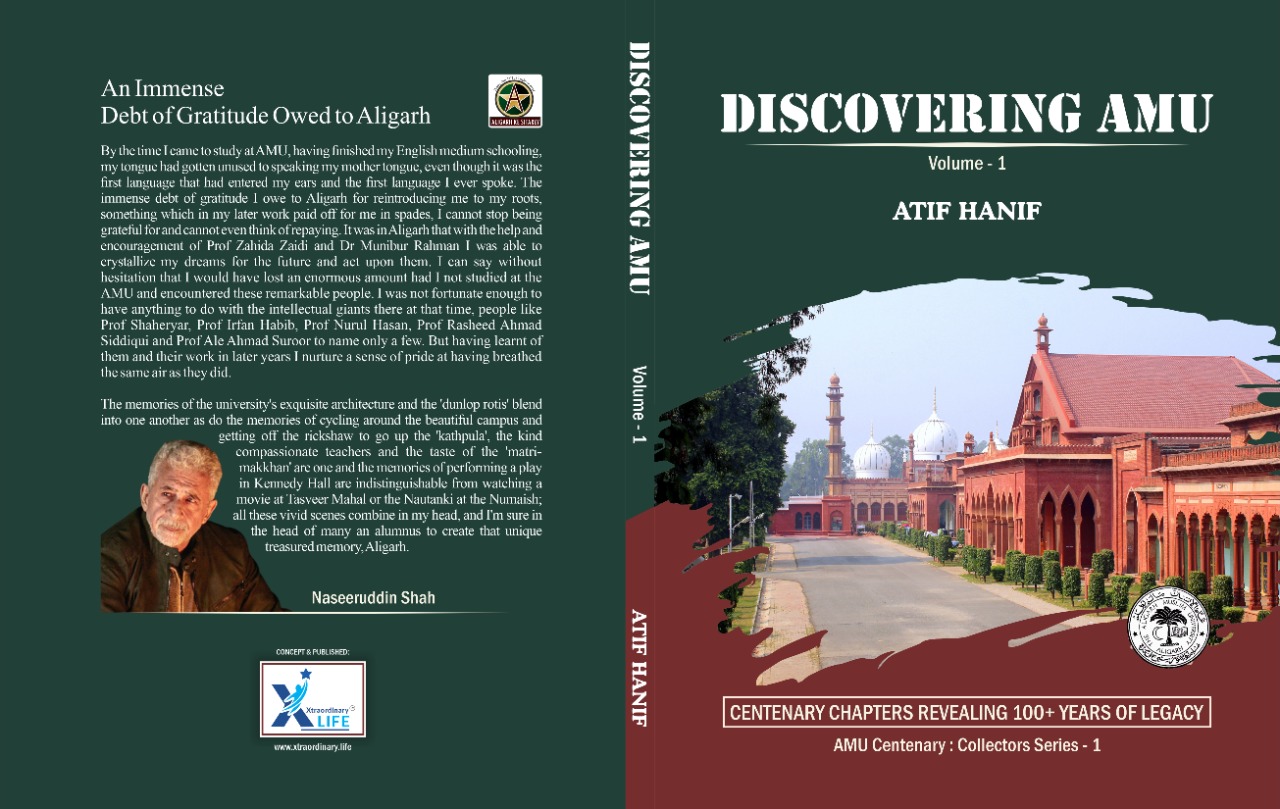
Sir Syed Ahmad Khan, KCSI

Author: Dr. Mohsin Aziz

(Residential Halls of Aligarh Muslim University Series/ Blog 1)

Soorat se ayaan jalaley shahi

chahrey par faroghey subhey gahi

wo mulk pe jaan deney wala

wo qaum ki naaw kheney wala

(Allama Shibli Nomani)

As promised in my previous blog, this is the first in series of blogs on the personalities on whom halls of residence at Aligarh Muslim University have been named. The list includes the luminaries of the late nineteenth and early twentieth century. It is a veritable who’s who list. But none among them can match the towering personality and lasting impact of Baba e Qaum, Sir Syed Baba. He is lovingly called by this name by Aligarians (Alumni of Aligarh Muslim University). Two halls of residences in University are named after the founder of the University: Sir Syed Hall North and Sir Syed Hall South. These halls of residence contain many heritage buildings associated with the history of Aligarh Muslim University, many of them designed by Sir Syed himself and built under his supervision. Some of the heritage buildings in the Sir Syed Hall compound include Victoria Gate, Jama Masjid, Strachey Hall, Beck Manzil, Asman Manzil, Sami Manzil, etc.

Syed Ahmed Taqvi bin Syed Muhammad Muttaqi, popularly known as Sir Syed, was born on 17 October 1817 at Delhi. His family was in service of Mughal Court for several generations (Bhatnagar, 1969) and his early education of Quran and Science was in the court itself. After the death of his father in 1838, the income from the Mughal Court reduced significantly. to support his family, Sir Syed started his career in 1838 with East India Company and after some training started working as Sadr Amin (Hali, A. H., 1939, p. 42). In 1839, he was called to Agra by Sir Robert Hamilton and made Naib Munshi in Agra Collectorate (Hali, A. H., 1939, p. 43). During his stay in Agra he prepared and passed the competitive exam for post of Munsif and got his diploma (Hali, 1939, p. 44). The material which he prepared for his competitive exam was published by him with his brother as co author to help others to prepare for the post of Munsif by the name of Intekhabul Akhween. It become quite popular and many people cleared the exam of Munsif with the help of the book (Hali, 1939, p.44). During this period he wrote three more books. The first was Jala ul Quloob bi Zikril Mahboob on the life of the Prophet Mohammad ﷺ . The second book was Tuhfah e Hasan and third book was Tasheel fi Jarre Saqeel which was translation of Ibn Sina’s book. It was published in 1844 (Hali, A. H., 1939, p. 45). During this period he was awarded the title of Jawwadud Dawla and Arif Jung in 1942 during a ceremony at the Court (Hali, A. H., 1939, p. 45, Bhatnagar, 1969). After the death of his brother, Sir Syed was transferred to Delhi where he continued to publish the newspaper, Sayed al Akhbar, which his brother started. The newspaper had its own printing press. It was here in 1847 that his book on the historical monuments of Delhi, Asarus Sanadid (Remnant signs of Ancient Heroes ) was published. It was a unique book in the sense that no such book was written on similar lines before. It contained the details of pre 1857 Delhi and its monuments, buildings and people. The book contained detailed drawings and measurements of the monument. It was translated into French in 1861 by Garcin de Tassy and based on the French translation, the Royal Asiatic Society made Sir Syed its honorary fellow on 4 July 1964 (Hali, 1939, p. 50). A highlight of Asarus Sanadid is the four statements of praise (taqreez) which are contained in the book. One of them is written by Mirza Asadullah Khan Ghalib (Naim, 2010). The hard work that Sir Syed put in collecting relevant information for Asarus Sanadid was an indicator of things to come. It was evident that if Sir Syed started a project he would give it all and would go to any length to get quality. To read the inscriptions on Qutub Minar, he would sit in a basket and the basket would be suspended on scaffolding high enough to read the inscriptions thus putting his life in danger (Hali, A. H., 1939, pp. 47-48). This quality of Sir Syed stood him in good stead in later life.

On 3 January 1855, Sir Syed was transferred to Bijnor as Sadr Amin (Hali, A. H., 1939, p. 52). During his posting at Bijnor Sir Syed published an annotated edition of Ain e Akbari. He included a number of pictures which were missing in the Ain Akbari.

In April 1858 he was transferred to Moradabad as Sadrus Sudur (Hali, A. H., 1939, p. 70). In 1859, the British Government constituted a commission to try those involved in the 1857 War of Independence. Sir Syed was made part of the commission in Moradabad. His presence ensured that the work of the commission was done with Justice (Hali, A. H., 1939, p. 71) and not with a feeling of taking revenge. Same year i.e. 1859 he established a Madrasa for teaching Persian at Moradabad (Hali, A. H., 1939, p. 73). In 1860 there was severe famine in the area in and around Moradabad. The responsibility to arrange relief was given to Sir Syed by the Collector of Moradabad, Sir John Strachey. Sir Syed worked tirelessly to provide relief regardless of religion or social status. He personally supervised the relief efforts and even used to wash clothes of people who were sick (Hali, A. H., 1939, pp. 91-92). Sir Syed also ensured that orphans were given for adoption according to their religion to either Hindu families or Muslim families and not to the Christian Missionaries which were working there under the patronage and with the support of the British Government. It was one of his conditions to accept the responsibility of managing the relief efforts which was accepted by Sir John Strachey (Hali, A. H., 1939, p. 93). Sir Syed ensured that none of the orphans was given to the Missionaries. Very soon Sir John Strachey was transferred and replaced by Mr. Power. He was inclined towards the Missionaries and ensured despite protest from Sir Syed that the orphans which were given to Hindu and Muslim families were taken back and given to Christian Missionaries by force. Even the four or five orphans who were living at Sir Syed’s house were not sparred. This incident shook him to the core and decided that very soon he will establish an orphanage for Indians were both Hindu and Muslim orphans will be taken care of and the funding will come from common people through donations. However, he very soon realised orphanage is no long term solution and unless there is education among Indians they situation can not be changed (Hali, A. H., 1939, pp. 91-94).

On 12 May 1862, Sir Syed was transferred to Ghazipur (Hali, A. H., 1939, p. 105). He established a school at Ghazipur in 1863 (Hali, 1939, pp.107-108). By that time Sir Syed was of firm belief that modern ideas, particularly scientific ideas, can not be propagated unless they are available in vernacular languages. To achieve the said goal, he published an appeal “Iltimas ba khidmat saaknaaney hindustaan dar baab e taraqi taalim ahley hind” (Appeal to the residents of Hindustan regarding development of education of Indians) and distributed it in 1863 (Hali, A. H., 1939, p. 106). He appealed to the people to make a society for translating old Indian books and modern scientific books in English language into Urdu language to inculcate scientific temperament. The appeal worked and Scientific Society was formed at Ghazipur in 1864. Sir Syed was elected its honorary secretary. The Duke of Argyll accepted to be appointed its patron. Lt. Governor Edmont Drummond (Lt. Governor of North Western Provinces) and Lt. Governor Sir Donald Friell McLeod (Lt. Governor of Punjab) were appointed Vice Patrons (Hali, A. H., 1939, p. 106). The scientific society was later shifted to Aligarh when Sir Syed was transferred to Aligarh. The society proved to be a milestone and an important pillar in the Aligarh Movement. Membership was open to all. Out of 109 people who accepted the membership 28 were British, 34 Hindu and 47 Muslims (Usmani, A., 2009).

In 1864, Sir Syed was transferred to Aligarh from Ghazipur (Hali, A. H., 1939, p. 108).. At Aligarh, on 10th May 1866, on the urging of Sir Syed, Aligarh British Indian Association was formed at Aligarh (Hali, A.H., 1939, p. 111). By 1867, he was promoted and became Judge at a Small Causes Court. In 1868, Sir Syed wrote a book “Risalae Ahkaam Ta’am Ahle Kitab“. In this book, Sir Syed used Quranic Verses and Hadith to argue that Muslims can eat with Christian and there is nothing in religion which stops them from doing so. It was quite provocative thought in that environment but according to Sir Syed himself people slowly accepted the argument and it became quite common for Muslims to share their dinning table with Britishers after some time (Hali, A.H., 1939, pp. 127-129).

It was the first war of Independence in 1857 and the subsequent suppression of Muslims by the British that shook him to the core and caused him to ponder over the fate of the community. At that time, he was posted at Bijnor and firsthand witnessed the calamity that was brought upon Indian Muslims as revenge for First War of Independence by the British. Although there was participation of every community in the War of Independence, greater blame was put on Muslims and hence the revenge. Sir Syed was so much affected by the large scale destruction and near complete annihilation of Muslim Elite (Shurafa) and was was so pained that he even thought of migrating to Egypt. However, he decided to stay and do something for the uplifting the community. In his own words, it would have been namardi (cowardice) and bemurawwati (disregardful or delinquent ) to leave the community in such a dire situation and find safe haven for himself. He decided to stay back and help his community in those trying times (Hali, A. H., 1939, p. 70). In 1859 he was promoted to the position of Sadrus Sudoor and transferred to Moradabad (Hali, 1939, p. 70). During his posting in Moradabad, he published Tarikh e Sarkashi Bijnor (History of the uprising of Bijnor,). Same year he wrote Asbab e Baghawat e Hind (The Causes of the Indian Mutiny) and submitted it to the British government. Given the times and circumstances, it was a daring and forceful critique of the British, their policies towards Indians particularly Muslims and their heavy handed handling of the revolt.

Meanwhile in 1861, Sir William Muir’s book “The Life of Mohammad” was published in 1861 from England. The book was full of Christian bias against Muslims and Islam as was noted by contemporary scholars. When Sir Syed read the book, he was saddened and wanted to write a rebuttal. He started collecting material for the same. In the meantime he got an opportunity to travel to England. His son Syed Mahmood got scholarship for higher education in England. Sir Syed decided to accompany him to England. The reasons why Sir Syed wanted to travel to England were manifold. Apparently he was going there to see the development of Science and Technology and firsthand learn about the reasons of Britain’s development. The idea was to learn and apply the same for the benefit of Indians so that they can also prosper. Another underlying desire for this journey was to collect references from the British libraries for his rebuttal of Muir’s book. Sir Syed believed that he can get relevant material in British Museum Library and India Office Library (Hali, A.H., 1939, p. 118). Before this opportunity arose, Sir Syed had already started writing rebuttal of Muir’s book. However, he faced paucity of reference material in India. The opportunity to travel to England was too enticing to be missed as Sir Syed and he immediately started his preparation for the all important journey. It is interesting to note that the recommendation of scholarship to Syed Mahmood was given by Sir William Muir himself in his capacity of Lt. Governor of North Western Province. It is also interesting to note that Sir Syed called on Sir William Muir before embarking on his journey to England. On 1 April 1869, Sir Syed left for England. For Sir Syed the journey was so important that to raise money for the same he mortgaged his house at 14 % per annum and borrowed money from his friends so as to meet the expenses of his trip (Naim, C.M., 2011). Besides mortgaging his house Sir Syed sold his personal library for which had so painstakingly collected books (Hali, A. H.,1939, p. 132). Sir Syed’s stay in England lasted for 17 long months. During this time, he was able to meet a lot of dignitaries of British high society. He was invited to many meetings in England. Besides he visited several colleges and Universities. He also extensively used the library of British Museum to collect reference material for his book. He wrote a series of articles in Urdu and got them published in England itself by getting them translated to English. During his stay in England he was awarded the C.S.I. on 6 August 1869 by the Duke of Argyll (Hali, A. H., 1839, p 137). During his stay in England, Sir Syed attended several meetings of Royal Asiatic Society and was present in the last reading of Charles Dickens at the Society. He was also was given membership of Athenaeum Club. It was a huge honour as at that time there was a waiting list of more than 3000 people, some of whom were waiting for 12 years to get its prestigious membership. Sir Syed stayed in England for 17 months and left England for India on 4 September 1870 (Hali, A.H., 1939, pp. 139-144).

Once back in India, the first thing Sir Syed did was to start Tehzibul Akhlaq. The first volume of Tehzibul Akhlaq came out of press o 24 December 1870. Sir Syed was major contributor of articles to Tehzibul Akhlaq in its first inning of six year as can be gauged from the fact that out 226 articles during that period, Sir Syed alone contributed 112 article. These articles covered a variety of topics ranging from religion, education, morality, philosophy etc. (Hali, A. H., 1939, pp. 148-150). Sir Syed’s articles in Tehzibul Akhlaq besides their inherent message were examples of Concinnous (Insha Pardazi) writings of the highest order. According to Allama Shibli, It was because of Sir Syed that Urdu language became capable of expressing a wide variety of topics in the realm of politics, morality and philosophy (Nomani, S., 1898).

To further achieve his goal of uplifting the Muslim community, he started Madrasatul Uloom Musalmanan-e-Hind at Aligarh. The Madrasa opened its doors to students on 24 May 1875 to coincide with the 56th birthday of Queen Victoria (Hali, A. H.,1939, p. 168). Two years down the line it became Mohammadan Anglo Oriental College at Aligarh on 8 January 1887. This was perhaps the first concrete and thought out response of the Muslims of India to the challenges amidst the hostile environment facing them in the later half of the 18th century after the first war of independence 1857.

This inaugural function of the establishment of the College was presided by the then Viceroy and Governor General of India, Lord Lytton, in the presence of Sir Syed and other dignitaries. Lord Lytton laid the foundation stone of the college. The address presented by Sir Syed to the Lord Lytton said that “from the seed we sow today, there may spring a mighty tree, whose branches like those of banyan of the soil, shall in their turn strike firm roots into the earth, and themselves send forth new and vigorous sapling: that this college may expand in a University whose sons shall go forth throughout the length and breadth of the land to preach the gospel of free enquiry, of large hearted toleration and of pure morality ”.

Despite the negative comments and personal attacks against him, Sir Syed had complete faith in what he was doing. Addressing Sir John Strachey during the foundation laying ceremony of the central building of the then college, he said “The central hall of our college buildings, which is to receive your name, and on the basement of which we are now assembled to greet you, will become one day the scene of intellectual contests of youthful ambition and educational honours” (Bhatnagar, 1969). The major problem that was faced by the College committee was to raise enough funds to run the College. Different methods were used for the purpose. Committees were formed which went to different districts to raise funds. Sir Syed even started a lottery for an amount of 30,000 rupees. After distributing the winning amount, 20,000 rupees was saved and used for the development of the College. In response to the criticism for the methodology used to collect funds, he argued that while one does many wrongs for his own personal benefit, what is the harm in one wrong for the benefit of the community? (Hali, A. H., 1939, pp. 176-177). Another innovative method which was adopted by him to raise funds for the College was to draw paintings with message and send them to rich people. The method worked and many new avenues of funding were opened (Hali, A. H.,1939, pp. 182-183).

Despite the paucity of funds, Sir Syed did not compromise when it came to the construction of buildings. While the other members of the College Committee wanted to save money, Sir Syed was of the view that the buildings of College should be grand. He believed that grand buildings will create a positive impact and would last for a long time. It is a fact that “Today it is not even possible to visualize the state of mind of Indian Muslims after the failure of the first war of Indian Independence in 1857. In the life of any community, the road from power to slavery is extremely painful. It is not easy to visualize and start something grand in such an environment. It required vision, indomitable courage and perseverance. These characteristics are very difficult to find in an environment of defeat and helplessness. After seeing Jama Masjid, Strachey Hall and Victoria Gate, who can say that these were built by a community who had just lost everything? This extraordinary effort was a reflection of yearning to regain the lost glory. It was a symbolic indication of trying to move from the present darkness to a bright future and also a pointer to future possibilities. When the political power was lost, Sir Syed laid the foundation of Kingdom of Knowledge and Enlightenment. It was not just an institution where degrees were awarded to get government jobs but it fulfilled many cultural and psychological needs of the besieged Muslim community” (Zilli, I.A., 2018).

1n 1876 Sir Syed took premature retirement after serving in various capacities in the British government to focus on his educational movement at Aligarh. His pension was fixed at 400 rupees per month (Kidwai, S., 2010, pl. 39). While at Aligarh in 1877 he started writing the tafsir of the Quran by the name of “tafsir al quran wa huwa al huda wal furqan“. He continued working on it till he breathed his last in 1898. He was able to complete 7 volumes which cover 16 para (parts). According to Sir Syed there are Muslims who need philosophical proof and logic for everything and his tafsir was an attempt to convince them with logic and it was not for those who already have belief and conviction. However, since its publication it has drawn criticism and negativity from majority of Ulema. As a result even the positive aspects in the tafsir have not been discussed by and large (Azmi, A. A., 2020). What is disheartening is that many have questioned his intention. His intention towards Islam and Prophet ﷺ was clear when he sold his library and mortgaged his house so as to travel to England to write a rejoinder to Sir William Muir’s book and defend the honour of the Prophet ﷺ.

While at Aligarh he was made member of Viceregal Legislative Council at the recommendation of Lord Lytton which was later continued on the the recommendation of Lord Ripon (Hali, 1939, p. 206). It was here that he was honoured with Knight Commander of the Order of the Star of India (KCSI) in 1888 through his membership to the Imperial Legislative Council (The London Gazette, 3 January 1888, p. 14). He was also chosen fellow of Calcutta University and Allahabad University by the Viceroy in the years 1876 and 1887 respectively. The 1889 he received an LL.D. honoris causa from The University of Edinburgh on the recommendation of Sir William Muir (Naim, C.M., 2010). Once at Aligarh, he immersed himself into the College project completely. On 27 March 1888 he left this world (Hali, A. H., 1939, pp. 266-67) leaving behind an unmatched legacy and a void that would be impossible to fill. It was almost 22 years after his death that Sir Syed’s dream of establishing a University for the Muslims of India was fulfilled when on 9 September 1920 through a bill passed in the Imperial Legislative Assembly and Mohammadan Anglo Oriental College was converted into a University (Noorani, A. G., 2016).

Sir Syed was a multi faceted personality. Besides being an Urdu writer par excellence, he was educationist, religious scholar, mufassir e Quran, social reformer, historian, judge, community organizer, philosopher and philanthrope all rolled into one. Whatever field he picked up he worked tirelessly and achieved excellence. One of his fiercest critic, Akbar Allahabadi, acknowledged the same at the time of Sir Syed’s death in the following words

hamari baten hi baten hain syed kaam karta tha

na bhulo farq jo hai kahney waley karney waley main

kahey jo chahey koi main to kahta hoon ki ae akbar

khuda bakhshey bohot si khoobiyan theen marney waley main

For more information and references, please see:

Azmi, Altaf Ahmad (2020) Tafsir al quran (Sir Syed): Ek Muta’ala. Maarif (April), Vol. 205, No. 4, pp. 245-253.

Bhatnagar, Shyam Krishna (1969) History of The M.A.O. College Aligarh. Sir Syed Bicentenary Celebrations Aligarh Muslim University. Caxton Press: Delhi.

Faruqi, Shamsur Rehman. (n.d.) From Antiquary to Social Revolutionary: Syed Ahmad Khan and the Colonial Experience. Available at: http://www.columbia.edu/itc/mealac/pritchett/00fwp/srf/srf_sirsayyid.pdf. Accessed on 11 October 2020

Hali, Altaf Hussain (1939) Hayat e Jawed. Anjuman Taraqqi Urdu (New Edition). Delhi.

Khursheed, Anwar (2019) Sir Syed Ahmad Khan’s Legacy Goes Beyond Securing Minority Rights. 17 October. The Quint. Available at: https://www.thequint.com/voices/opinion/muslim-rights-sir-syed-ahmad-khan-constitution-of-india-amu. Accessed on 11 October 2020.

Kidwai, Shafey (2010) Cementing ethics with modernism – An appraisal of Sir Sayyed Ahmad Khan’s Writings. Gyan Publishing House: Delhi.

Naim, Choudhri Mohammed (2010) Syed Ahmad and His Two Books Called ‘Asar-al-Sanadid’. Modern Asian Studies (pp. 1-40). Cambridge University Press

Naim, Choudhri Mohammed(2011) A Musafir to London. Outlook. 17 October. Available at: https://www.outlookindia.com/website/story/a-musafir-to-london/278673. Accessed on 9 October 2020.

Noorani, Abdul Ghafoor Majeed (2016). History of Aligarh Muslim University. Frontline (13 May). Available at: https://frontline.thehindu.com/the-nation/history-of-aligarh-muslim-university/article8523802.ece. Accessed on 14 October 2020.

Shibli Nomani (1898, May) Sir Syed Marhoom aur Urdu Literature. Mohammadan Anglo Oriental College Magazine and Aligarh Institute Gazette. Vol. 6, No. 5., pp. 205-214.

Siddiqui, Mohammad Asim (2015) Man who knew tomorrow. 16 October. The Hindu. Available at: https://www.thehindu.com/books/books-authors/sir-syed-ahmad-khan-man-who-knew-tomorrow/article7770311.ece. Accessed on 11 October 2020.

The London Gazette (1888). Issue 25722, p. 14. Available at: https://www.thegazette.co.uk/London/issue/25772/page/14. Accessed on 15 October 2020.

Usmani, Afzal (2009). A history of the Scientific Society. Two Cricles. Available at: https://twocircles.net/2009aug25/history_scientific_society.html. Accessed on 16 October 2020.

Zilli, Ishtiyaq Ahmad (2018). Excerpts from speech given while excepting the Sir Syed Excellence Award 2018 on behalf of Darul Musanneffin Shibli Academy at Aligarh Muslim University. Available at: https://mohsinazizblog.org/2019/10/20/sir-syed-excellence-award-2019-2/. Accessed on 14 October 2020.

100 Years of Aligarh Muslim University: The Journey Continues

Author: Mohsin Aziz

This month Aligarh Muslim University celebrated its Centenary. Series of events are planned at the University for this joyous occasion. The Story of Aligarh Muslim University started after the first war of independence in 1857. At that time, Sir Syed was posted at Bijnour as Sadr Amin. He saw the destruction brought upon Indians and particularly Muslims after the Colonial Power suppressed the independence movement. Sir Syed was deeply affected by what he saw. He was so distraught that he even planned to migrate to some other country. Sir Syed decided to stay and work for the upliftment for the community as he himself said that it would be an act of cowardice to leave the community in such dire straits at such crucial stage of their history and settle abroad.

To achieve his aim of uplifting the community from the quagmire of poverty and illiteracy that it found itself, Sir Syed worked simultaneously at several fronts. While on the one hand he was trying to inculcate scientific temperament among the Indian Muslims by establishing Scientific Society in 1864 and bringing out magazine like Tehzeeb-ul- Akhlaq (Mohammedan Social Reformer) in 1871. On the other he was urging them to adopt modern education. Naturally he faced multi faceted opposition also.

It was on 1 April 1869 he embarked on a journey of England where his son, Syed Mehmood, got scholarship for higher education. Sir Syed’s stay in England lasted for 17 months. The visit brought major change in Sir Syed’s outlook. Although the underlying factor for his England visit was to collect material to write rebuttal of Sir William Muir’s book on Prophet Mohammad (Peace be upon him). During his stay in England Sir Syed visited colleges and universities and was inspired to started a “Muslim Cambridge” back home. Back in India, Sir Syed hit the ground running and immediately started working on his plan.

After seeing the advancement in Science and Technology, Sir Syed realised that the only way forward for the community was to embrace the new Science. However, back in India he faced stiff resistance from the community as the community felt that educating their children in English would make them Christaan (Christian). Despite all the adversities Sir Syed showed his character and stood his ground and worked till his death to achieve his purpose. He was lucky in a sense that he got the support of many intellectuals of his times. Similarly many in the landed aristocracy wholeheartedly supported him. Among the intellectual giants who supported Sir Syed in his endeavour are Maulana Altaf Hussain Hali, Allama Shibli Nomani, Nawab Muhsinul Mulk etc. Personally Sir Syed did everything to raise funds for his College. He begged, danced on stage, played lottery, sang on stage and what not. In his last message Sir Syed said that “

To achieve his goal of uplifting the Muslim community, he started Madrasatul Uloom Musalmanan-e-Hind at Aligarh. The Madrasa opened its doors to students on 24 May 1875 to coincide with the 56th birthday of Queen Victoria. Two years down the line it became Mohammadan Anglo Oriental College at Aligarh on 8 January 1887. The inaugural function of the establishment of the College was presided by the the then Viceroy and Governor General of India, Lord Lytton, in the presence of Sir Syed and other dignitaries. Lord Lytton laid the foundation stone of the college. The address presented by Sir Syed to the Lord Lytton said that “from the seed we sow today, there may spring a mighty tree, whose branches like those of banyan of the soil, shall in their turn strike firm roots into the earth, and themselves send forth new and vigorous sapling: that this college may expand in a University whose sons shall go forth throughout the length and breadth of the land to preach the gospel of free enquiry, of large hearted toleration and of pure morality

Later when Lord Ripon, the Viceroy, visited Aligarh in 1884, Sir Syed said: “Some day when our endowments are sufficient, we would request the Government to confer upon us the legal status of an independent University.” In July 1906, Badruddin Tyabji said in an address to the Aligarh College Association in England: “If, as I hope, Aligarh develops into a university it will become the centre of attraction of education for all Mohammedans, not only from the various Mohammedan schools and colleges of India, but also, it may be, from all other parts of the Mohammedan world“. The college later became University on 9 September 1920 through a bill passed in the Imperial Legislative Assembly.

Today Aligarh Muslim University is one of the Central University of the Republic of India and has been consistently ranked amongst the India’s best Universities. The University is spread over 467.6 hectares (1155 acres) in the city of Aligarh in Uttar Pradesh. Presently the University offers more than 300 courses in the traditional and modern branches of education. The University has about 28000 students, more than 1300 teaching staff and about 5600 non teaching staff on its rolls. The University boasts of 12 faculties comprising of 98 teaching departments. Besides there are 3 academies and 15 centers and institutions in the University. However, the heart and the soul of the University is its residential character. Most of the staff and students reside inside the campus. There are 19 halls of residence for students with 80 hostels. Besides the University runs one primary school and seven high schools including one for the visually challenged and two senior secondary schools, one each for boys and girls.

There are ample opportunities for sports and cultural activities on campus thus providing for all round development of students. The University maintains Willingdon Cricket Ground for Cricket, Meston Swimming pool for swimming, Gymkhana, Hockey field with asto turf besides several football grounds, skating rink, basketball, volleyball and Lawn Tennis facilities. The University also has a hiking and mountaineering club. However, the University Riding Club is its crowning glory. It is more than 100 years old riding club with excellent horses and coaching facilities. Riding Club has its own riding ground for practice. Yours truly is a former member of the riding club having earned my horsemanship certificate from Janab Hamid Ansari Sahib during his tenure as Vice Chancellor of the University. For Cultural activities there is General Education Centre which boasts of Kennedy Auditorium. The activities in General Education Centre are organised through Drama Club, Music Club (Hindustani and Western Music), Literary Club and Film Club.

The University also runs three off campus in the districts of Malappuram (Kerala), Murshidabad (Bengal) and Kishanganj (Bihar). These campuses offer MBA and integrated B.A.L.L.B. courses.

Its alumni are spread all over the length and breadth of the globe as envisaged by the sage himself. The alumni of the University have established schools, colleges and universities all over the globe and have advanced the cause of education. However, there is still lot to be done particularly in India. Various reports make it clear that Muslims in India lack behind other communities in education. The situation is even worst when it comes to higher education. It is time for Muslims of India to take initiative and invest all their time, energy and money in raising their educational standards. It is time for them to rededicate themselves to learning and contribute even more to the progress and prosperity of India and humanity at large.